◆ the want
Brainrots are the prize
Goofy voxel characters in escalating rarities — Common up through Mythic, Emerald, Celestial, Godly. Pulling a rarer one is the core "I got something" hit the whole game is built to deliver.
At its core this is a brainrot collector: catch them, place them, earn cash, repeat. The twist that sets it apart is how you catch them — through a sniper scope, with slow-motion and a satisfying crack. The brainrots are the dopamine; the rifle is the best way the game delivers it.
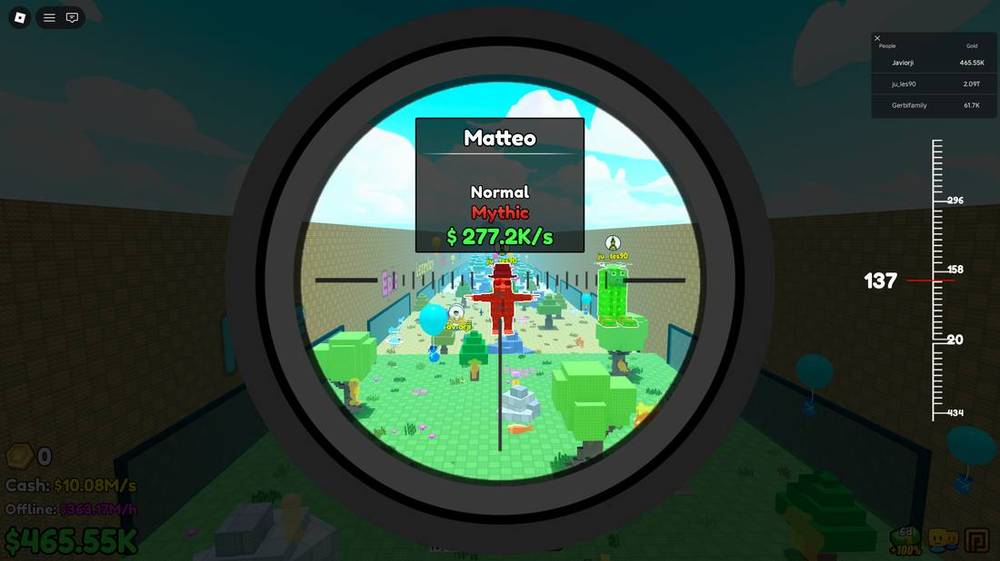
Before the deep dive, here's the shape of the thing. The dopamine engine is the brainrots — collecting them, watching rarer ones drop, and turning them into ever-bigger income. Everything else, sniping included, exists to feed that engine.
Goofy voxel characters in escalating rarities — Common up through Mythic, Emerald, Celestial, Godly. Pulling a rarer one is the core "I got something" hit the whole game is built to deliver.
Instead of a fishing rod you have a scoped rifle. You shoot a brainrot downrange to claim it — the same place-and-earn loop as its siblings, but the catch step is an actual aimed shot. This is the standout, covered in depth next.
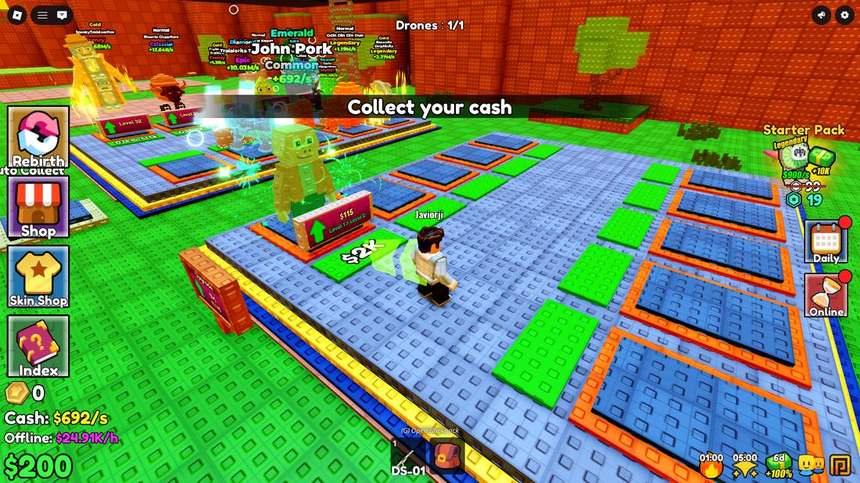
Set a caught brainrot on a plot pad and it earns cash per second. Collect, upgrade your rifle and drones, rebirth for multipliers, and the numbers spiral from hundreds to billions.
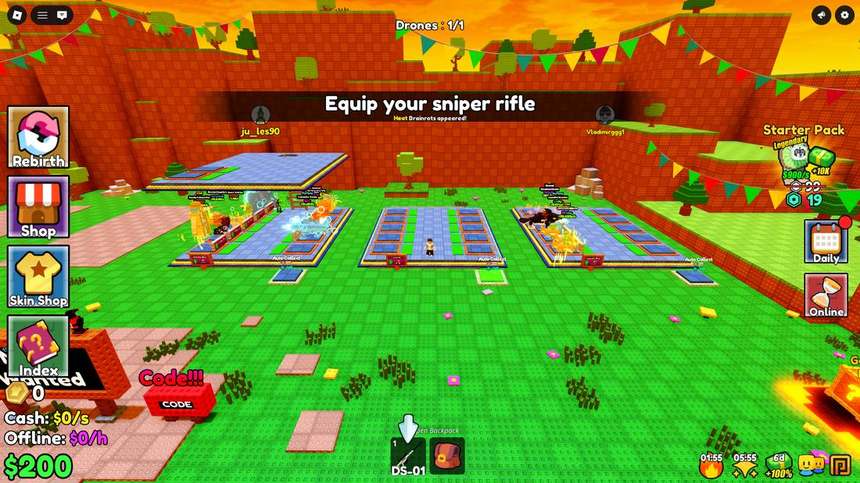
Around that core sits the usual supporting cast: a drone layer that auto-collects and adds light PvP, lucky blocks for a reveal-toy hit, daily and online reward clocks, a skin shop, and timed events that spawn special brainrots. None of it is novel — it's the proven brainrot-collector chassis.
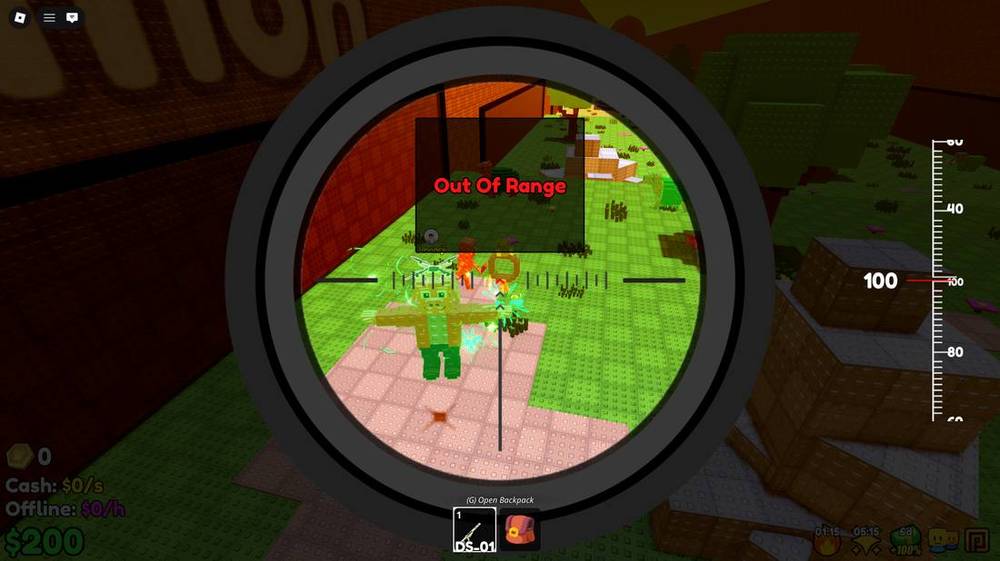
This is the part that makes the collector feel fresh. Catching a brainrot isn't a passive click — it's an aimed shot through a scope, and the studio clearly spent its polish budget here. The scope isn't a zoom toggle; it's a mode change, with the HUD shouting the controls, the world recoloring through the glass, and a live rangefinder turning every target into a yes/no decision.
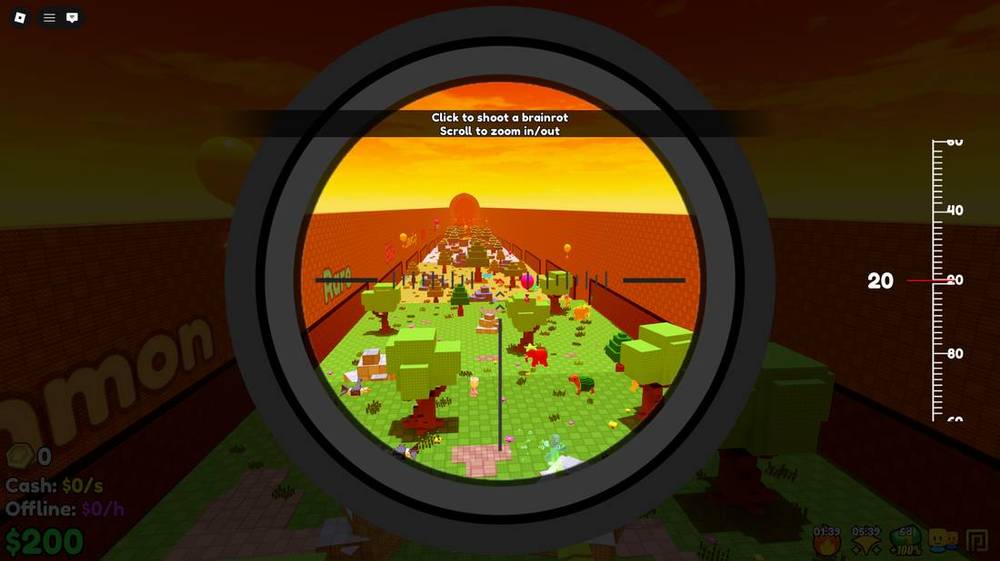
Two prompts live inside the glass: click to shoot, scroll to zoom. That's the entire control surface, and it's legible in a second. The sunset light flooding the range makes the scope view its own distinct visual space — you always know whether you're "in" the shot or not.
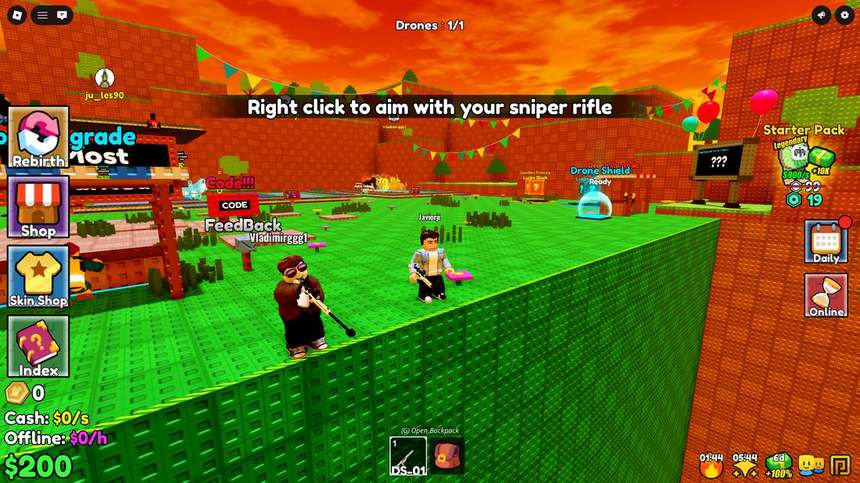
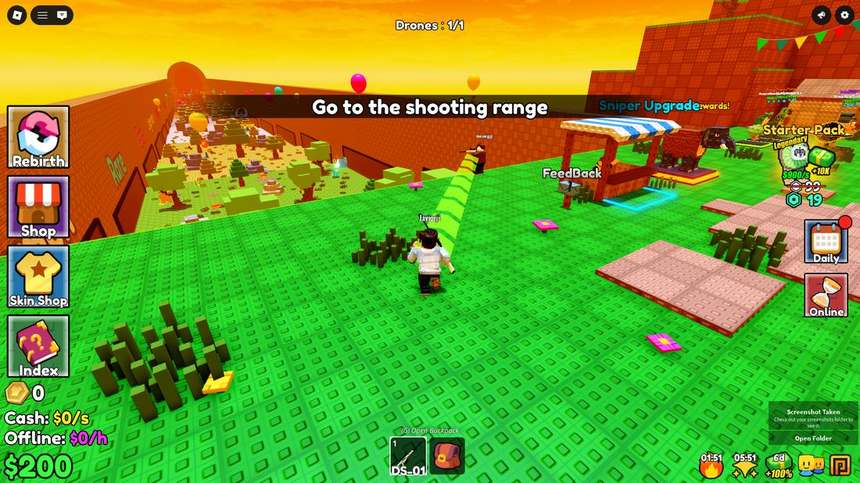
The shot is where the care shows. On release the game stacks slow-motion, a gun crack, and a separate hit sound — a tiny layered payoff that makes a single click feel weighty and confirmed.
Slow-motion is the trick that elevates the whole thing. For a beat after you fire, time stretches and the camera holds — you watch the shot resolve instead of just registering a number. It borrows the language of a real sniper game and drops it into an idle collector, which is exactly why it stands out.
It's easy to overlook, but the music is one of the biggest reasons the game feels alive. A bright, chiptune-style track runs at a brisk tempo and never lets the energy drop — which matters enormously for a game that is, mechanically, mostly waiting.
The genius of a fast 8-bit loop here is that it masks the downtime. Between shots and cash collections there's a lot of standing around, but the music keeps a constant forward pulse, so the idle stretches read as momentum instead of dead air.
Chiptune also fits the brainrot aesthetic perfectly — it's nostalgic, a little goofy, and instantly readable as "this is a fun, not-serious place." The track sets the emotional register before you've fired a single shot, and it pairs with the toy-bright voxel world to tell you exactly how to feel.
Worth saying plainly: the structure around the catching isn't especially sophisticated. Shoot a brainrot, pick it up, place it to earn, collect the cash — it's the same place-and-earn skeleton you'll recognize from Fish a Brainrot, with a rifle where the rod would be. That's not a knock; it's a proven loop, and the polished catch step is what makes this one feel different.
Right-click into the scope at the range.
→Scroll to zoom; rangefinder says yes or no.
→Slow-mo, crack, hit-confirm.
→Walk over the downed brainrot to claim it.
→Drop it on a plot pad to earn cash/sec.
→Sweep up the cash, upgrade, repeat.
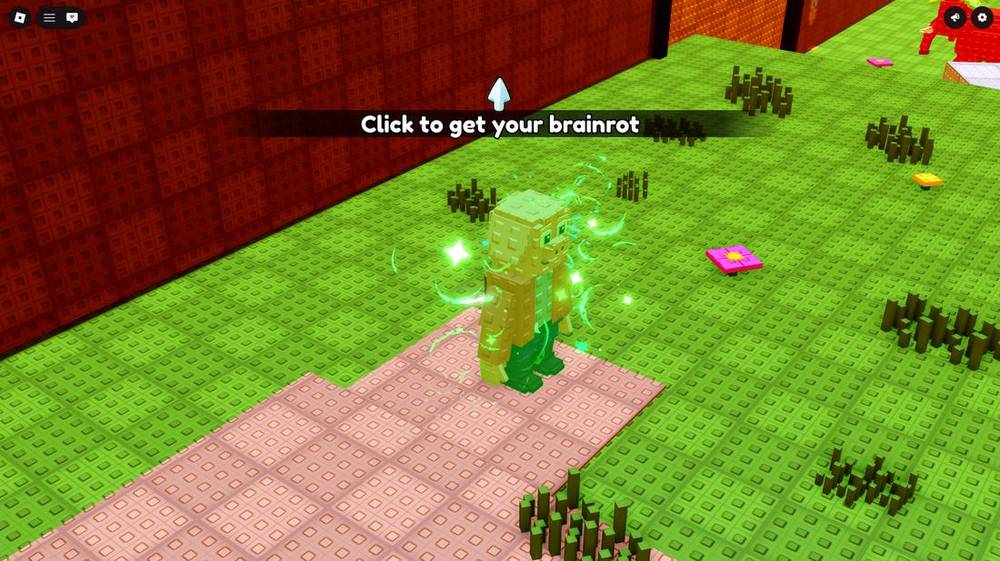
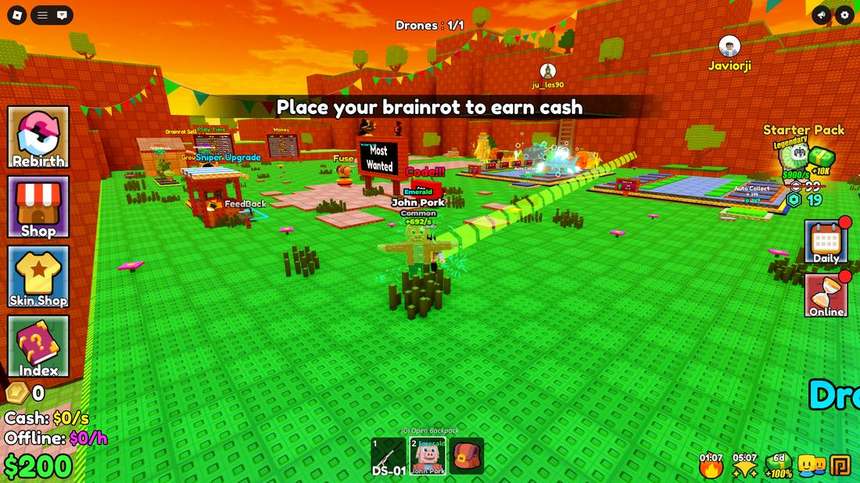
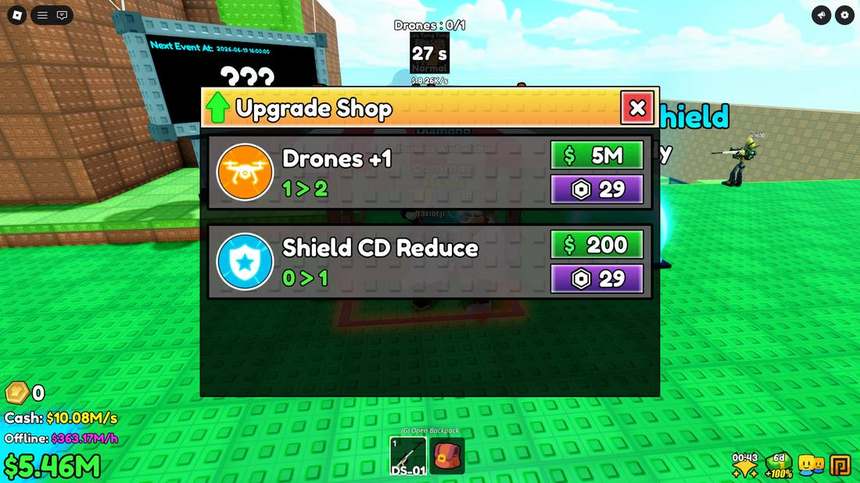
The sniping stays engaging because range gates what you can hit. Better targets sit further away, and your rifle's range is a number you spend money to grow — so the shot is never purely automatic.
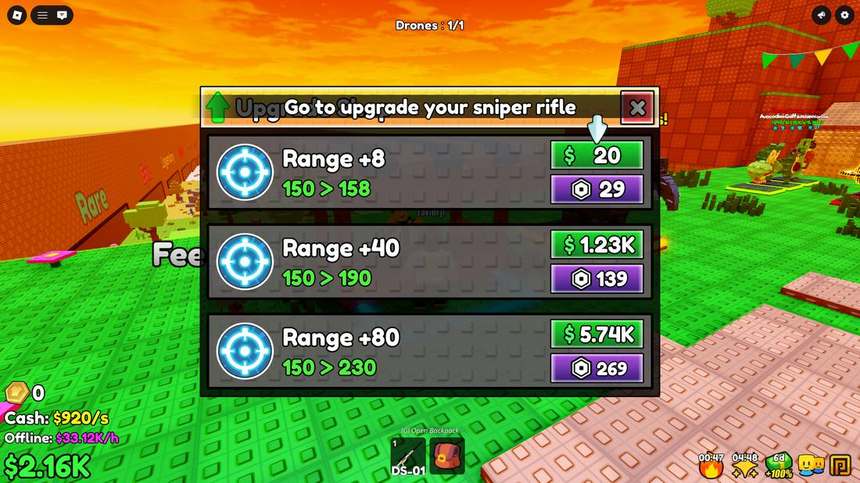
Because the rangefinder is live in the scope, a range upgrade isn't an abstract stat — you immediately see previously red Out Of Range targets turn green. That tight link between spending and capability is what keeps the shooting from going stale.
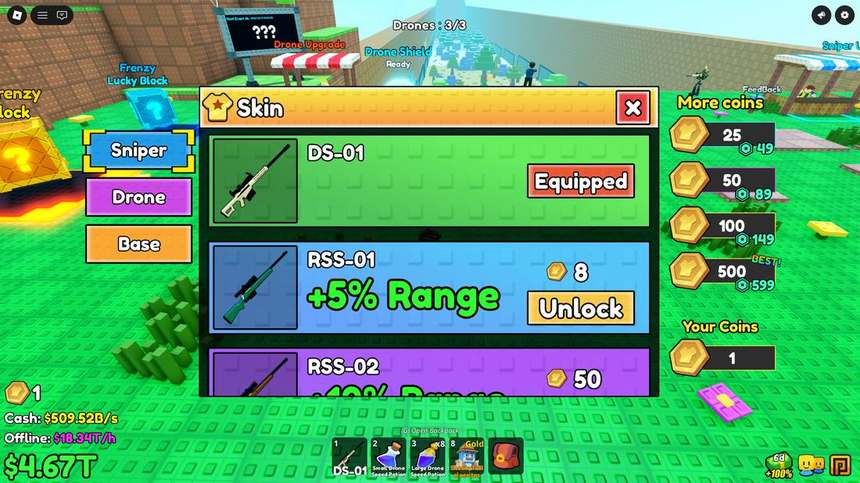
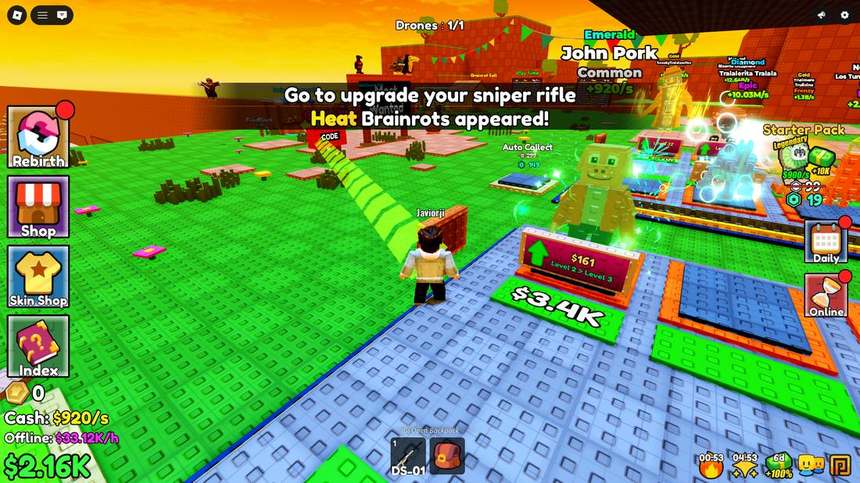
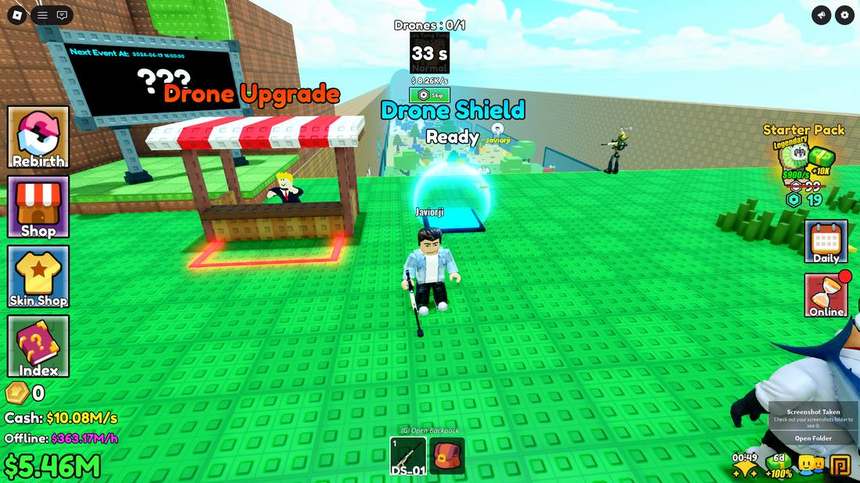
The one place the game reaches past solo idle is the drone layer: drones collect for you, other players are visible doing the same, and a shield ability adds a light defensive counter — a small amount of contested space layered onto a co-op range.
The Drone Shield charges up and reads Ready, then pops a visible bubble — a clean, legible ability with a cooldown you can pay to reduce. It's not deep PvP, but seeing another sniper across the range while your drone hums and your shield recharges gives the space a live, shared feel.
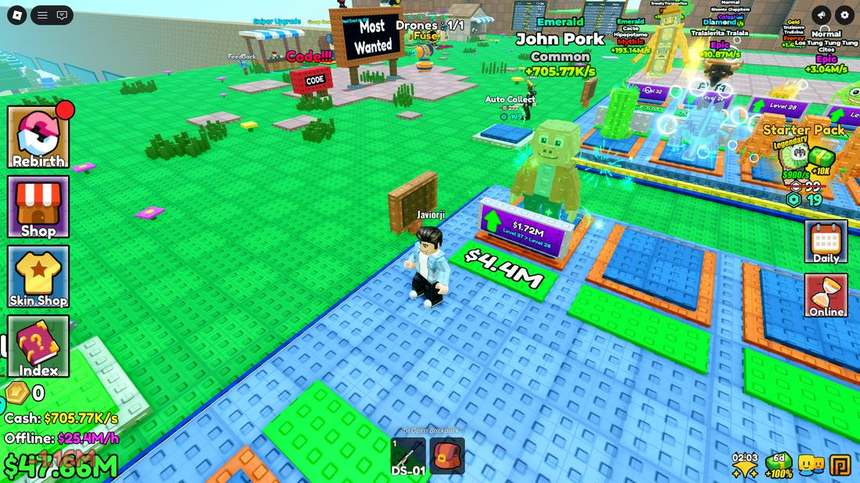
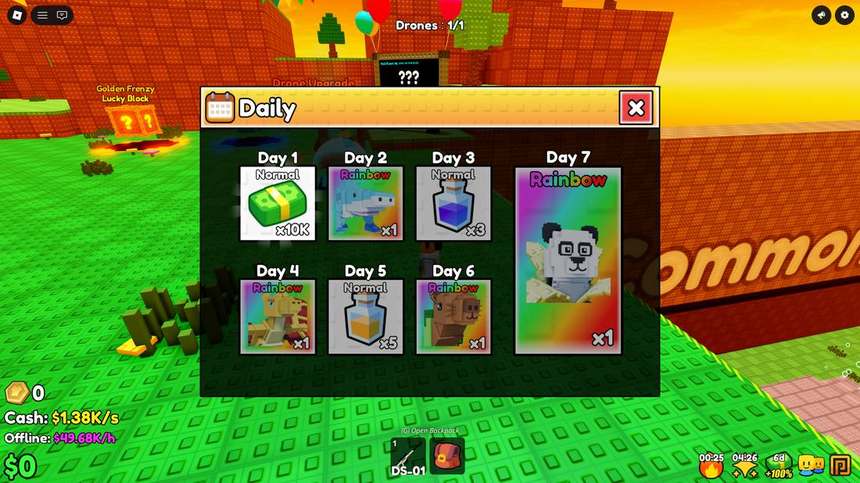
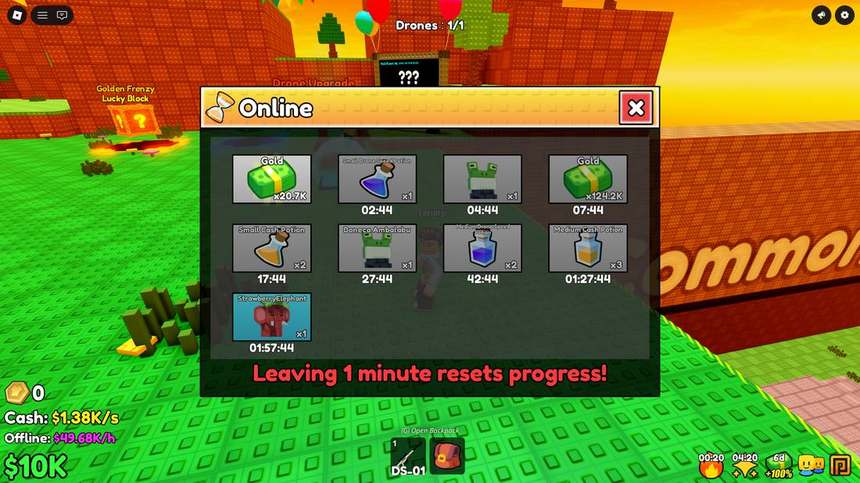
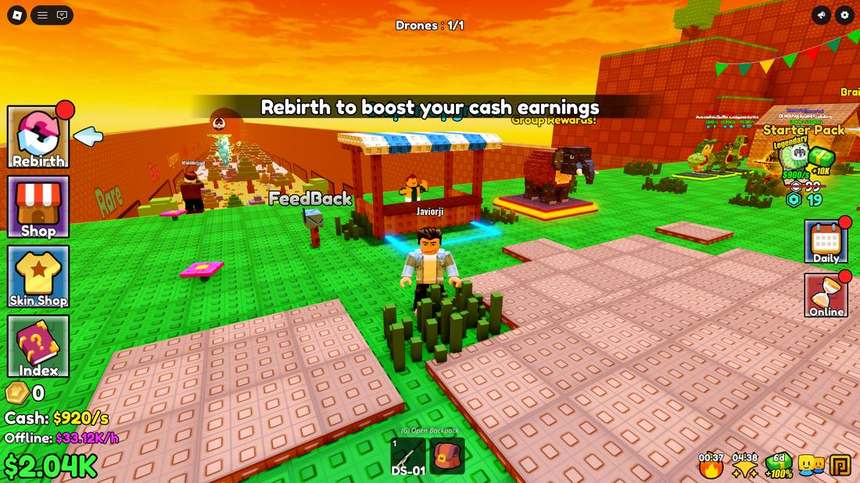
Like its siblings, the game front-loads return hooks: a tutorial that teaches rebirth before you need it, daily and online reward clocks, and dual lucky blocks for a reveal hit. None are novel — they're the genre's standard retention furniture — but they're installed competently.
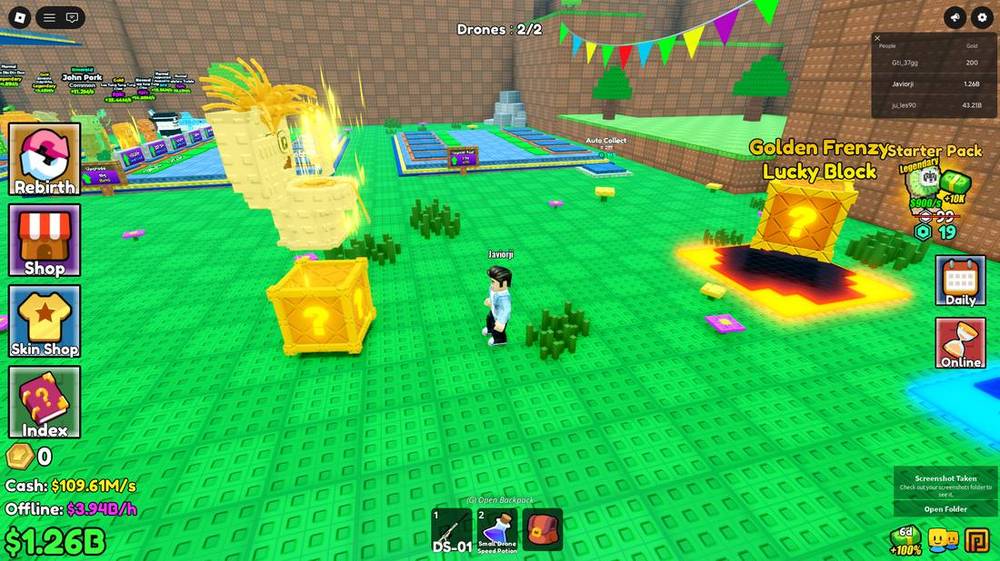
The lucky blocks are the one spot the game borrows the reveal-toy energy directly: a Golden Frenzy and a Frenzy block sit side by side with an odds bar, and opening one plays a build-up before spitting out a brainrot. It's the most "dopamine-forward" moment in a game that's otherwise carried by its shooting.
The dopamine lives in the brainrots; the sniping is the best delivery mechanism for it. The fun is concentrated in the catch, not spread thin across systems.
Escalating rarities and spiraling cash-per-second are the real pull. Every other system exists to put more, rarer brainrots on your plot — that's the loop the player is actually chasing.
The one moment that repeats — the aimed shot, with slow-mo, crack, and hit-confirm — gets all the craft. A great-feeling catch step turns routine collection into something you want to do by hand.
A bright 8-bit score papers over the idle downtime, and a borrowed place-and-earn economy needs no reinvention. The studio spent its budget on the differentiator and trusted the chassis.