Generosity before grind
Power, rare drops, and one-shot kills arrive fast and early. The player is hooked on the feeling of winning long before the economy tightens — so the later grind reads as "earning more" rather than "being slowed down."
A beat-by-beat teardown of how the game manufactures wanting — from the frictionless first thirty seconds to the world-two monetization wall. The core trick is one reveal animation, reused everywhere, wrapped around three reward clocks that never all stop at once.
Everything in the teardown rolls up to these. They're the levers worth stealing for a prototype.
Power, rare drops, and one-shot kills arrive fast and early. The player is hooked on the feeling of winning long before the economy tightens — so the later grind reads as "earning more" rather than "being slowed down."
The click-mash Lucky Block reveal — tap to power up, animation, sound — is reused for purchases, time rewards, and box opens. Every "you got something" moment shares the same satisfying shape, so the whole game feels consistent and rewarding.
Instant (one-shots, reveals), short (dummy and rebirth milestones), and long (battle pass, pets, new worlds) all run in parallel. Whatever length your session is, there's always a next dot to chase.
The spine of the teardown. Each beat is colored by the rarity tier the player is roughly chasing at that point — grey Common at spawn, climbing to Divine by the world gate.
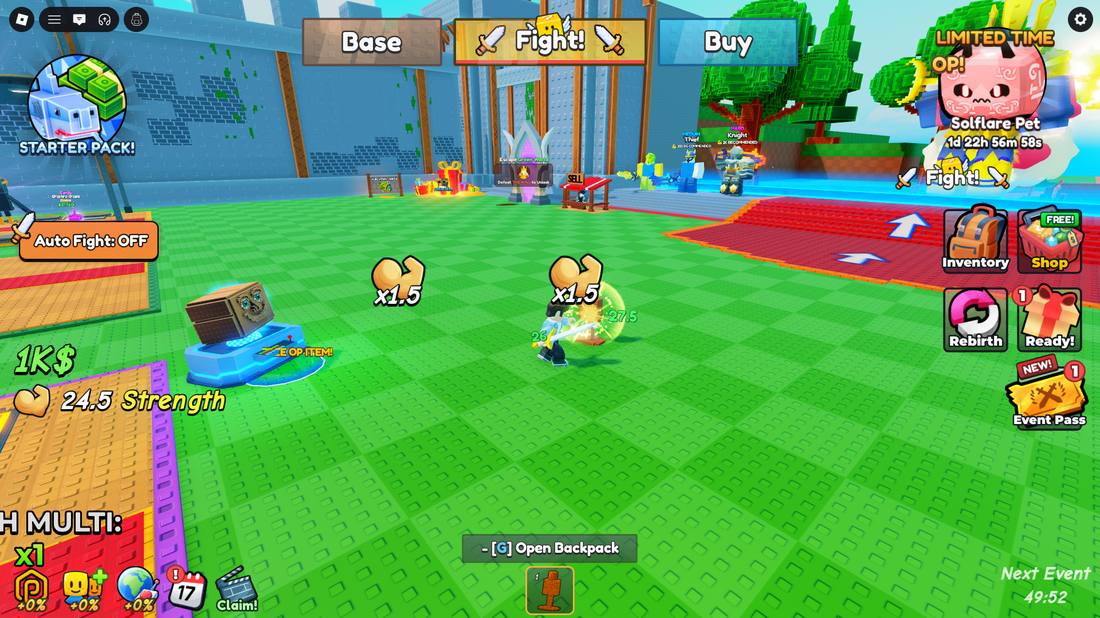
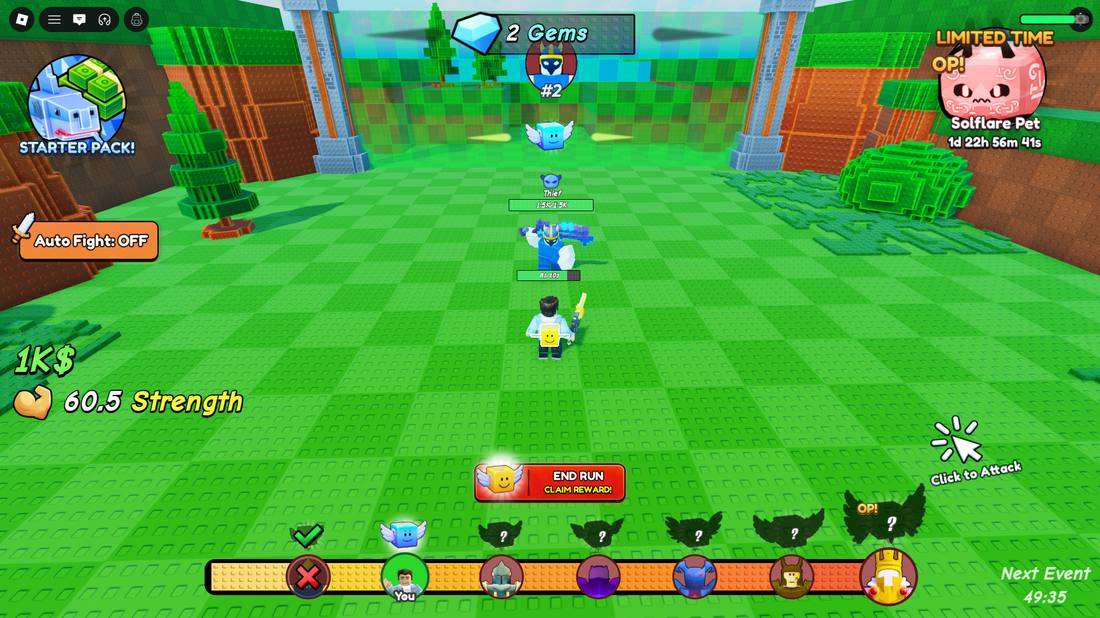
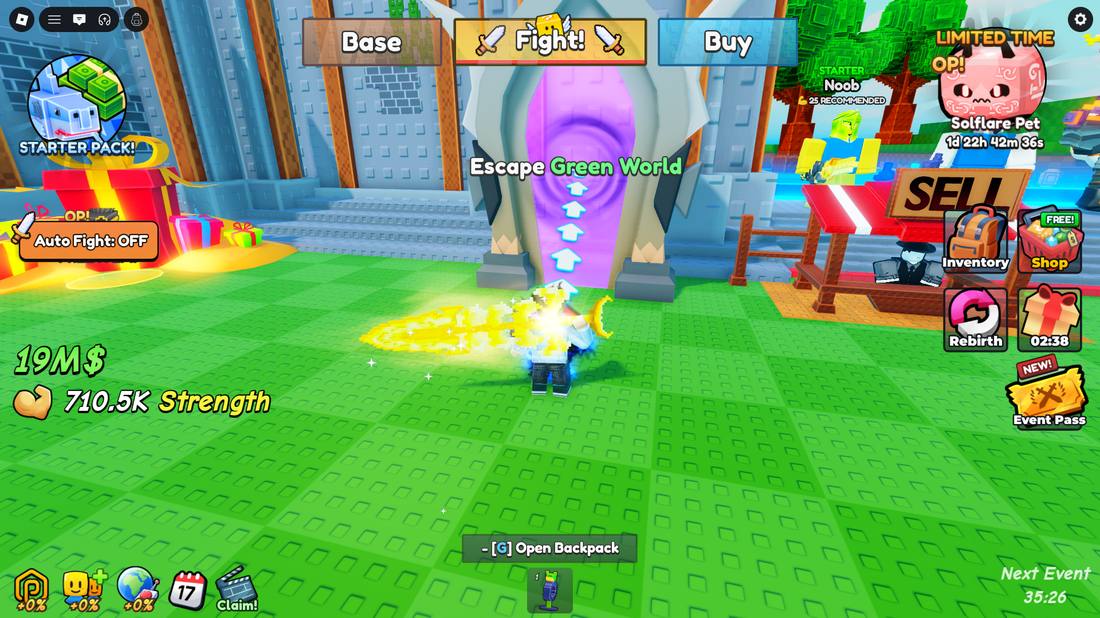
The first reward claim fires a popup, a sound, and a flash of screen feedback — instant confirmation that an action produced a result. The player is handed a sword right away (no empty-handed phase), auto-attacks a dummy to learn the loop without being lectured, then is funneled straight into a dungeon to win an easy fight and earn a first Lucky Block.
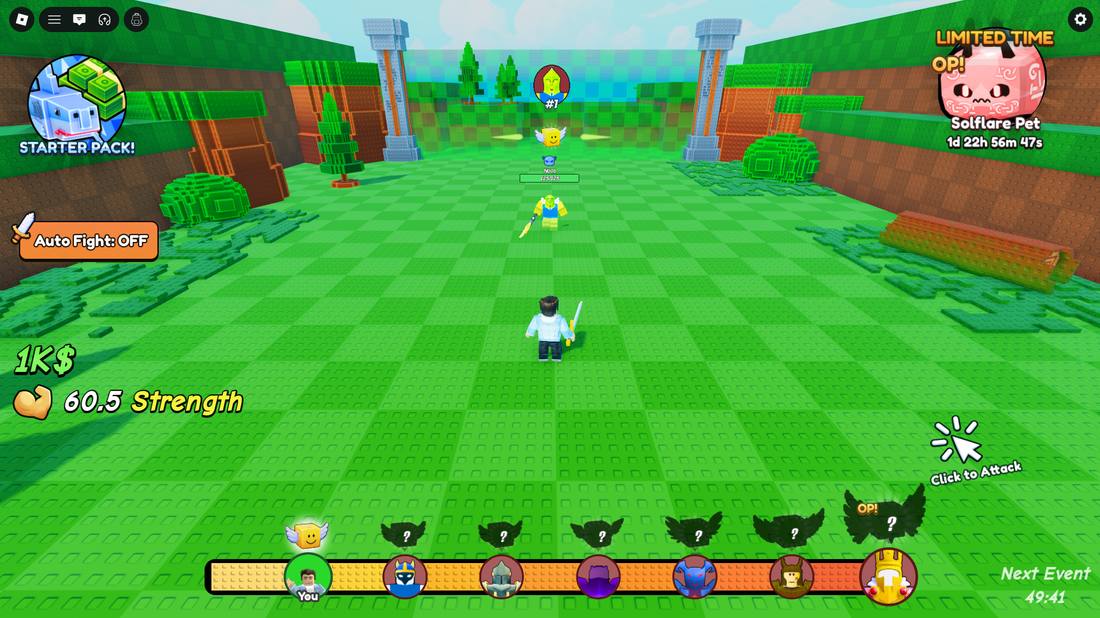
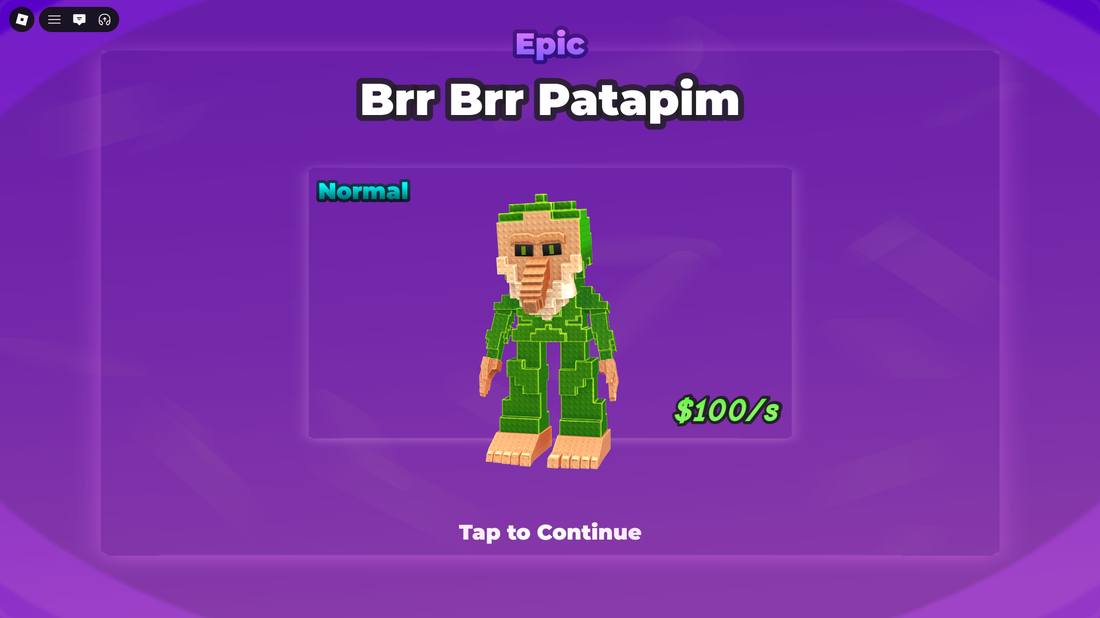
The first reveal is the early peak: a click-mash opening sequence with its own animation and sound. Immediately after, a stronger enemy the player can retreat from teaches risk/reward and gives the world stakes.
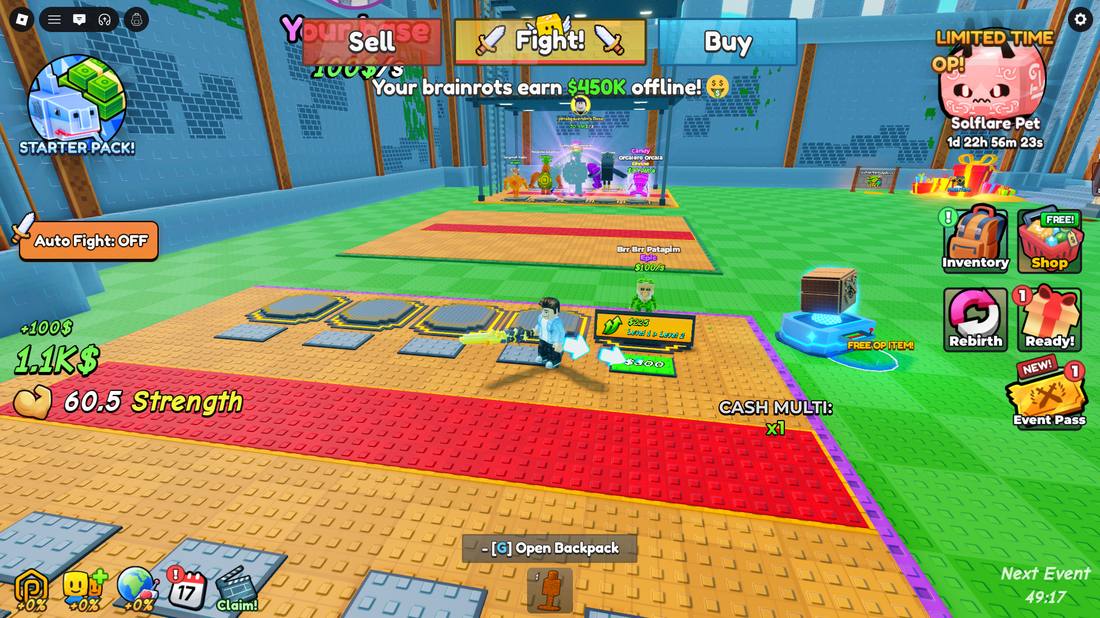
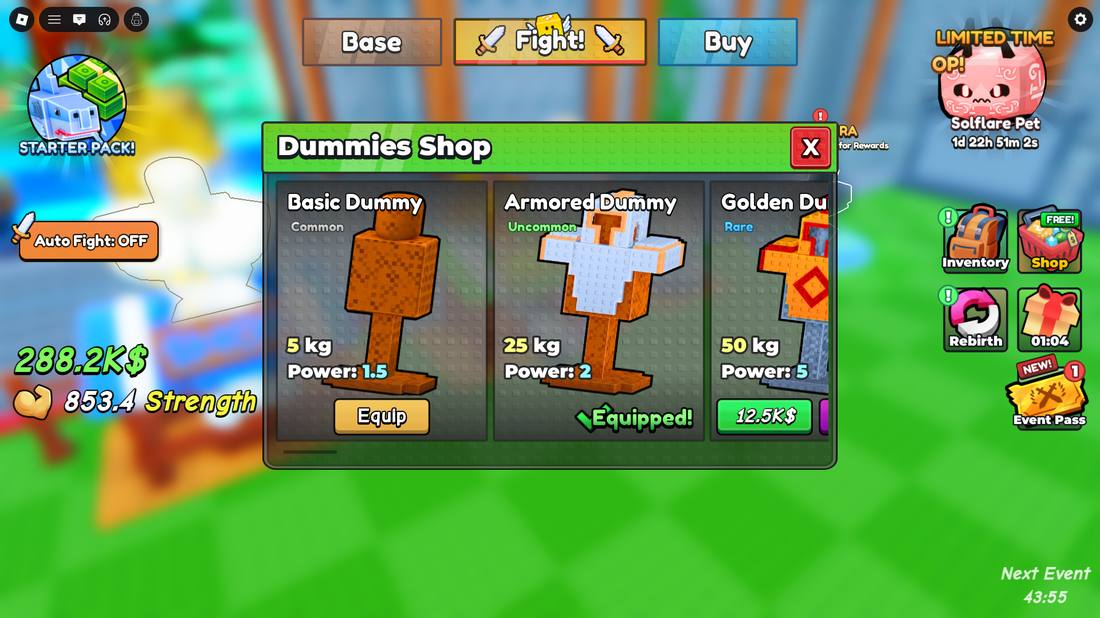
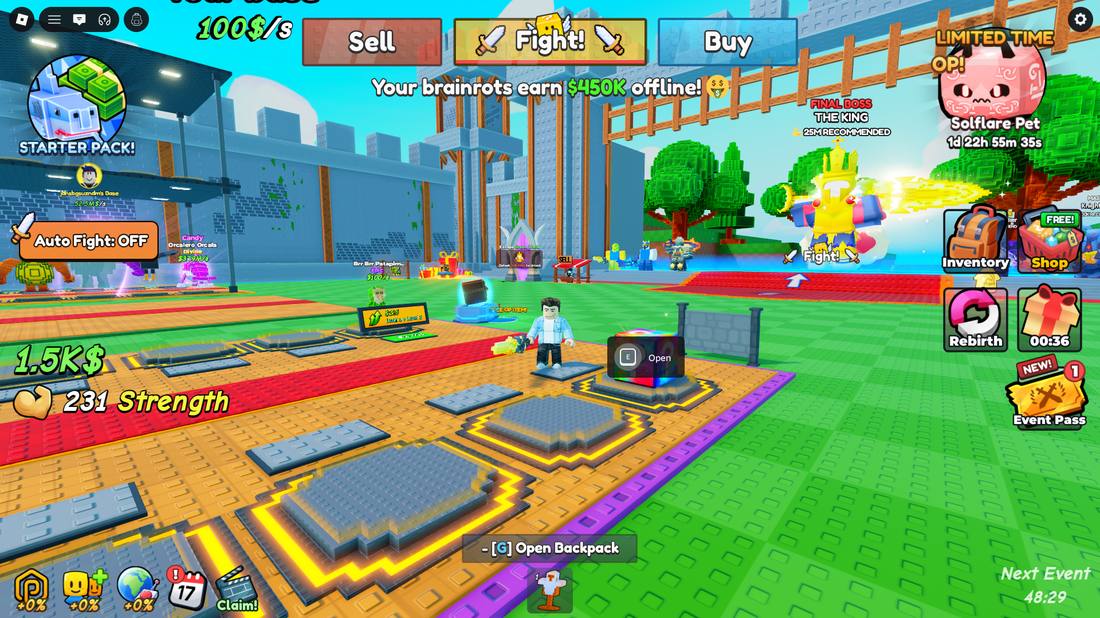
The player places a brainrot on their plot for passive money and buys a better dummy — and the purchase popup reuses the exact frame as the Lucky Block reveal. New movement tech (sword-out run, double jump, landing effects) makes traversal itself feel good, so downtime between fights isn't dead.
A 25-minute playtime reward, a gold-sky event, a battle pass that fills from kills, the dummy as an idle multiplier, plus glimpses of pets and a free-item ladder. The player is now self-directing at their own pace.
Rebirth changes the player's animation — a bragging-rights transformation, not just a number. Income jumps past 500K; the leaderboard shows only strength and cash, keeping the chase clean.
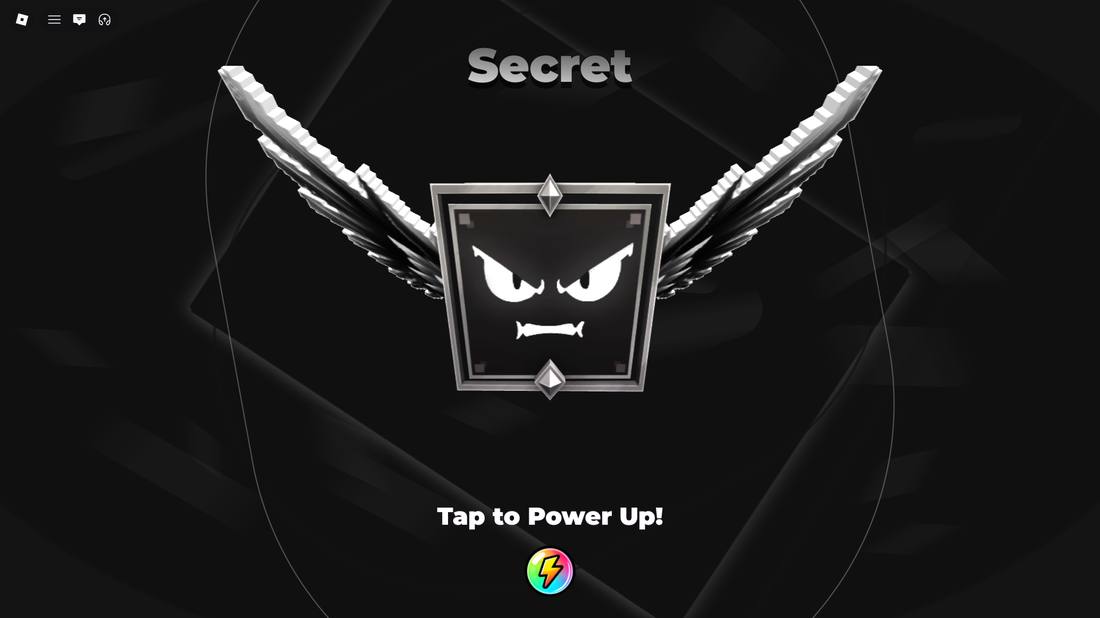
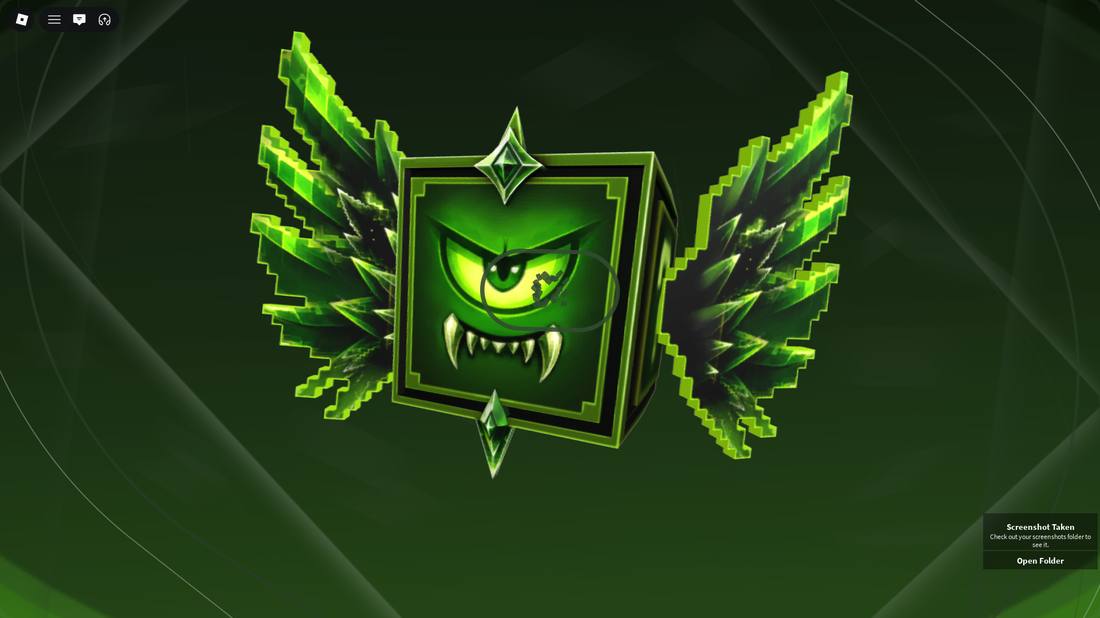
Mythic and Legendary drops break the Epic ceiling. Five enemies fall in single hits — the game cashing the check it wrote at onboarding. A Mythic Lucky Block upgrades to Secret, yielding a Hacker-rarity brainrot, and the player crosses into millions.
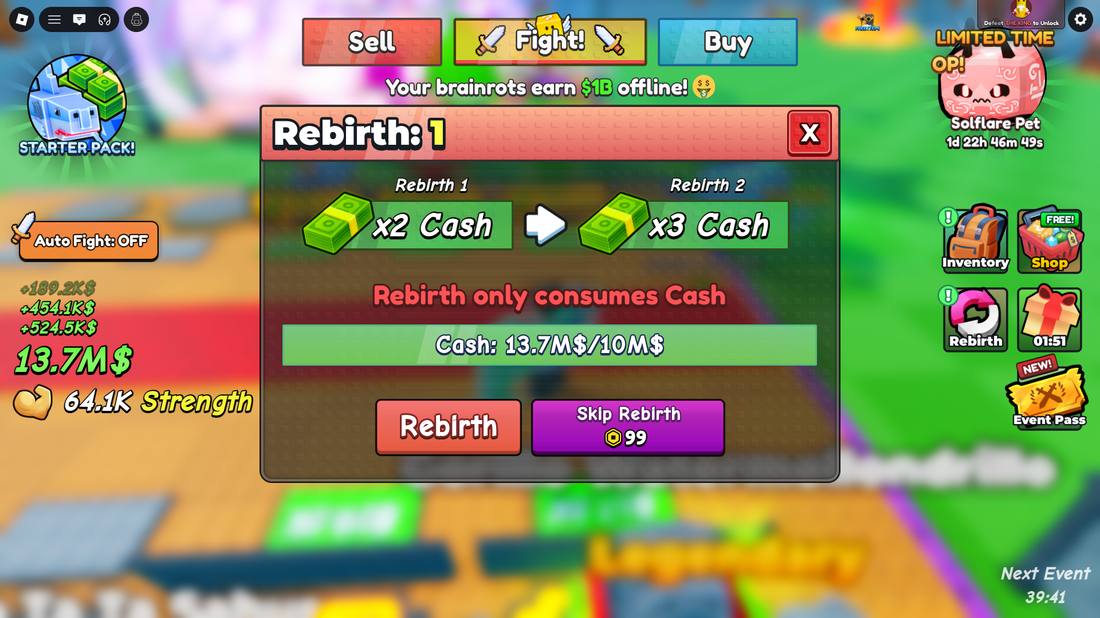
The second rebirth lands seconds after the first milestone. Learning that rebirth resets cash reframes the billionaire-strength players nearby from intimidating to aspirational — proof the ceiling is real and reachable. Quick-travel buttons remove run-back tedium.
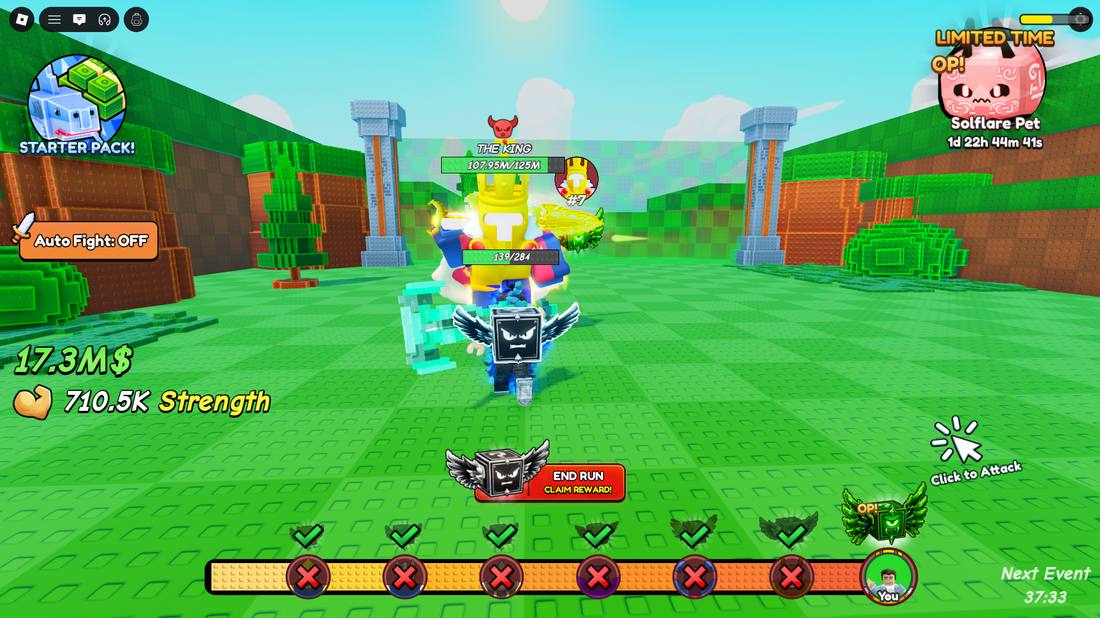
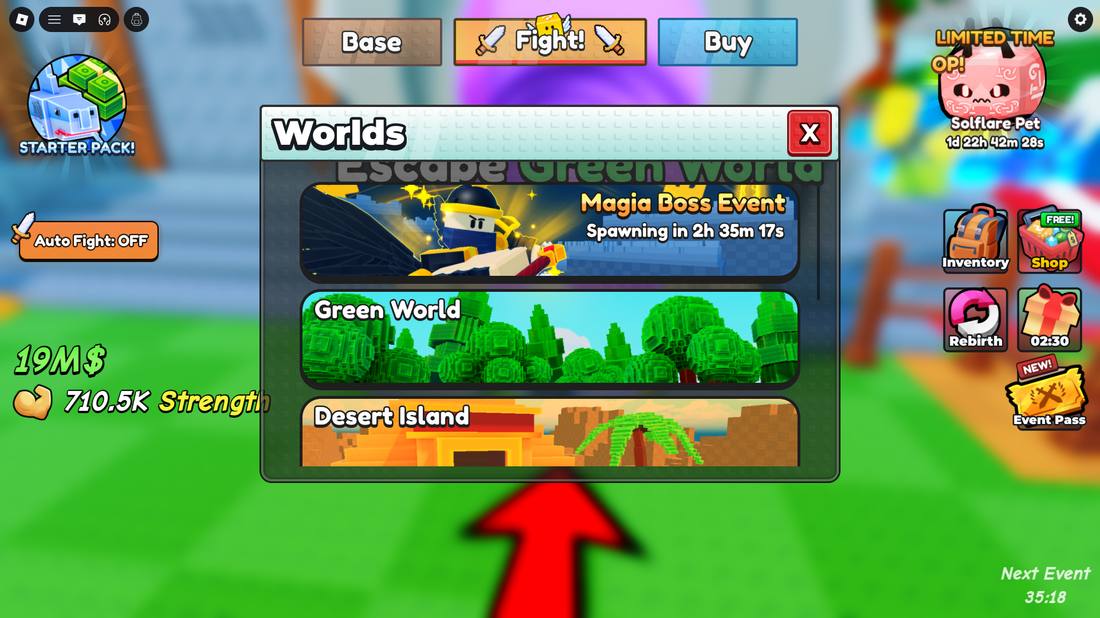
Beating the final King unlocks a new biome. Worlds carry progress forward, add a base-upgrade ceiling, and introduce gems → pet eggs as a long-term goal. This is the beat that re-motivates a player who felt world one was conquered.
Late game juggles a bait-and-reveal support box, a limited-time pet FOMO offer, and ever-bigger dummies. The honest soft spot: world one over-rewards, then world two leans on Robux — the point where early generosity meets monetization. The arc still closes on a high: a gated enemy beaten, another Divine brainrot pulled.
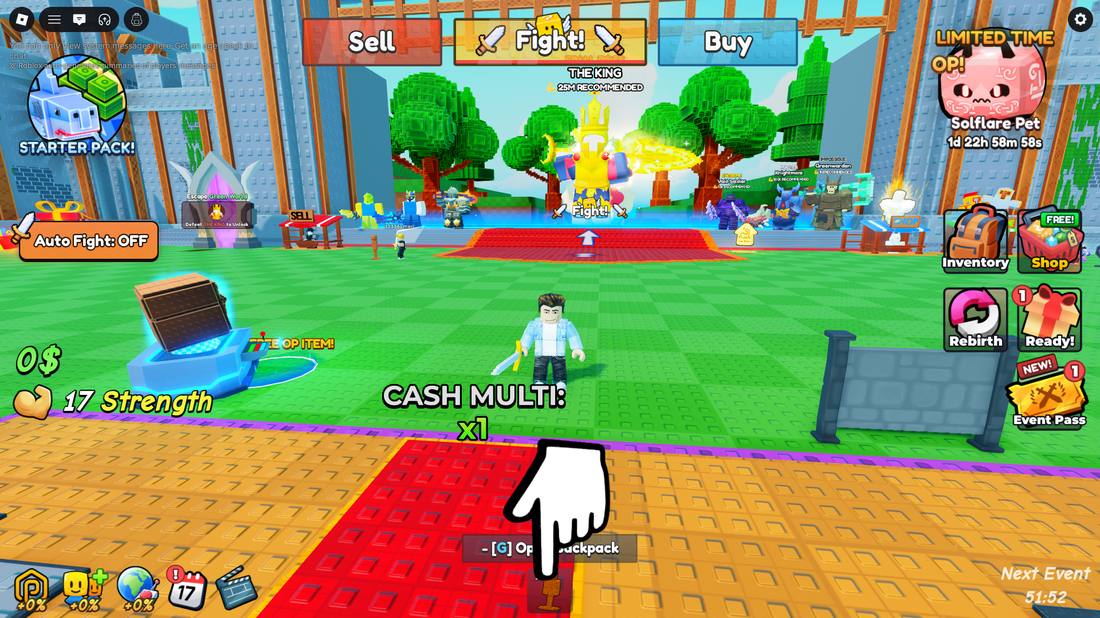
The opening minutes are engineered for frictionless competence — the player feels capable before they've done anything to deserve it.
Three moves happen almost at once: a reward claim with full aud-visual feedback, an equipped weapon, and an auto-attacked dummy that teaches the loop by doing rather than telling. Then the player is funneled into a dungeon to win an easy fight.


One animation — tap repeatedly to "power up," with escalating visuals and sound — is the single most repeatable dopamine source in the game. It combines a variable reward, physical input, and a rising payoff.
The opening sequence rewards mashing — input pressure layered on top of the random drop.
The payoff frame is then reused everywhere — purchases, time rewards, box opens all share its shape. That consistency means every reward in the game feels like the good one.
Crucially, the player works out for themselves that Lucky Blocks open by being placed in brainrot slots. The self-discovered "aha" is more satisfying than a tooltip would be.


Once the core loop is learned, the game stacks systems that each add a reward horizon — and a reason to stay logged in.
The plot turns drops into passive income, and the dummy converts active clicking into a flat multiplier — the classic incremental "graduation" moment where the game starts playing a little of itself.


Rebirth is the most important mechanic in the game, and it's taught early. It resets cash but multiplies earnings — and, critically, changes how the player looks.
Because rebirth resets cash, the billionaire-strength players around the map suddenly make sense — and flip from intimidating to aspirational. The ceiling is visibly real and reachable.
The animation change on rebirth is the quiet masterstroke: prestige you can read at a glance, on your own avatar, without opening a menu.
All the grinding suddenly renders earlier content trivial — and that contrast is the reward.
By mid-game the player one-shots enemies in streaks, pulls Mythic and Legendary brainrots, and watches weaker content fall apart in front of them. Ranged one-shotting becomes a skill expression — hard against bigger enemies, so it never feels free.
Just as world one risks feeling conquered, the game opens a door to a second biome — and reveals a whole new ceiling.


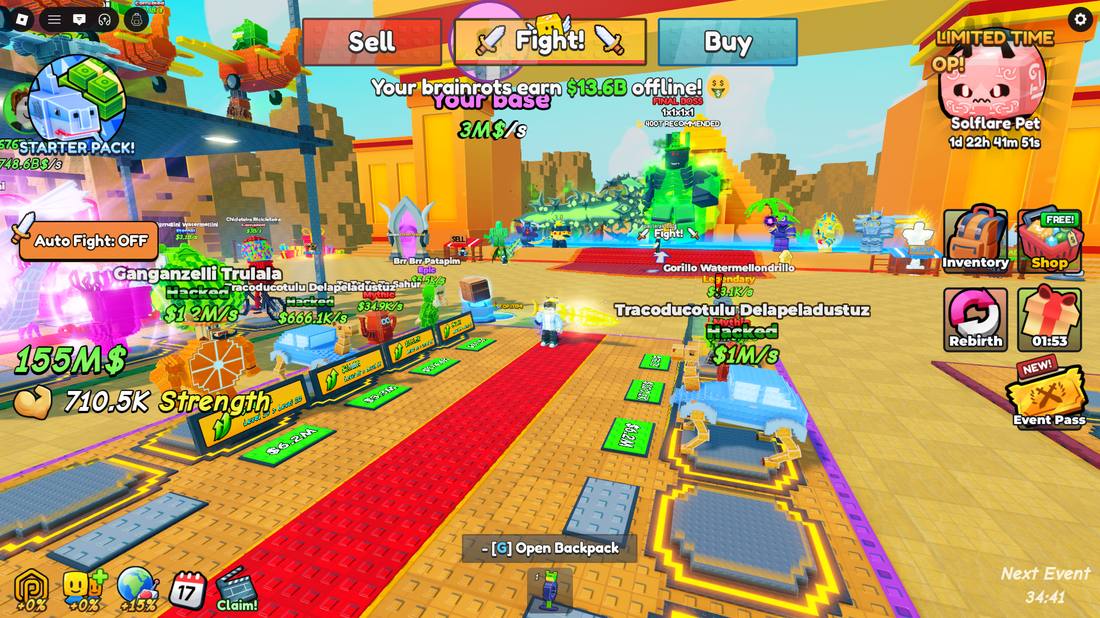
New worlds add a base-upgrade ceiling, an escalating price curve, and gems → pet eggs (one egg per world) as a long-horizon goal. The desert world is also where the player meets the hyper-players: bases earning trillions, parked right next to their own.
The structural reason the game stays compelling: it runs instant, short, and long reward horizons simultaneously, so whatever your session length, something is always about to pay out.
| Horizon | Examples | What it delivers | Cadence |
|---|---|---|---|
| Instant | One-shot kills, Lucky Block reveals, claim popups | The moment-to-moment hit; the feeling of winning right now | seconds |
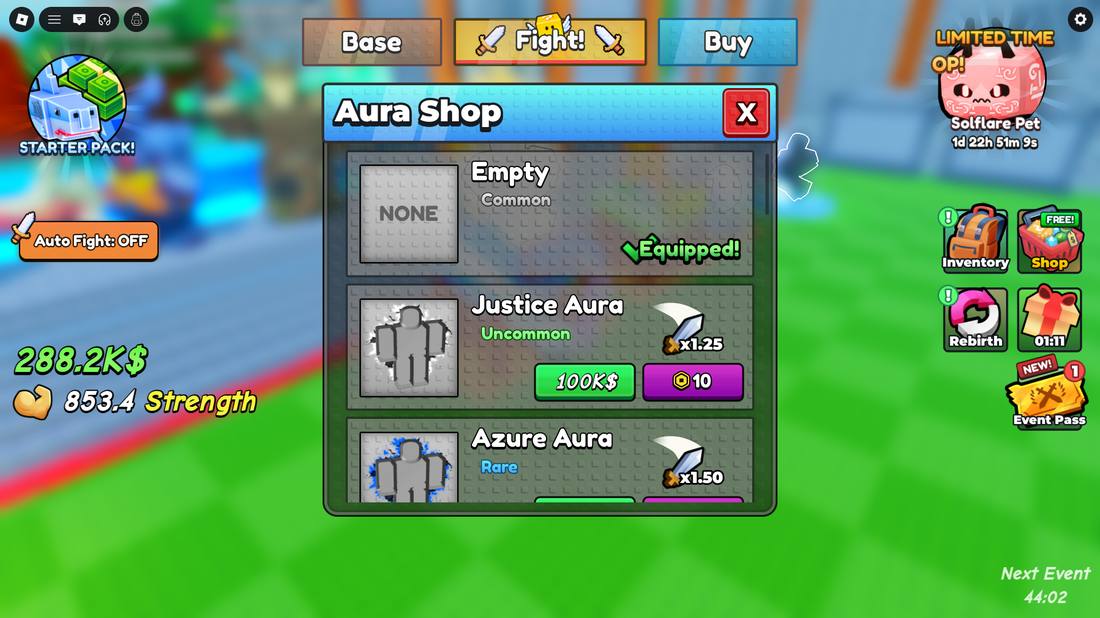
| Short | Dummy upgrades, rebirth milestones, aura tiers | The sense of steady progress; "one more milestone" | minutes |
| Long | Battle pass, pets & eggs, new worlds, base ceilings | The reason to come back tomorrow; the distant dream | sessions |
An honest teardown names where the otherwise-tight reward loop stumbles. Both are fixable.
The event fires a dramatic white-screen transition and turns the sky gold — but the actual rewards are unclear. The spectacle outruns the communication, so the player feels something special happened without knowing what to chase.
World one over-rewards — huge cash, top rarities. Then world two introduces a fall-off that leans on Robux purchases. The generous early curve meets the paywall abruptly, and the contrast is where the spell is most likely to break.
Strip away the brainrot skin and three structural decisions are doing the work.
Power and rarity arrive fast, so the player is hooked on winning before the grind tightens. Later effort reads as earning more, not being slowed.
The click-mash payoff frame appears on drops, purchases, time rewards and boxes. Every reward shares the good one's shape, so the whole game feels rewarding and coherent.
Instant, short, and long horizons run at once. There's always a next dot — whatever the session length, something is about to pay out.