The Pitch
Pick a vehicle, gas it up, and drive across a hostile desert toward an escape point. The map is a route, not an arena — the whole game is the trip.
Mad Road is a textbook "journey" game in the Roblox tradition: a long, linear traverse where the destination sits at a fixed distance and the fun is everything that goes wrong on the way there. The store framing is explicit — customize & drive, scavenge resources, find safe havens. A persistent distance counter (metres remaining) and an objective marker keep that goal in view the entire run.
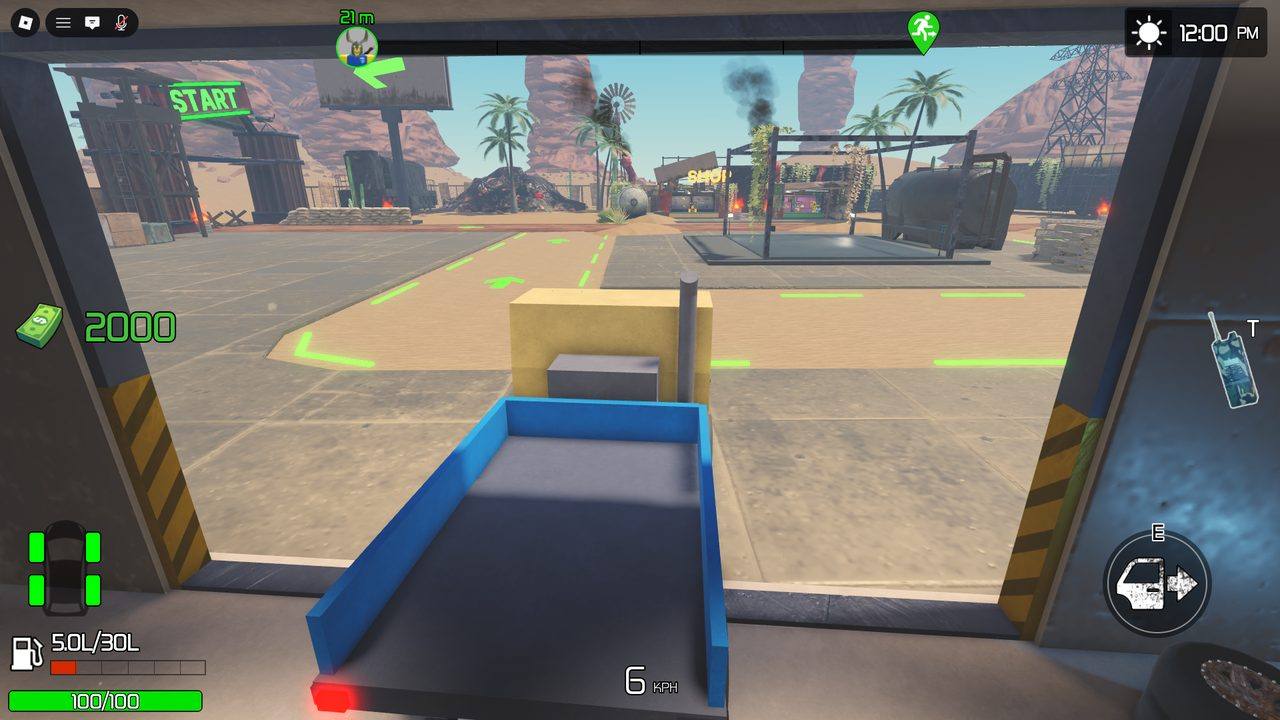
Where Mad Road earns its keep is the vehicles: solid arcade driving, a tactile damage model, and meaningful customization that you experience during the journey rather than only in a menu. The trip is the content, and the truck is the toy.
Lobby, Garage & Shop
A hub world with teleporters into runs, a car garage with purchasable vehicles, and a weapon shop — the staging area before each journey.
The lobby is the familiar Roblox teleporter pattern: walk onto a pad to launch a run. Around it sit the two storefronts that define your loadout — a Garage selling vehicles (from a cyber-truck to a neon convertible) and a Shop selling weapons.
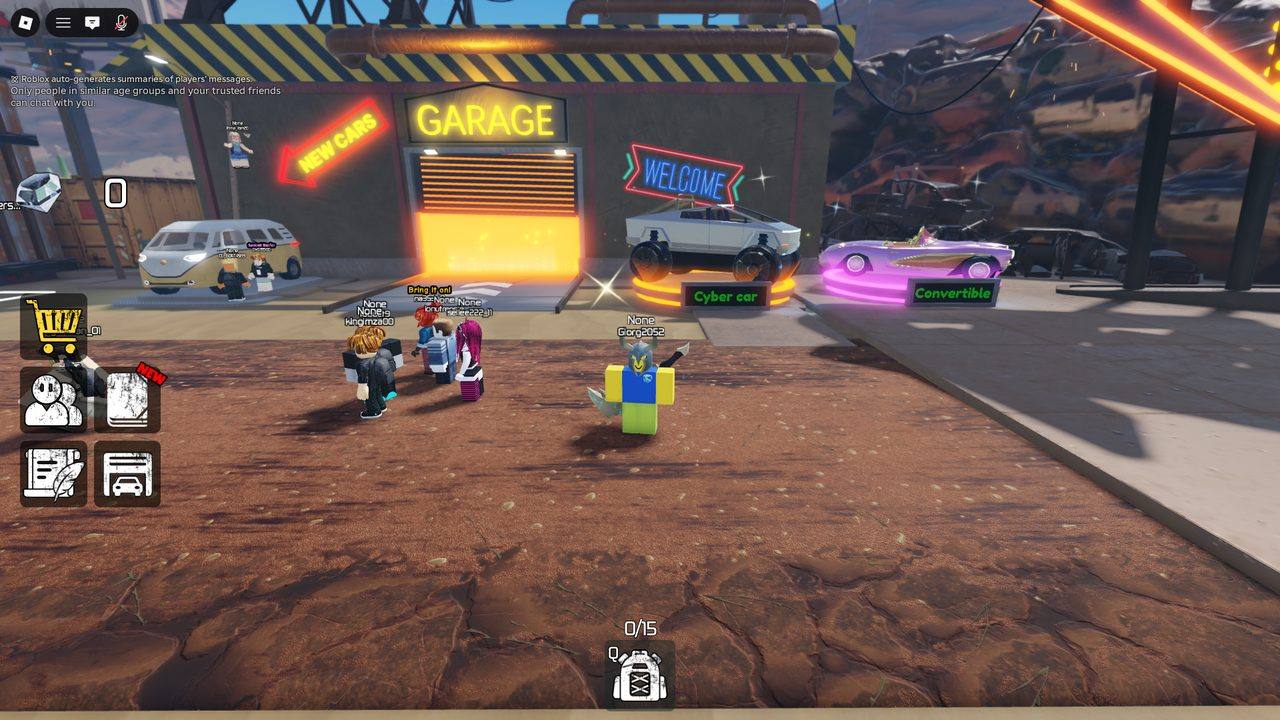
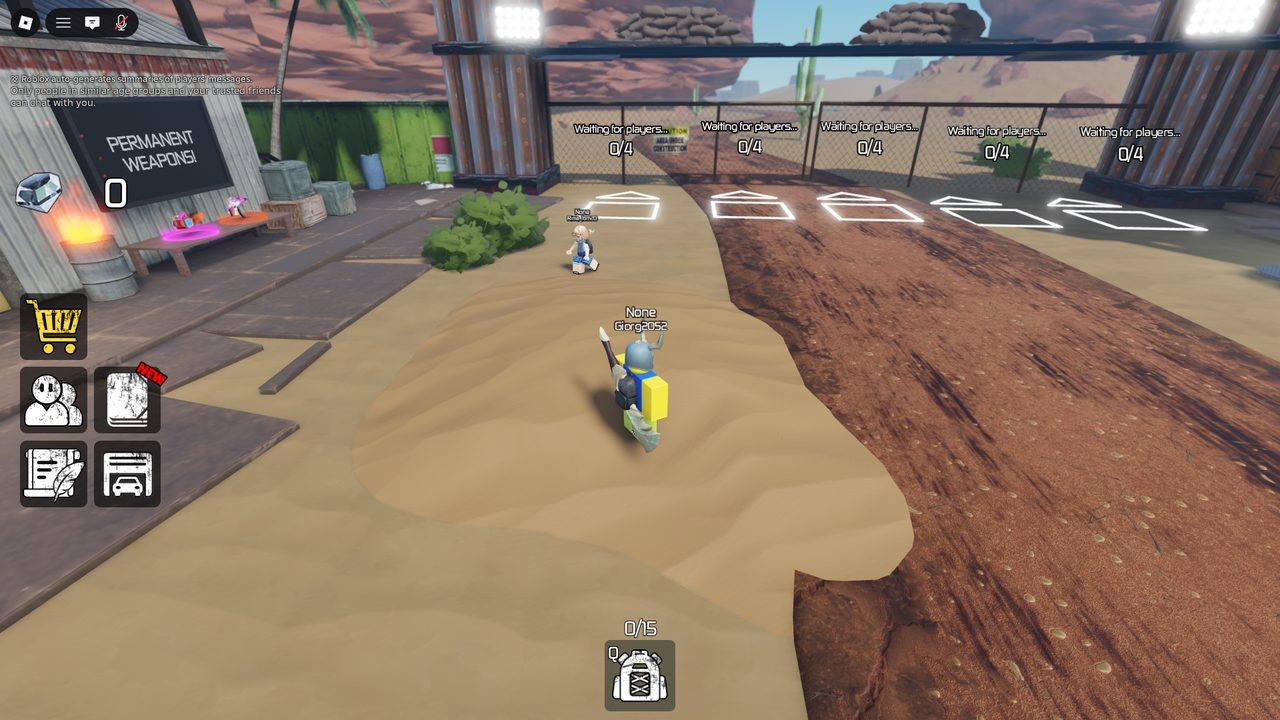
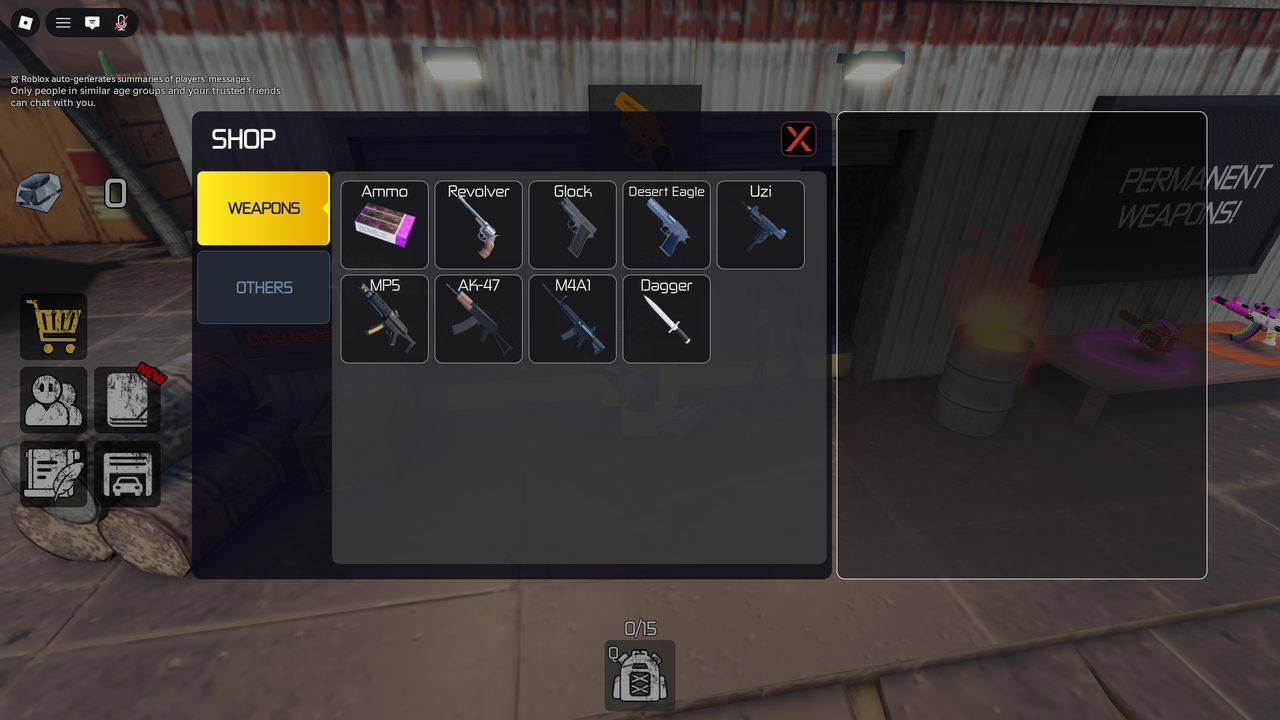
The run uses cash ($) for in-journey scavenging and survival; the meta-layer uses Diamonds for permanent purchases (vehicles, permanent weapons). Standard free-to-play split: spend cash to survive a trip, spend Diamonds to start better-equipped next time.
Pre-Trip: Fuel & Fit-Out
Every journey starts in a garage bay: top off the tank, bolt on parts, then take the driver's seat. Fuel is the master clock of the whole run.
Spawning into a run drops you beside your truck in a service bay with a big green guidance arrow. The first prompts are clear: fill up with gasoline from a jerry can, and fit upgrades to the rig before you roll.
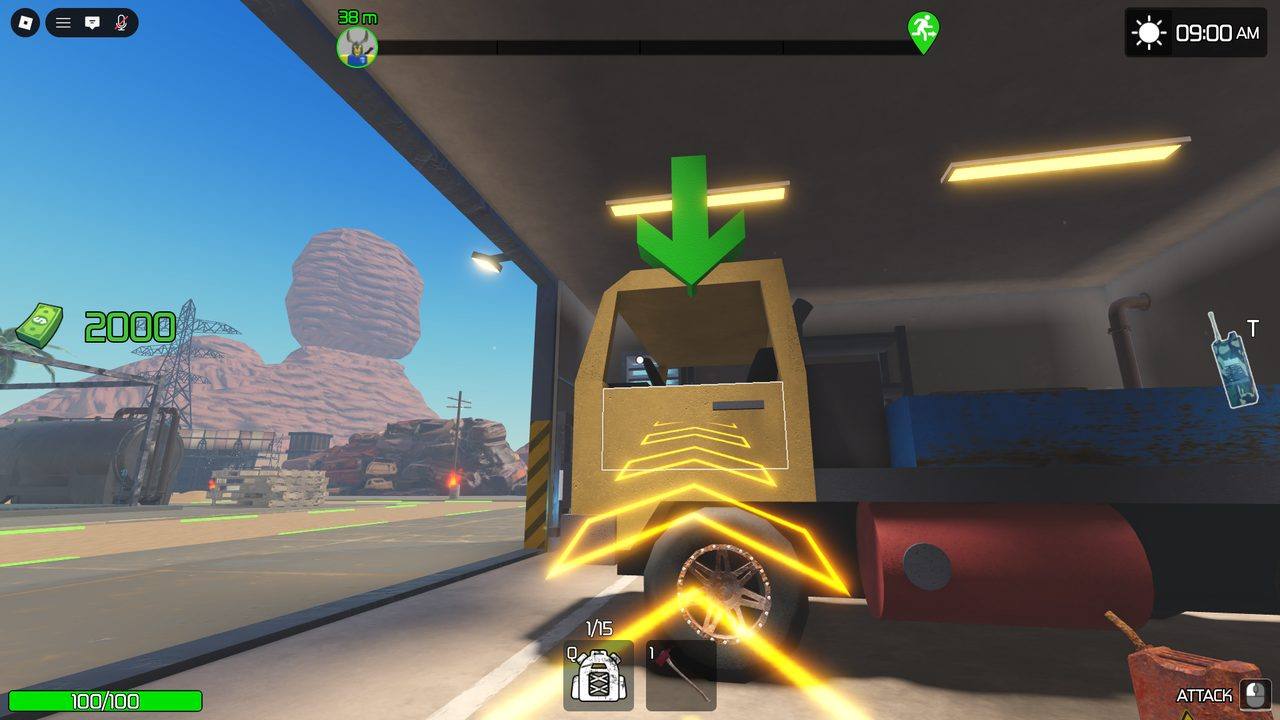 A bold green arrow points to the driver door. The onboarding is almost wordless — arrows and chevrons lead you through fuel → fit-out → drive.">
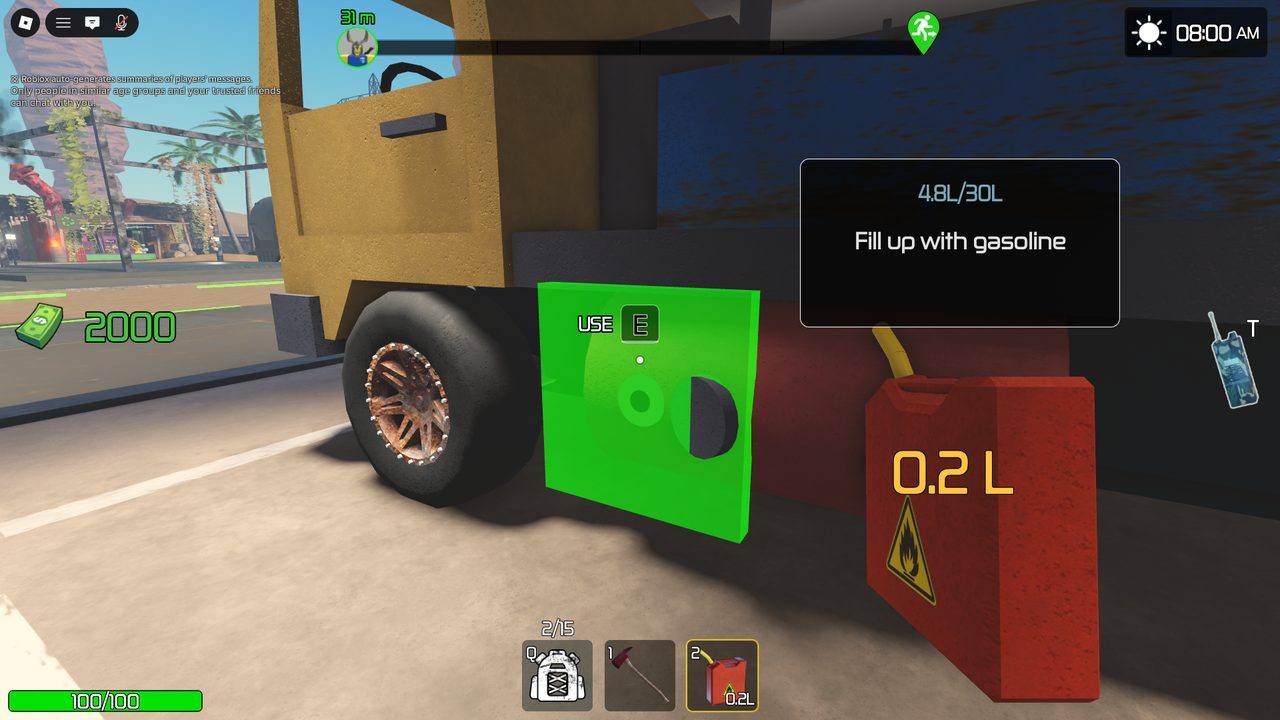 A green USE [E] pad and a jerry can refilling the tank (4.8L / 30L). Fuel is finite and drains as you drive, so refuelling is the constant background pressure of every journey.">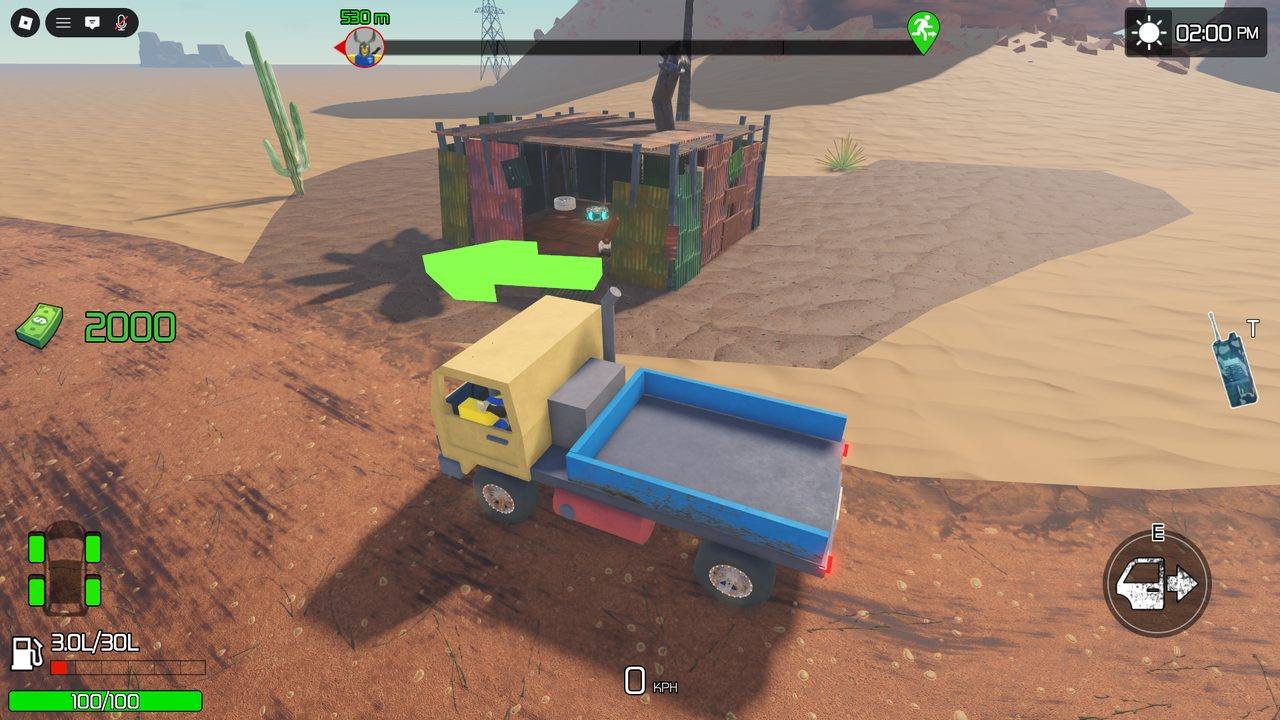
Driving & Vehicles
The standout. Simple automatic arcade handling, a satisfying physics body, live KPH and fuel readouts, and customization you feel on the road.
Handling is simple automatic drive — no gear management, easy to pick up on any device — but the vehicle itself has real physics weight: it leans, drifts on sand, bottoms out on dunes, and tips if you take a slope badly. The cockpit HUD (speed, fuel, a per-corner damage diagram) makes the truck feel like a system you're nursing across the map.
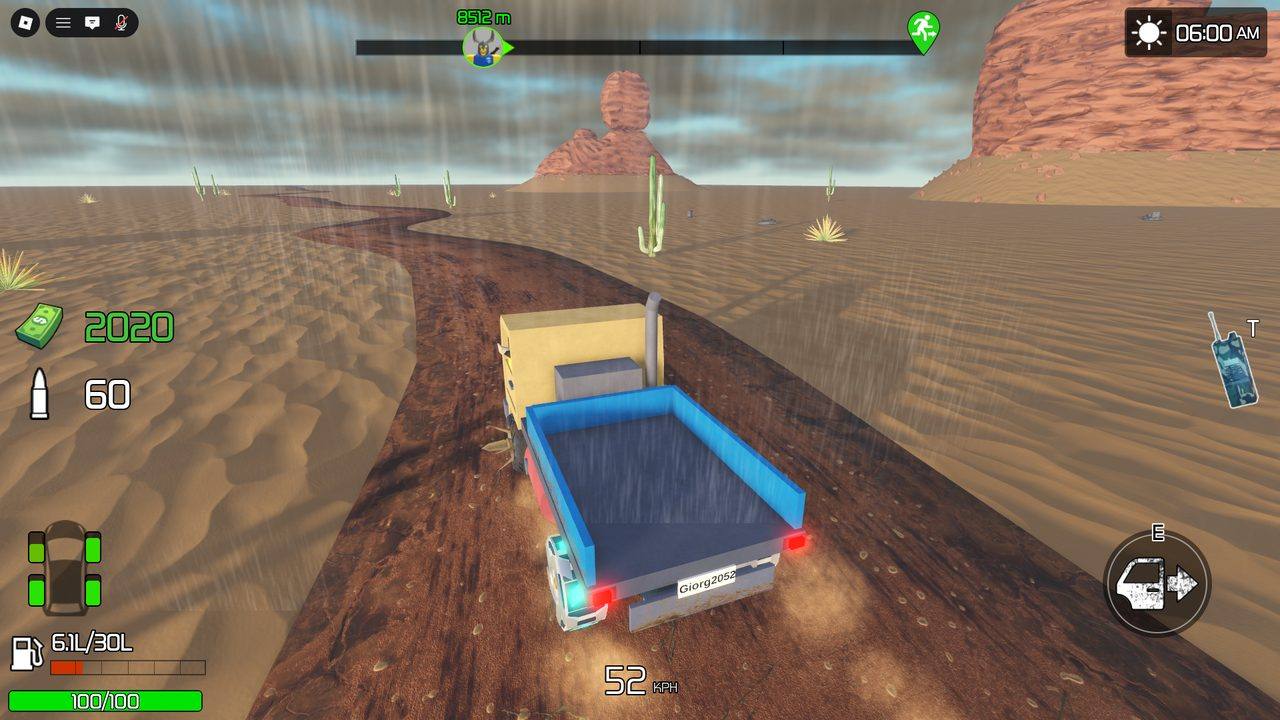
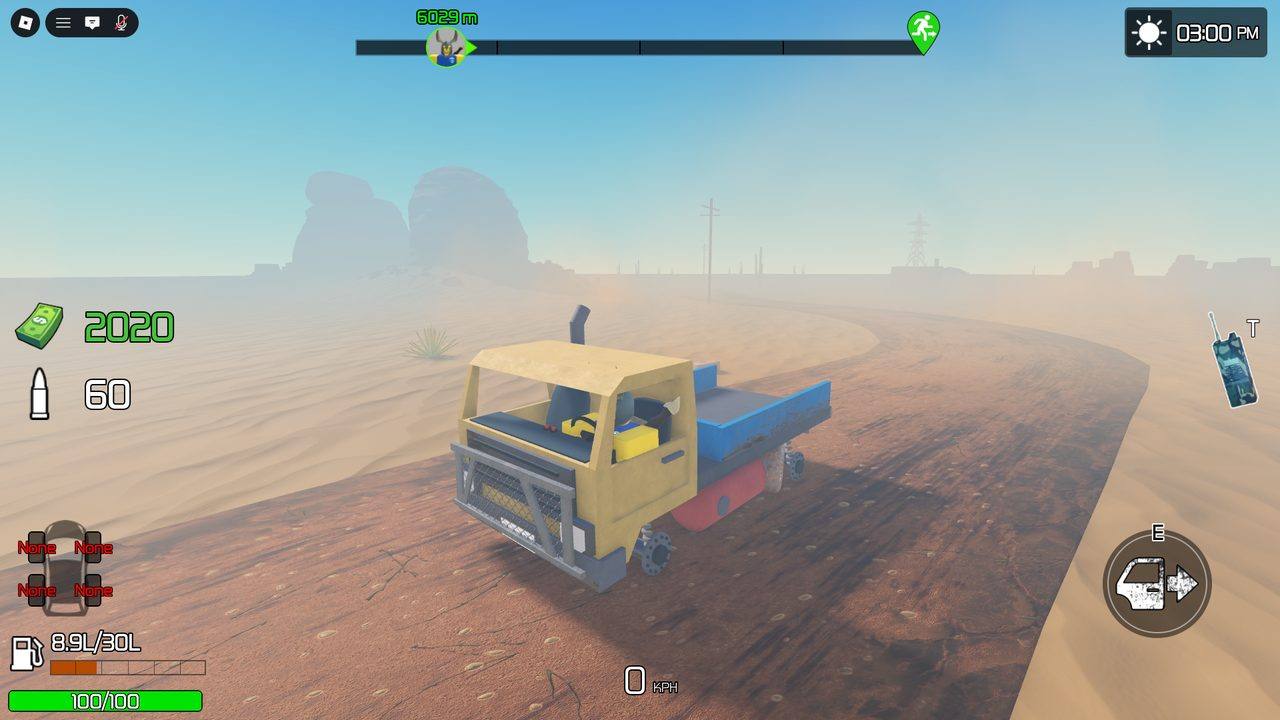
Customization shows on the vehicle in-world: distinctive rims, glowing wheels, a welded cargo setup, cab guards. You noted the rig accepts bolts, belts and suspension parts, plus different tire types found in the world — some spiked, which make ramming enemies hit harder.
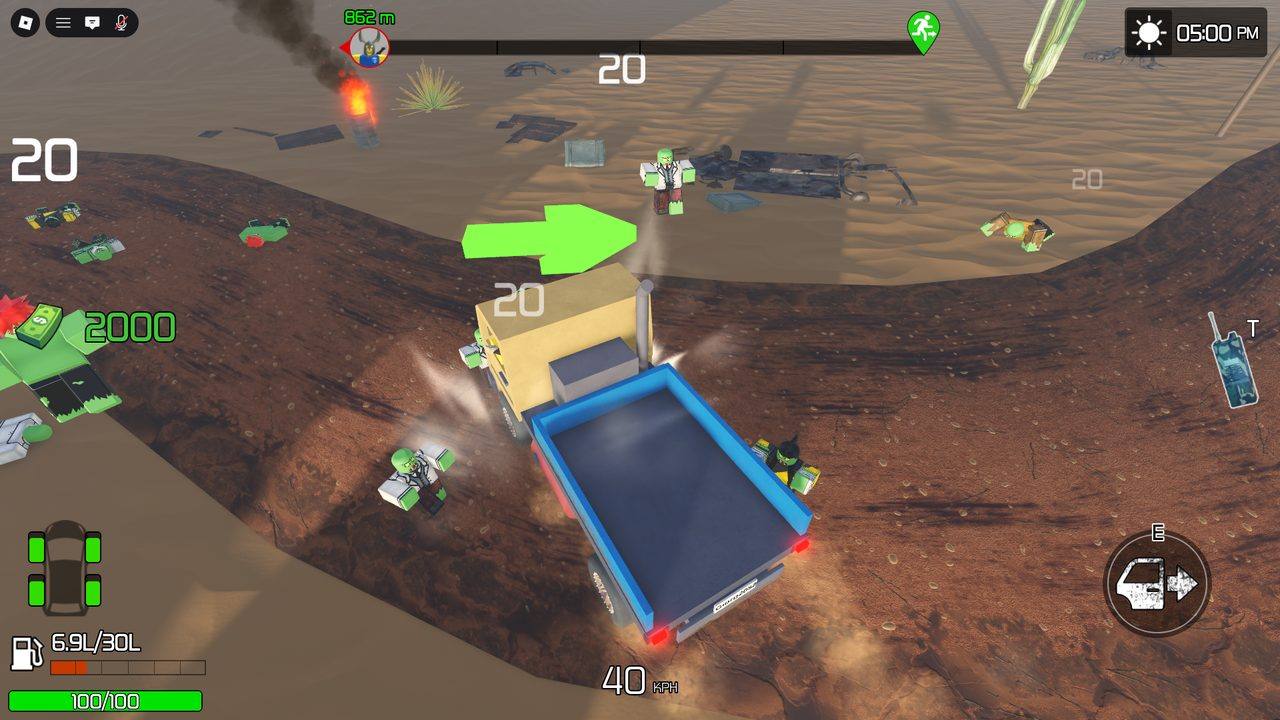
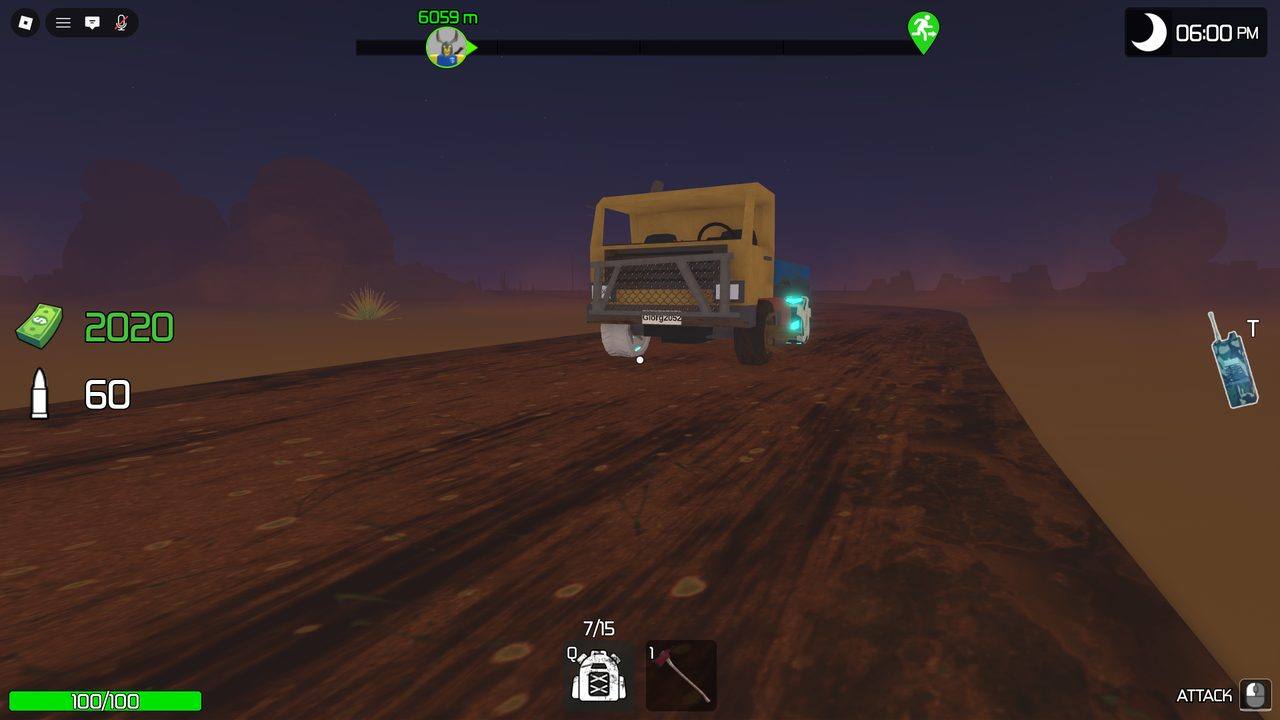
The gunplay is the weak link. Gun handling is genuinely not good — flat feedback, basic effects, and weapons are scarce enough early that you spend much of a run meleeing with an axe or simply ramming. This is a driving game with combat bolted on, not a shooter; the vehicles carry it.
Threats: Raiders, Zombies & the Day/Night Cycle
A live clock cycles day to night, and the danger scales with it — armed raiders prowl after dark, ambushes and mines wait on the road.
A clock in the corner runs a full day/night cycle, and it's not cosmetic: gun-toting raiders appear at night and thin out by day. Daytime threats lean toward zombies and scripted hazards; night is when the human enemies hunt you.
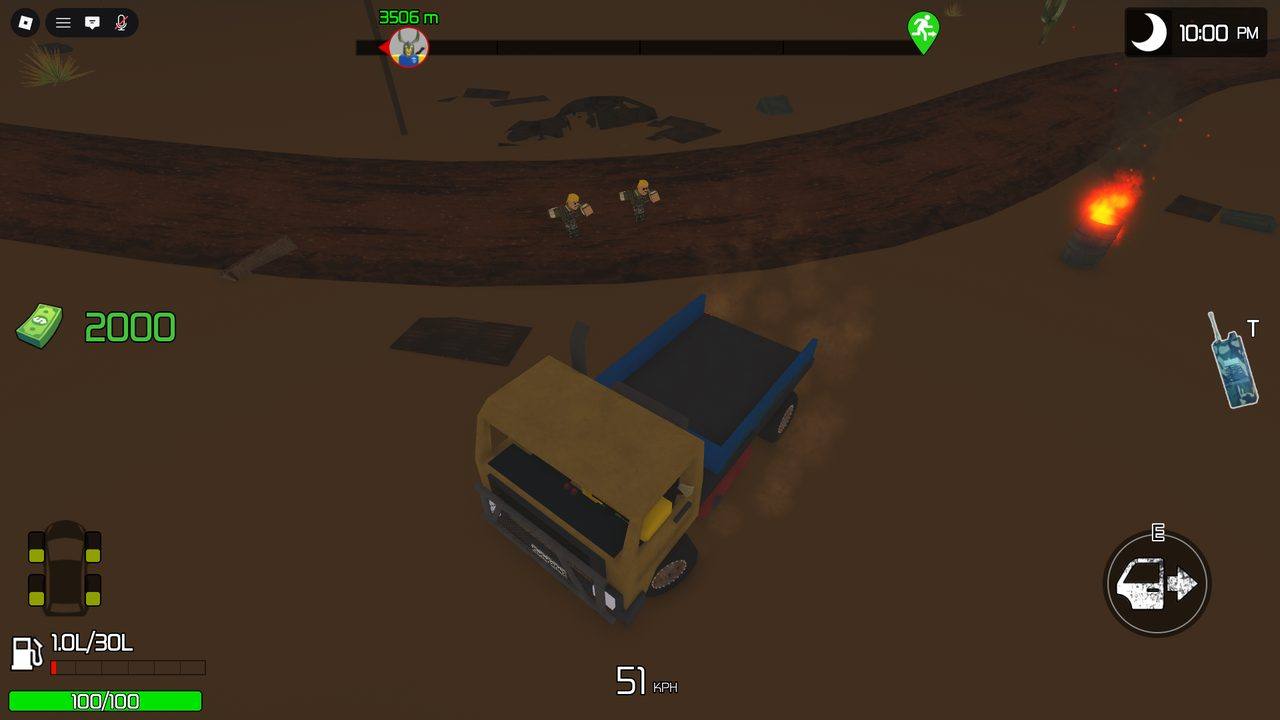
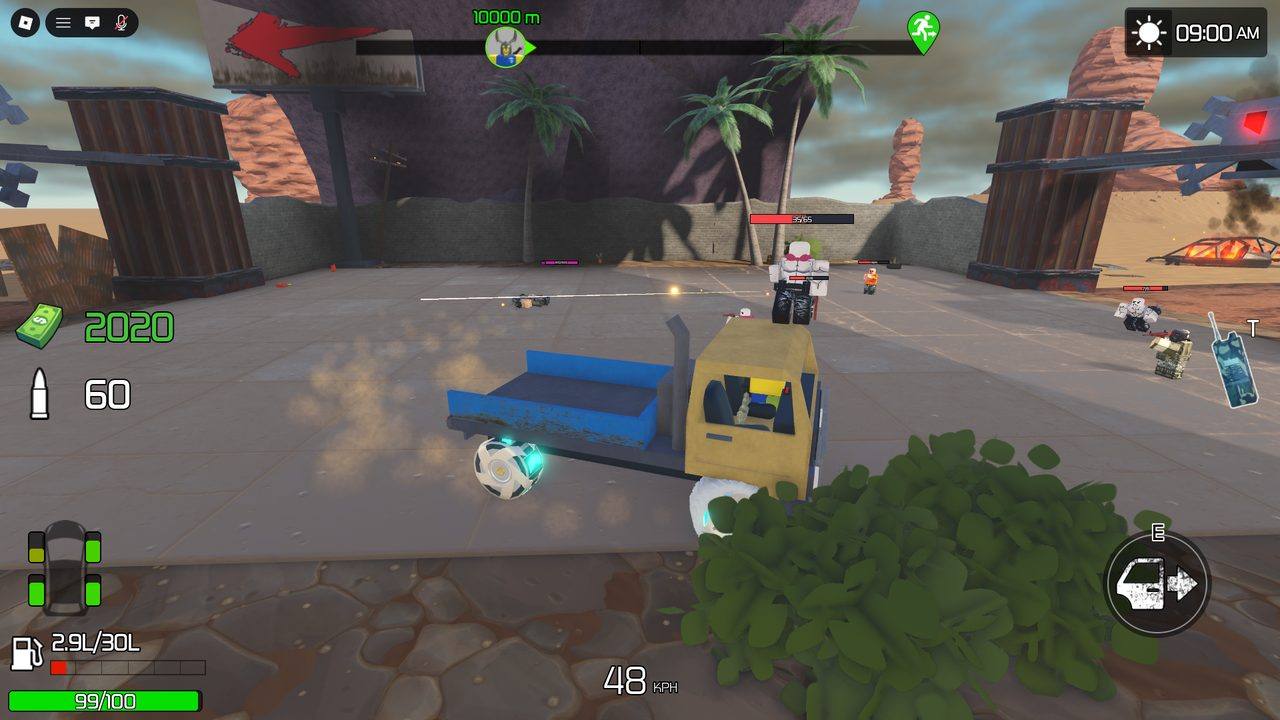
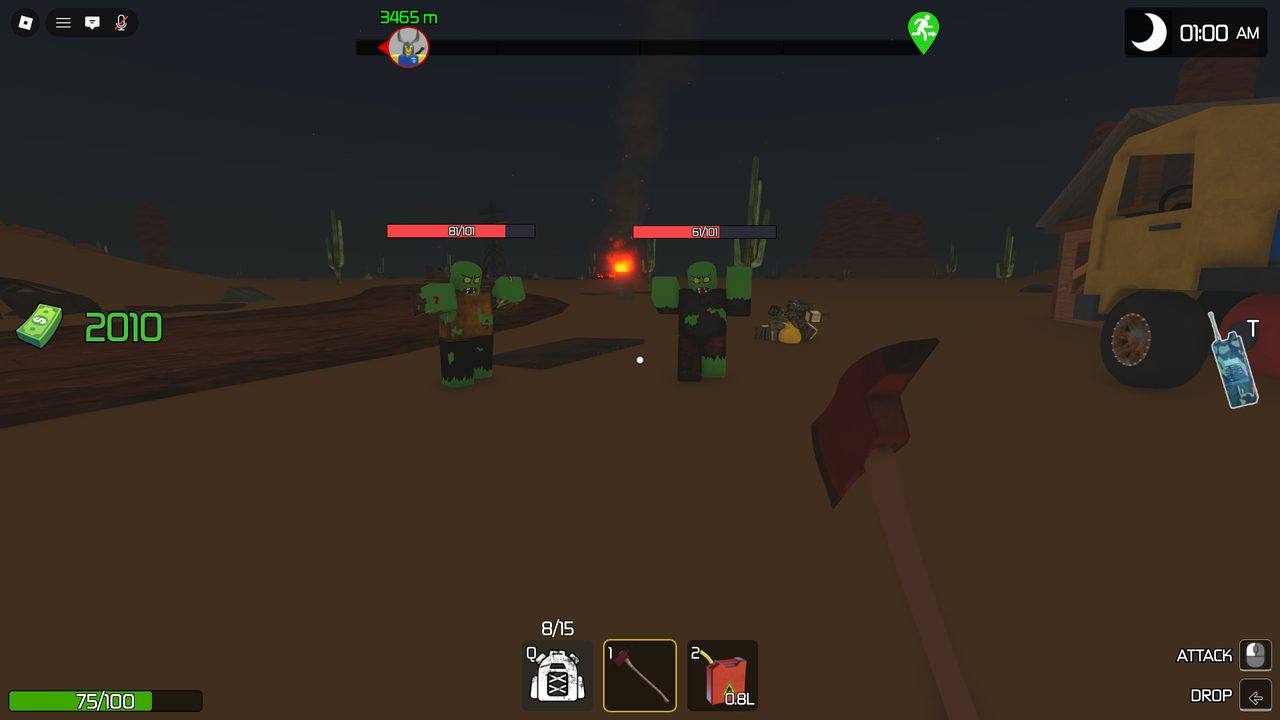
The road itself fights back: mines and ambushes can blow your tires out in an instant, forcing an emergency stop to repair — exactly when enemies are closing in.
Durability & Repair Loop
The truck degrades constantly — tires blow, panels dent, it can flip. Carrying spare parts and stopping to repair is the core survival decision.
Damage is modelled per-component: the HUD shows a car diagram with each door/corner colored by condition, dropping to "None" when a tire is destroyed. Ramming enemies, hitting mines, and rough terrain all chew through durability, so you're forever weighing aggression against wear.
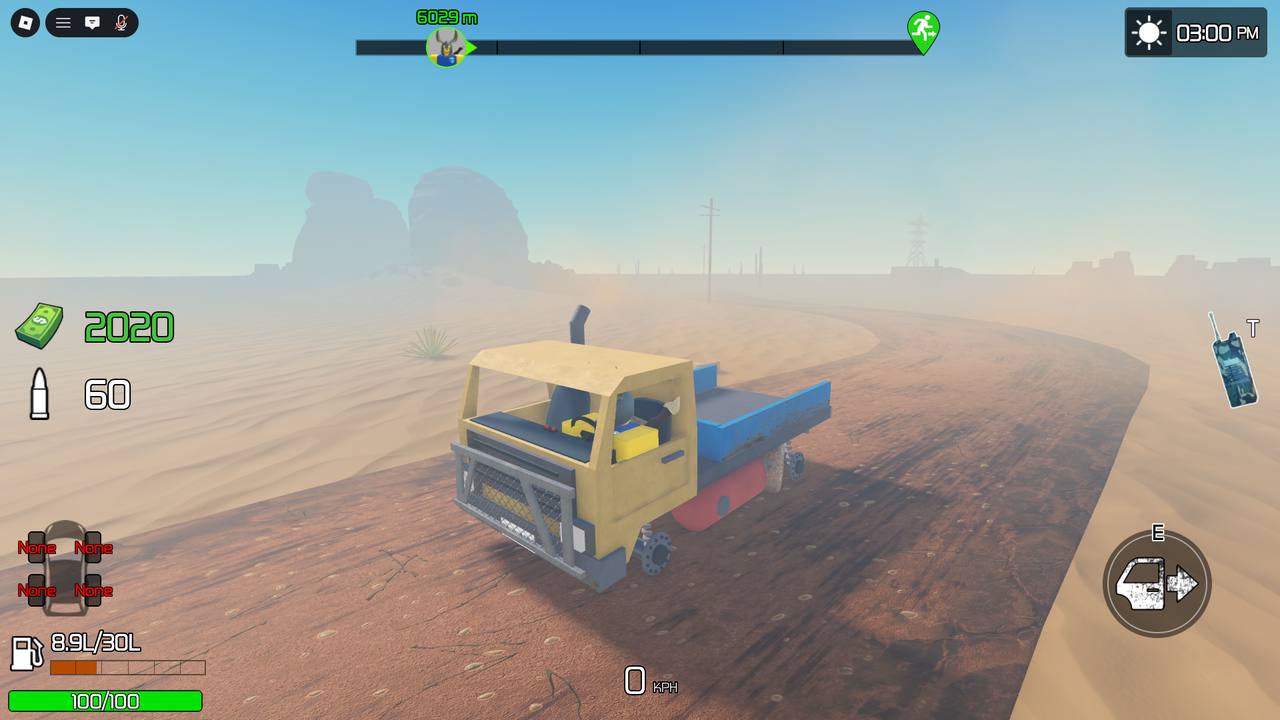 All four tires destroyed (0 KPH, damage panel red) after an ambush. The run halts until you swap in spares — the scavenged tire economy exists for exactly this moment.">
This is what makes the scavenging matter. Tires, fuel and parts aren't collectibles — they're consumables you will need, and a journey can end not from death but from a stranded, tireless, empty-tank truck in the middle of nowhere.
Being a physics-driven game, it has the charm and the jank that comes with it — a loose tire can get wedged in your cab, a flipped truck can be a problem. It reads as part of the wasteland character rather than a dealbreaker.
Scavenging & the Weld System
Stop, loot, and physically weld supplies to your truck so you can carry more than your pockets allow.
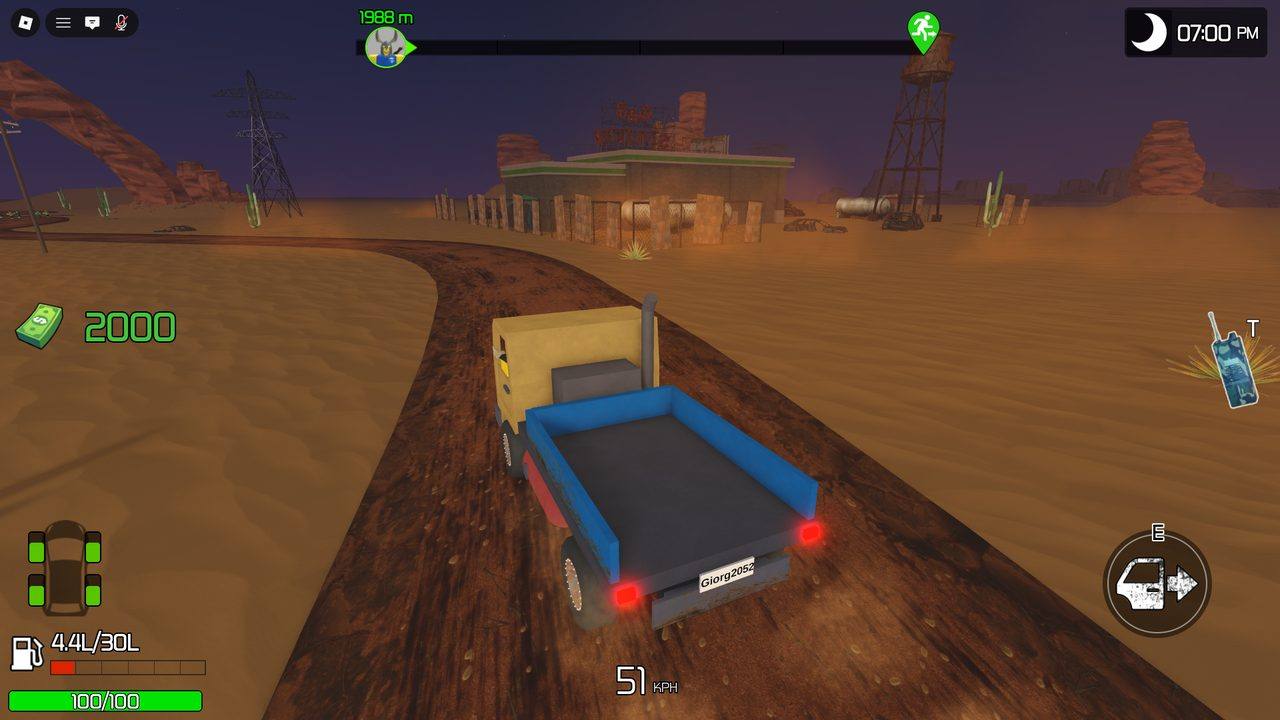
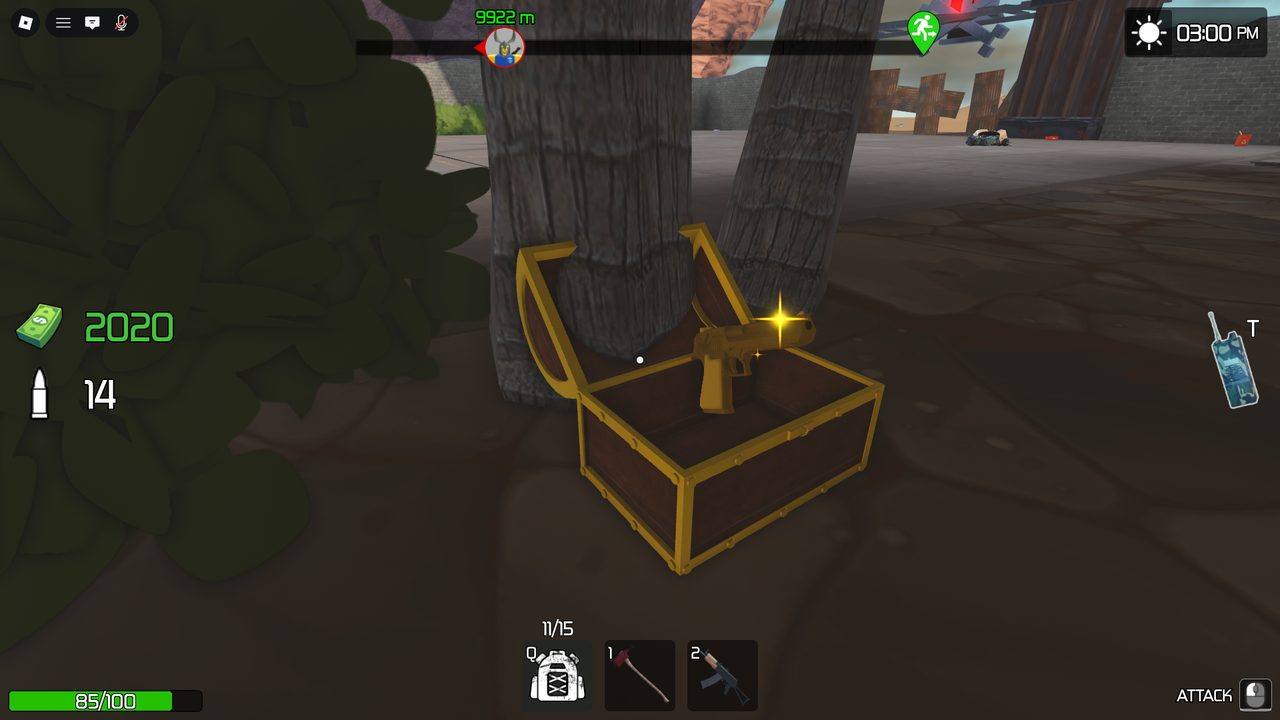
Loot lives in roadside buildings, chests, and enemy stashes: fuel, tires, cash, the occasional weapon. The clever wrinkle is a weld mechanic — you can attach found items directly to the truck, effectively extending your storage by strapping cargo to the bed and frame.
Boss Encounters
Hulking enemies with large health bars gate parts of the route — and your truck is often the best weapon against them.
Beefy boss raiders with oversized health bars (1,500+ HP) show up as set-piece fights. With gunplay weak and ammo thin, the practical answer is frequently to ram them with the vehicle — turning the durability gamble into the boss strategy.
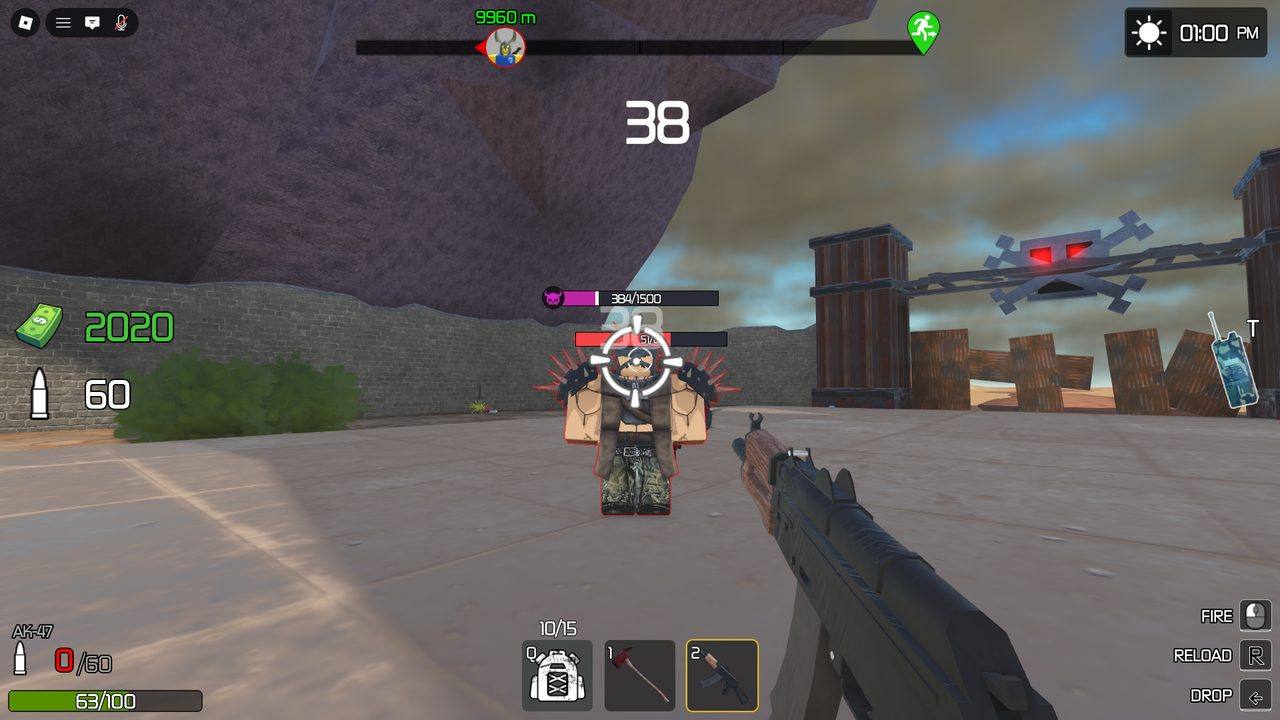
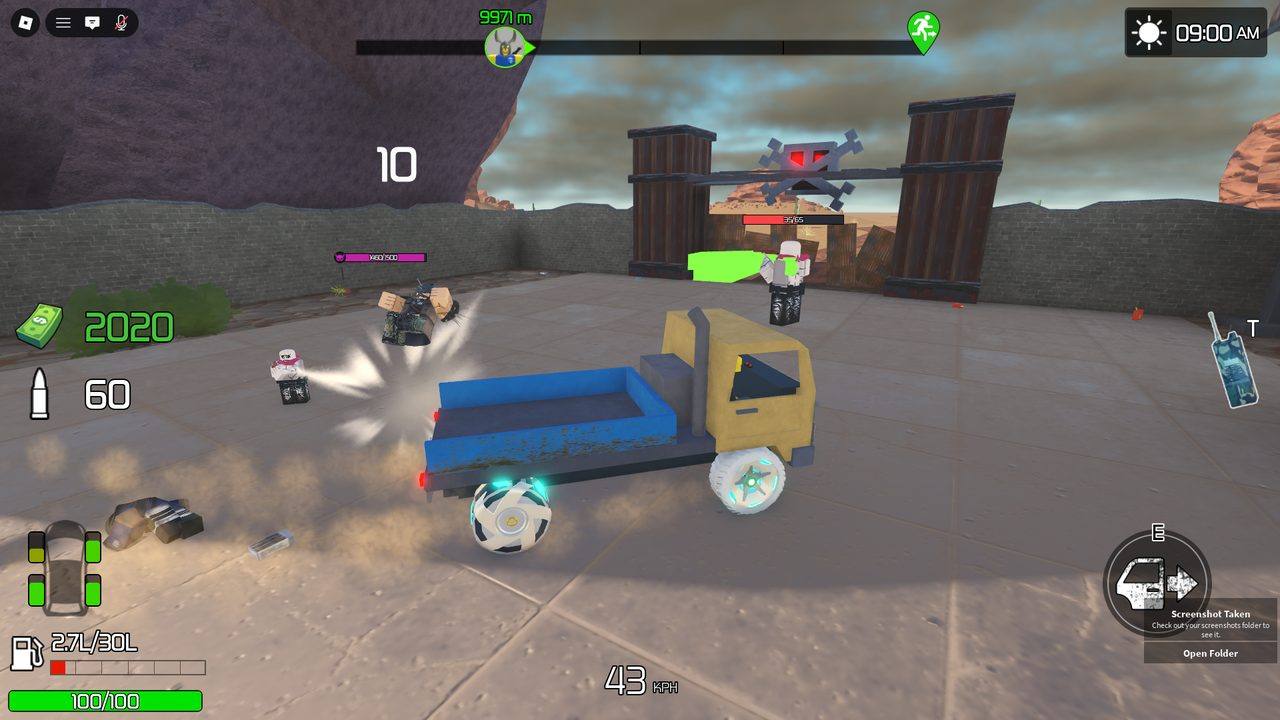
Clearing a boss opens its stash — some of the best chests (and the rare good guns, like a Desert Eagle) come from these fights, giving the journey periodic spikes of reward.
Economy & Monetization
Run cash buys survival; Diamonds buy permanence. Vehicles, permanent weapons and passes form the spend layer.
The two-currency split does the commercial work. In a run you earn and spend cash on supplies. In the lobby, Diamonds (boostable, and sold via passes) unlock permanent vehicles and permanent weapons — the things that make your next journey easier from the first metre. The store page advertises new four-person vehicles, new passes, and boosted Diamond earnings, confirming vehicles and convenience as the monetization spine.
| Layer | Currency | Spends on | Persistence |
|---|---|---|---|
| In-journey | Cash $ | Fuel, tires, ammo, repairs | Per run |
| Meta / lobby | Diamonds ♦ | Vehicles, permanent weapons | Account-wide |
| Premium | Passes (Robux) | 4-person vehicle, boosts | Account-wide |
Verdict & Takeaways
A solid, characterful journey game carried by genuinely good vehicles and customization — held back by weak gunplay it doesn't really need.
What lands
- Strong arcade driving with a satisfying physics body.
- Vehicle customization you experience on the road, not just in menus.
- Fuel + durability create constant, legible survival pressure.
- Day/night cycle scales threat in a readable way.
- Weld-to-truck storage is a clever, on-theme inventory twist.
- Wordless arrow/chevron onboarding gets you driving fast.
Where it strains
- Gun handling is genuinely poor — flat, weak feedback.
- Weapons too scarce early; long stretches of axe/ramming.
- Physics jank (wedged tires, flips) can sour a run.
- Boss fights lean on ramming because shooting underdelivers.
- Combat depth lags well behind the driving systems.
The transferable lesson is make the vehicle a living system, not a skin: fuel as a master clock, per-component durability, and customization that visibly changes how the thing drives turns "a car" into a survival puzzle the player nurses to the finish. And the journey framing — a fixed, visible destination at distance — gives an otherwise open drive a spine and a payoff. Just don't bolt on a combat system weaker than your core verb; lean into what the game does best.