The Pitch
Spawn with a pistol. Kill zombies for points. Spend points on better guns, perks, and doors that open the map. Survive escalating rounds with your squad until the horde wins.
Project Lazarus: Zombies doesn't hide its inspiration — the store page calls it "inspired by classic wave-based Call of Duty Zombies," and the mechanics map almost one-to-one: barricaded windows zombies climb through, points as the universal currency, wall-buy weapons, perk vending machines, a roaming Mystery Box, and a Pack-a-Punch upgrade station. What makes it work on Roblox is execution discipline, not novelty.
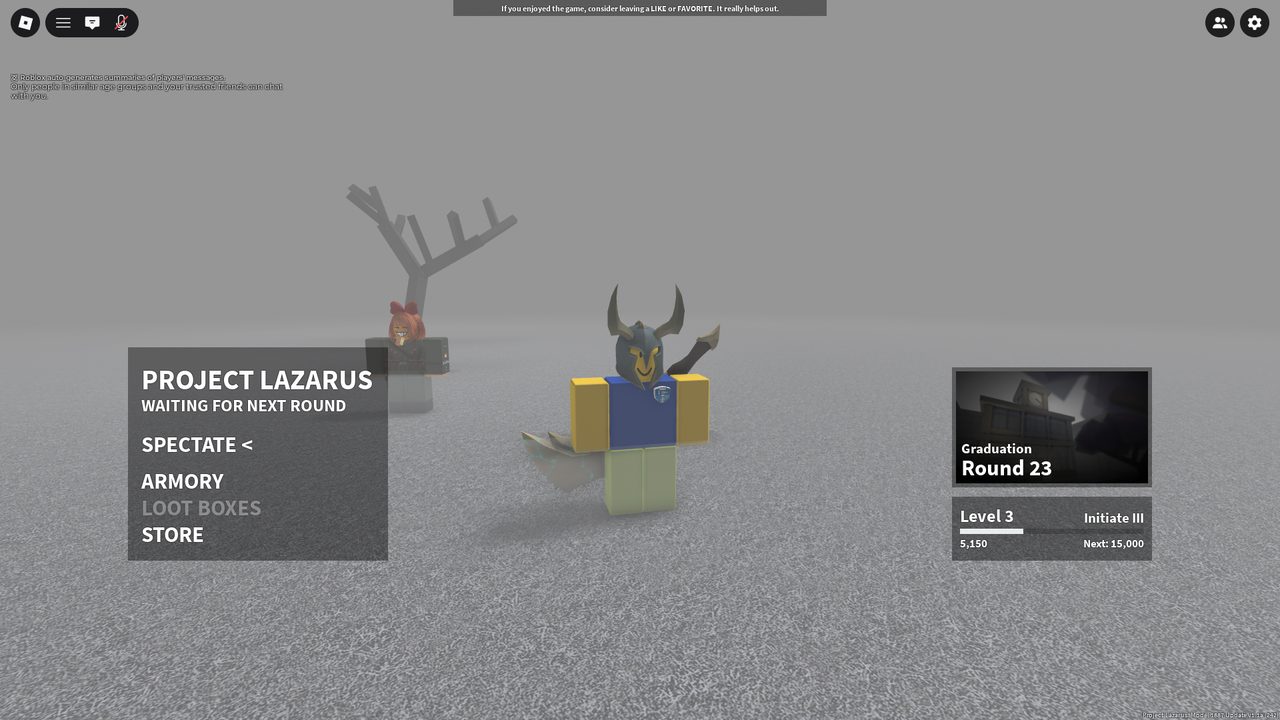
The visual language is intentionally classic Roblox: flat colors, no fancy textures or mesh parts, readable silhouettes. That keeps performance high across phones, tablets and console — which the game explicitly supports.
Core Loop
Kill → bank points → spend on the next capability → survive a harder round. The genius is that every system feeds the same point wallet.
Points come from two sources: killing zombies and repairing the barricades they smash. That second source is clever — it turns a defensive chore into income, so a quiet moment between waves is never wasted.
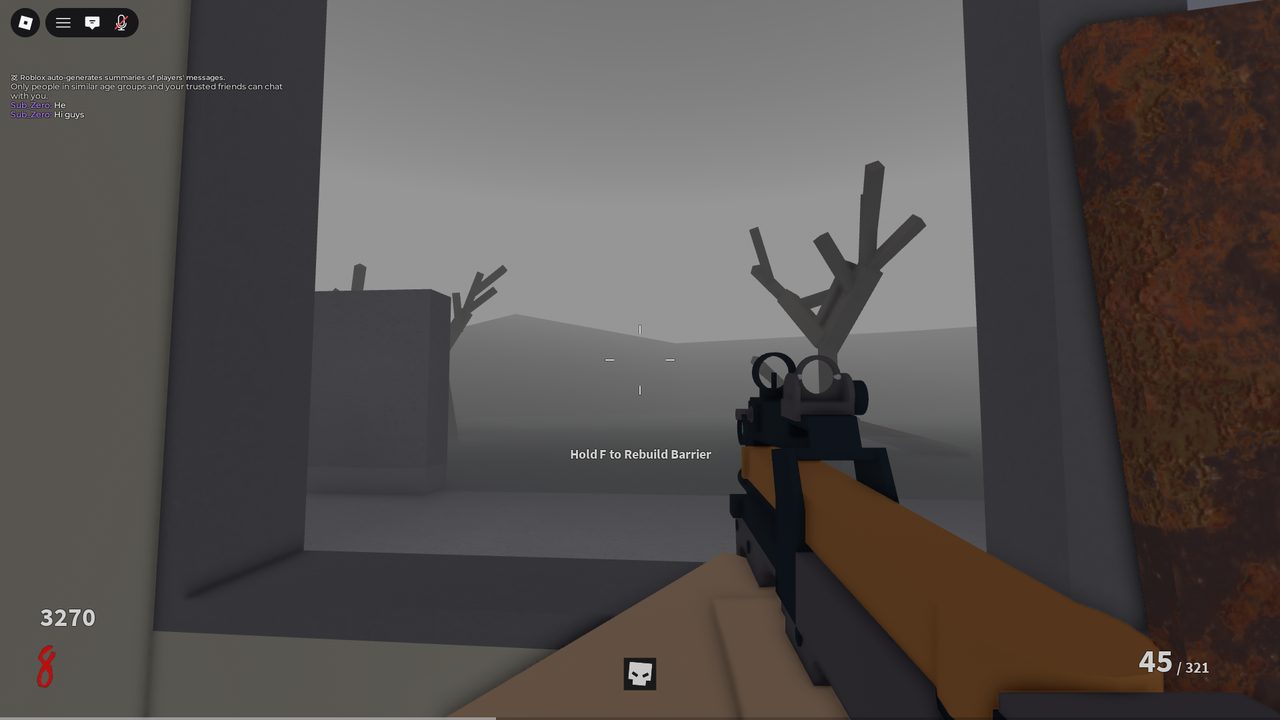 Repairing a smashed barricade pays points, converting downtime into income and rewarding map upkeep. Note the kill-skull objective marker and reserve-heavy ammo (45/321).">
Like many strong wave-survival designs, the score and the wallet are the same number. Points measure performance AND buy power, so there's no currency-conversion friction — every kill is felt immediately as spendable capability.
Map Progression & Forced Co-op
The map is a locked puzzle. Doors and debris cost points to clear, and critical systems are gated behind objectives only your teammates can complete.
You don't start with the run of the map. Debris and doors cost escalating points (I watched a door run $1000) to open new areas. This doubles as pacing: the playable space grows exactly as fast as the squad can afford it.
The sharpest co-op idea is power gating. Perk machines and other systems stay inert until the power is switched on — and the switch is on the far side of the map, reachable only by other players. Until they get there, you're effectively boxed into your starting zone.
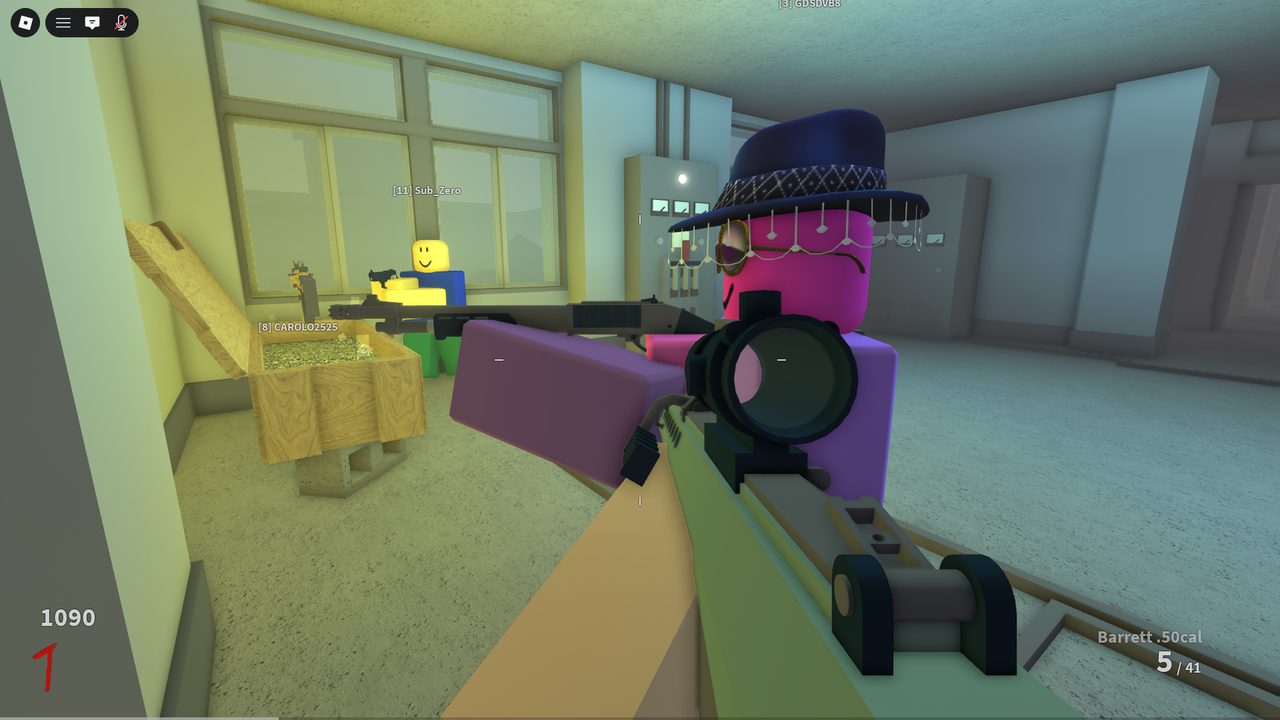
Players come back because map knowledge is the meta-skill. Once you know where the Mystery Box, perks and Pack-a-Punch sit on the school map, you can rush the optimal route the next time it comes up — mastery is portable across sessions, which is exactly what keeps a wave game sticky.
Weapons & Gunfeel
A deep wall-buy + Mystery Box arsenal with per-gun recoil, ADS, unique equip and inspect animations, and a knife that's always available.
Guns have real identity: each has its own recoil profile (you called the P90's "harsh for Roblox standards"), distinct iron sights or optics, and a first-time equip animation that only plays once per weapon. You can aim down sights, inspect, and melee-knife regardless of what you're holding. Notably there's no crouch — positioning is all footwork and sprint.
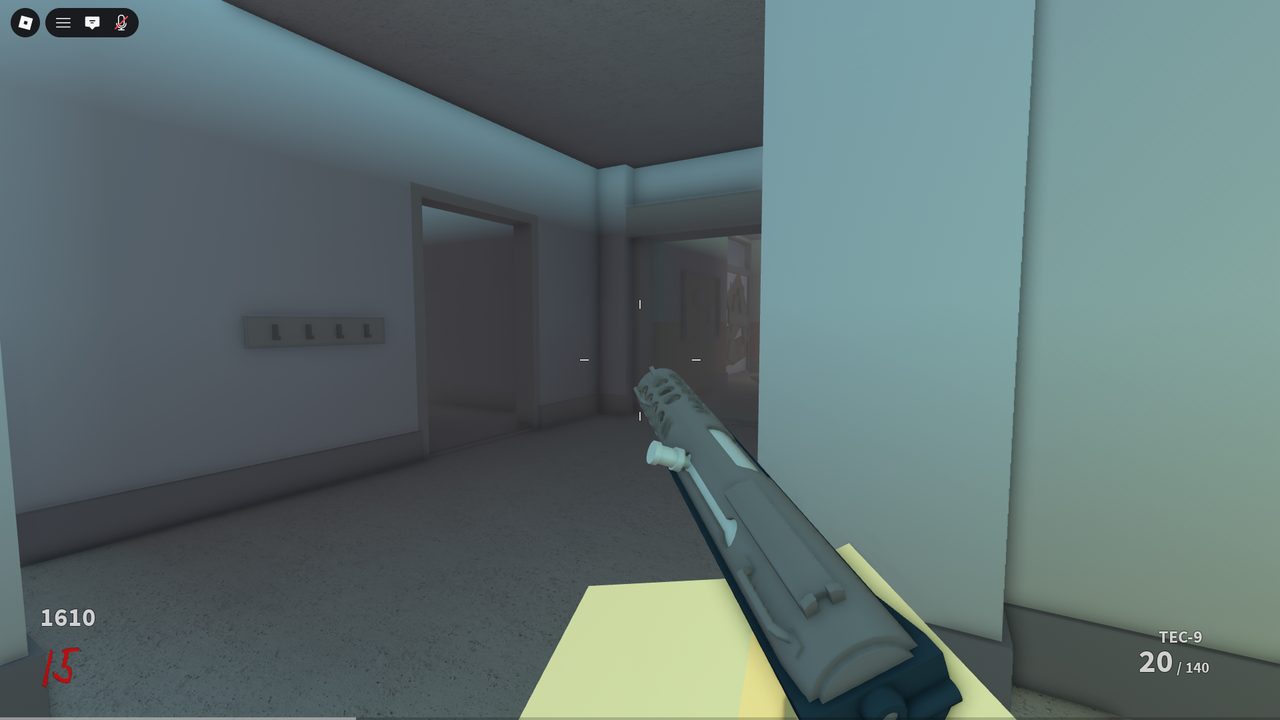
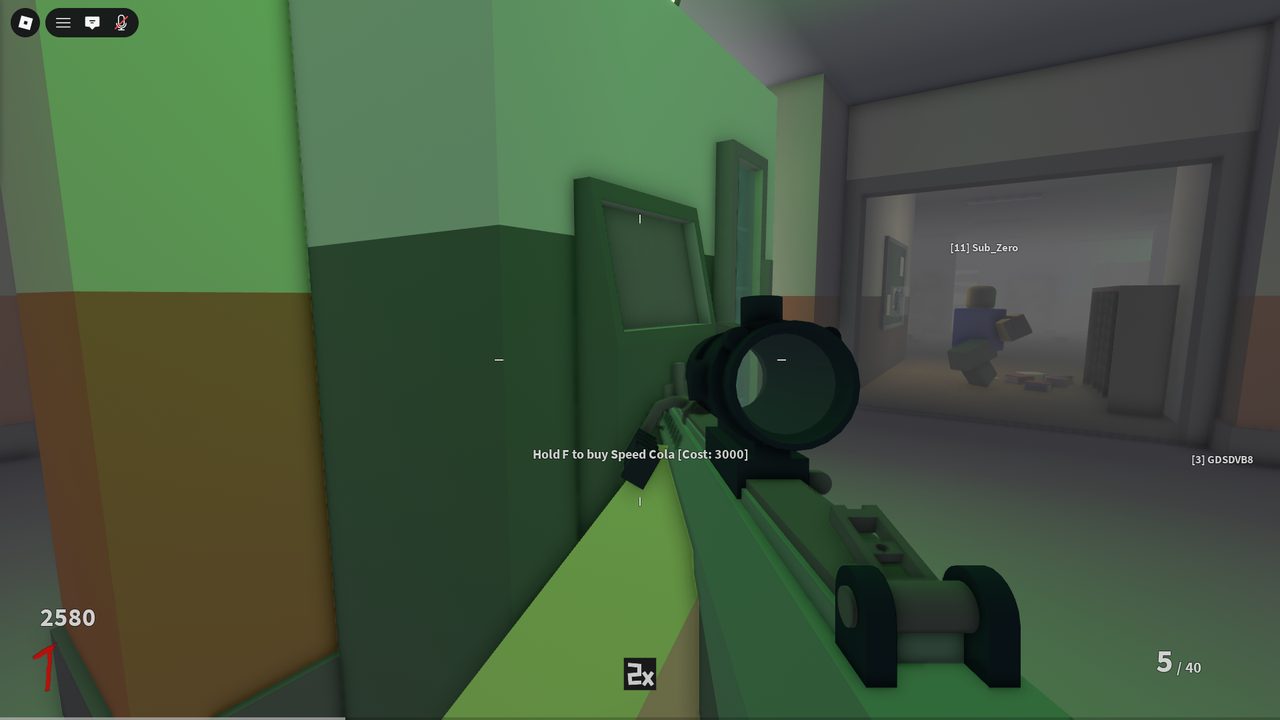
Progression is roughly linear by round: a rifle that one-shot heads on round 1 needs two shots a few rounds later, and an un-upgraded gun eventually can't keep up — the explicit on-ramp to Pack-a-Punch.
Perks & Consumables
Vending-machine perks are permanent-for-the-life buffs; dropped consumables are short, dramatic team-wide swings.
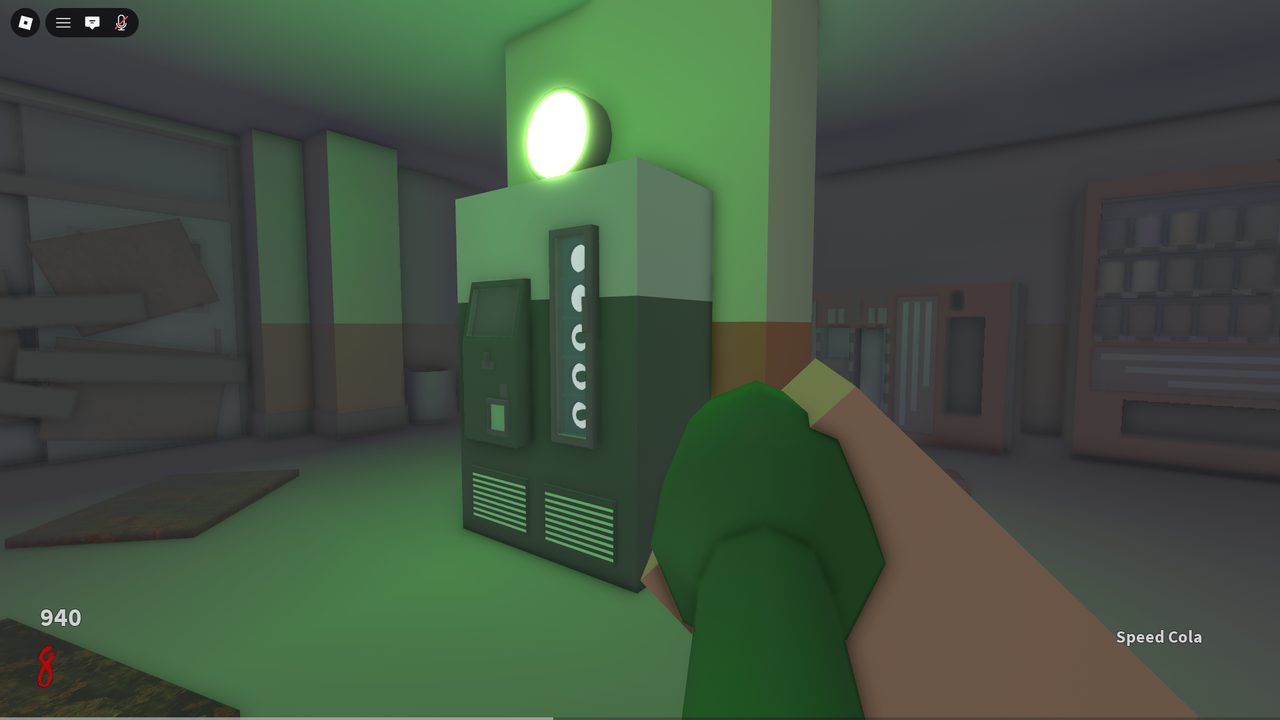
Speed Cola
Faster reloads (and quicker interactions / builds). The difference between escaping a cornered horde and dying in it.
Quick Revive
Revive downed teammates faster — the co-op survival glue.
Insta-Kill (drop)
Team-wide: for a short window any bullet kills any zombie.
Nuke (drop)
Interacting clears every zombie on the map instantly — a panic button.
Consumed perks revert when you go down and out. Death isn't just a revive timer — it rewinds your build, so staying alive compounds and dying sets you back economically as well as tactically.
The Mystery Box
A gamble vendor: pay points for a random weapon, chase the jackpot guns, and risk the box teleporting away.
The Mystery Box spins for a random gun — anything from a dud to a jackpot. The chase prize is the Ray Gun (already prestigious, and Pack-a-Punchable into something nastier). The twist that keeps it from being a free slot machine: a Joker can appear, which makes the box vanish and relocate to one of several preset spots on the map — a soft cap on how hard you can farm it.
Pack-a-Punch
The 5,000-point weapon upgrader. Mandatory late-game, and the source of the game's most prestigious cosmetics.
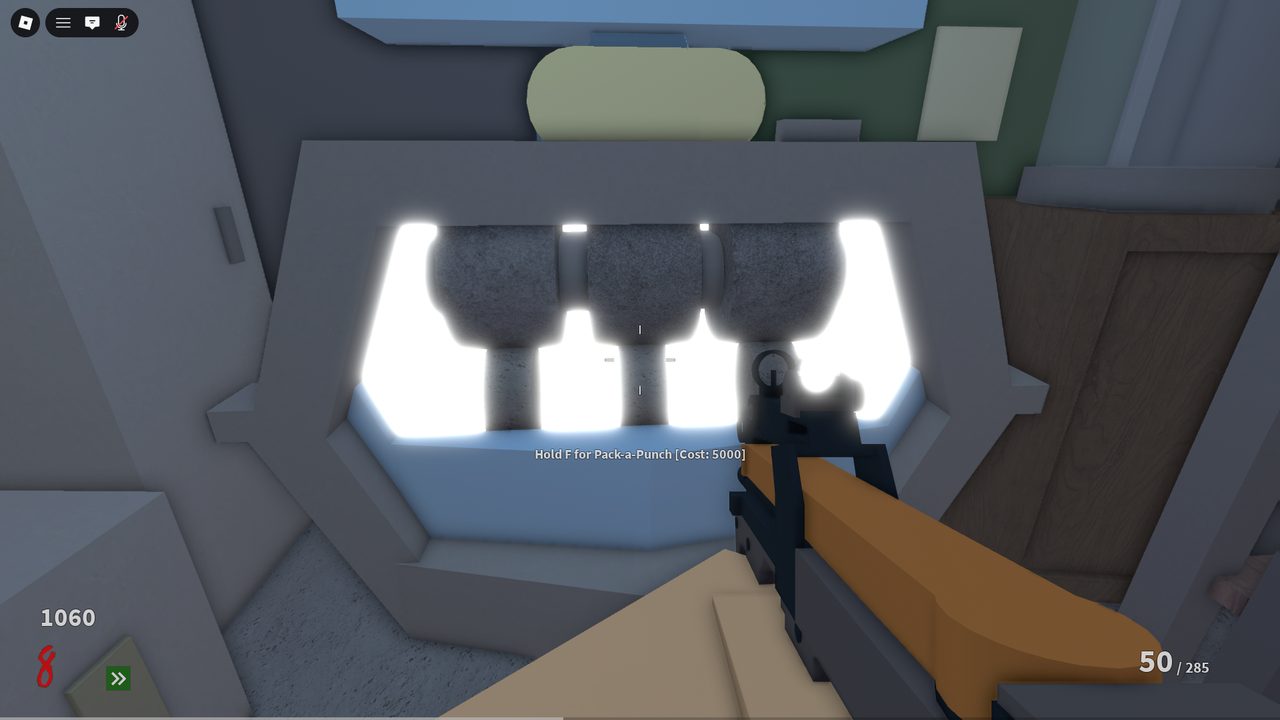
A Pack-a-Punched gun gets a unique name, texture and skin, plus in some cases a special module — and crucially the raw power to stay relevant once base guns fall off. It's the spend sink that absorbs late-game points.
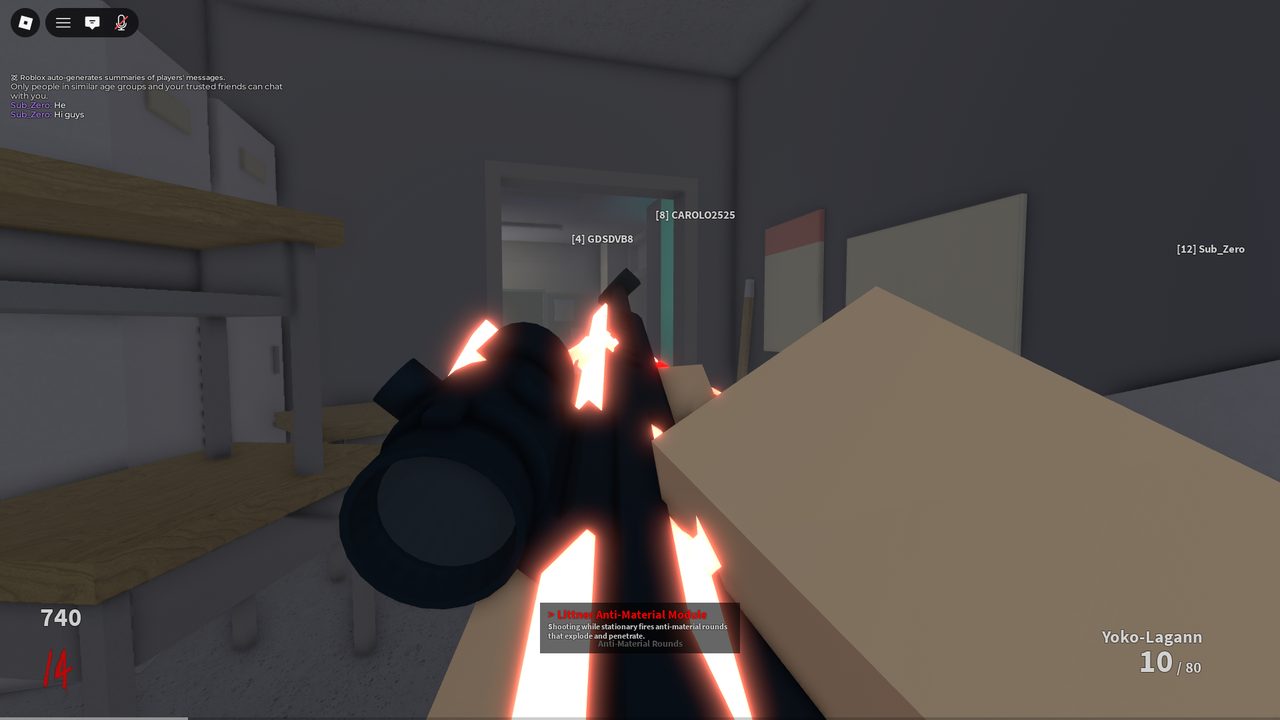 Note the bespoke name and the "Littner Anti-Material Module": shooting while stationary fires explosive, penetrating anti-material rounds. Upgrades add identity, not just stats.">
The upgrade isn't instant — the weapon sits in the machine while it processes. Get swarmed mid-upgrade (as happened on a P90 run) and you can lose the window and the points, which turns a power spike into a tense commitment.
Down-but-Not-Out & Team Play
Going down isn't death — it's a countdown your team can interrupt, surfaced with unmissable red callouts.
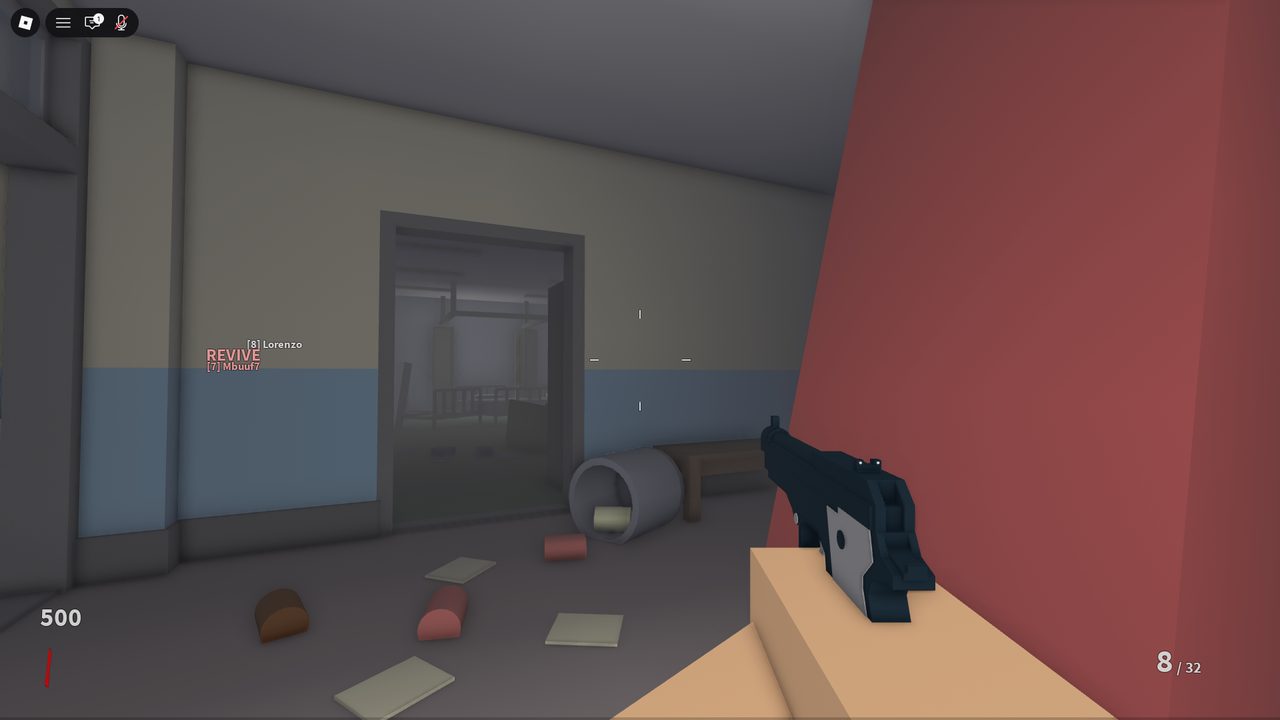
When downed you enter "Down but Not Out!": immobile, sidearm only, bleeding out until a teammate revives you. Downed players are flagged with bright red REVIVE text visible across the map, so the squad always knows who's in trouble and where.
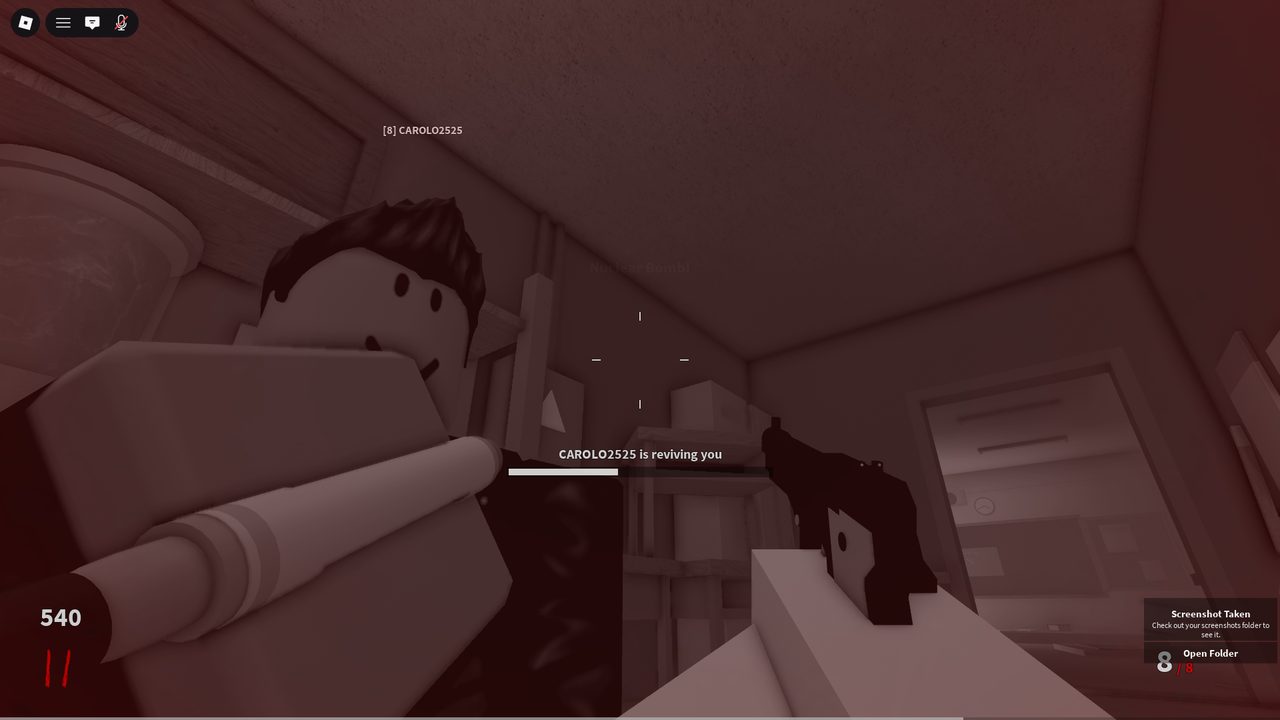
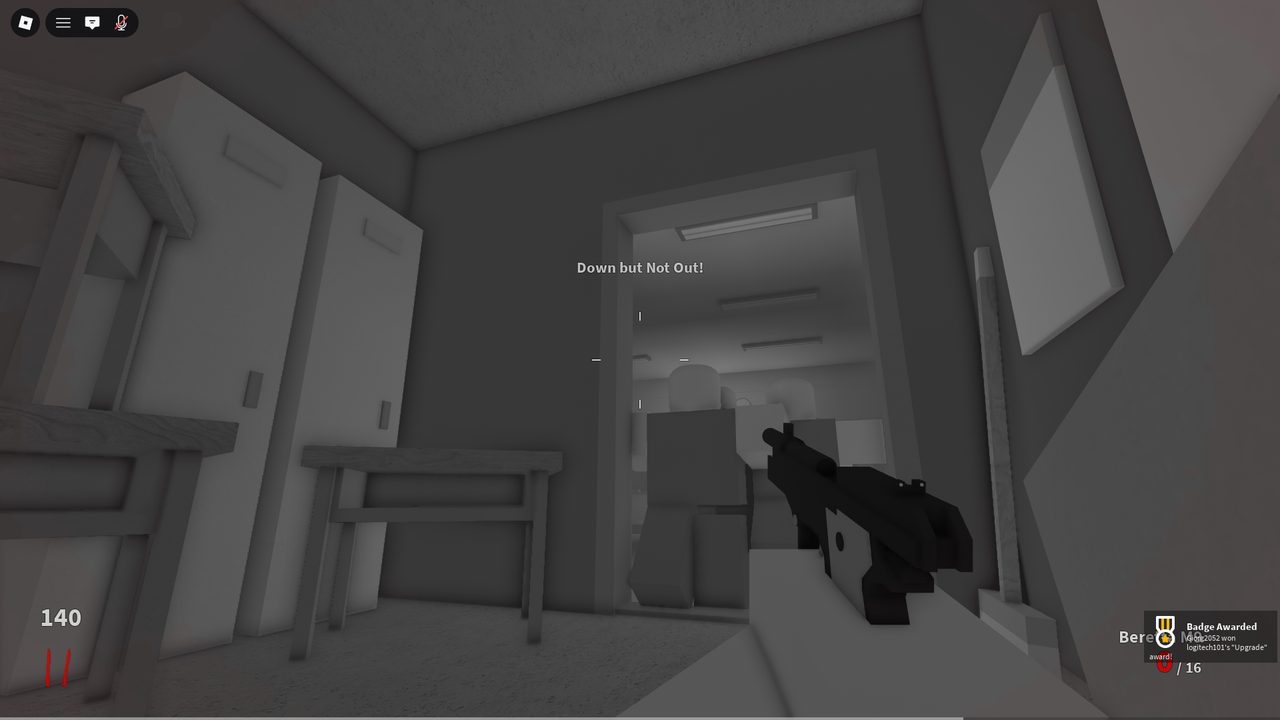 The crawling state with a Beretta. The "Badge Awarded" toast confirms the dev (logitech101) and shows the persistent badge/achievement layer.">
Tight corners are the real killer — running zombies are easy in the open but lethal when they stack in a doorway and box you in. The whole revive system exists to make those mistakes recoverable rather than run-ending.
Retention & Monetization
An account-level track, Loot Boxes, an Armory and a Store layer cosmetic and convenience progression on top of the round loop.
Beyond the in-round economy, the lobby runs a persistent account level (Initiate ranks, XP toward the next tier) plus Armory, Loot Boxes and Store entries — the standard Roblox meta-progression and monetization stack. The deepest retention hook, though, is non-commercial: map mastery, the multi-platform reach (Xbox/PlayStation), and the simple "one more round" tension of a high-score chase.
| Hook | Type | Effect |
|---|---|---|
| Account level / ranks | Progression | Long-term XP chase across runs |
| Loot Boxes / Store | Monetization | Cosmetic & convenience spend |
| Map mastery | Skill retention | Knowing the route rewards return play |
| Console support | Reach | Audience beyond PC/mobile |
| Round high-score | Compulsion | "How far can we get" replay driver |
Verdict & Takeaways
A disciplined, faithful CoD-Zombies port to Roblox that wins on execution: tight economy, real gunfeel, and co-op systems that force genuine teamwork.
What lands
- Single points wallet ties killing, building and buying together.
- Rebuilding barriers turns downtime into income.
- Power-gating forces real co-op, not parallel solo play.
- Map mastery is portable, session-over-session retention.
- Pack-a-Punch and the box give late-game spend sinks + chase prizes.
- Classic low-poly art keeps it fast on phones and console.
Where it strains
- Power-gate can strand a zone if teammates stall or grief.
- Death reverting perks can feel punishing for newer players.
- Heavy reliance on CoD familiarity — less legible to genre newcomers.
- No crouch limits tactical positioning options.
- Mystery Box variance can swing runs on luck alone.
Two transferable ideas. First, pay players for upkeep — the rebuild-barrier-for-points loop shows how to make a maintenance task feel rewarding rather than tedious. Second, gate shared systems behind cooperative objectives so progression requires the group to actually coordinate, not just occupy the same server. And as always: collapse score and currency into one number.