The Pitch
A round-based co-op survival shooter. You wake into a ruined city, scavenge it by day, fortify by night, and grind toward a long-shot escape on Day 100 — while the zombies get meaner every cycle.
Survive the Apocalypse drops you and up to four others into a foggy, half-collapsed city. The loop is legible within seconds: a day/night clock ticks at the top of the screen, a skull counter tracks your kills in the corner, and the world is dotted with loot crates, gas pumps and craftable defenses. The fantasy is classic zombie-survival, but the framing is a race against a deadline rather than an endless sandbox.
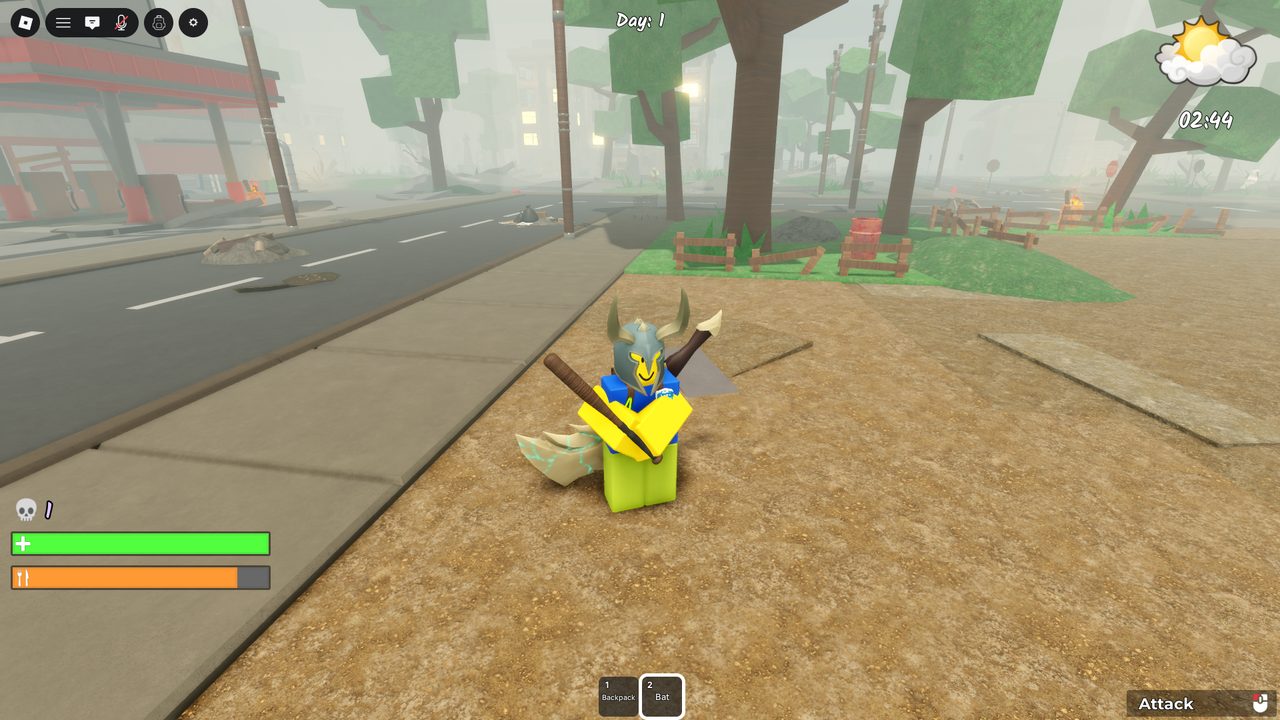
The art is deliberately soft and low-poly — pastel daytime fog, chunky props, a friendly blocky avatar — which keeps the horror approachable for a young Roblox audience while still landing a mood when the blood moon hits.
Core Loop
Day: loot and prep. Night: fight the wave. Between rounds: craft, upgrade, push the escape objectives. Repeat with rising difficulty.
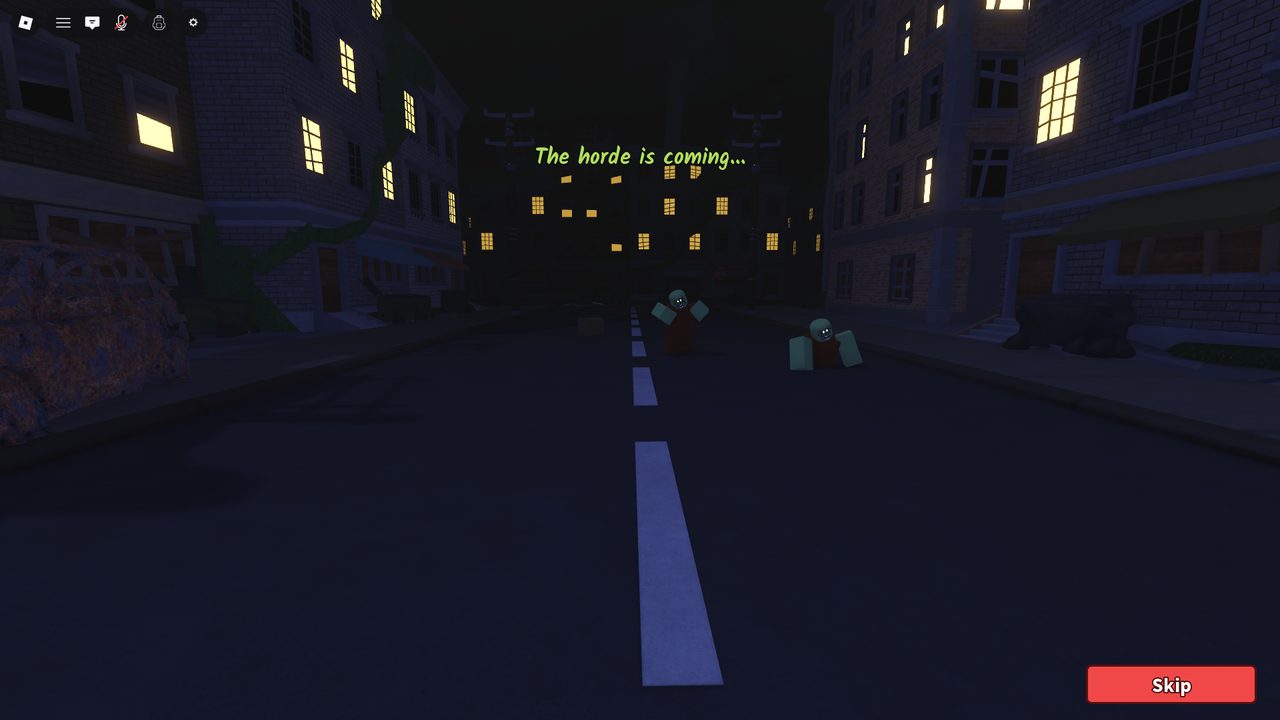
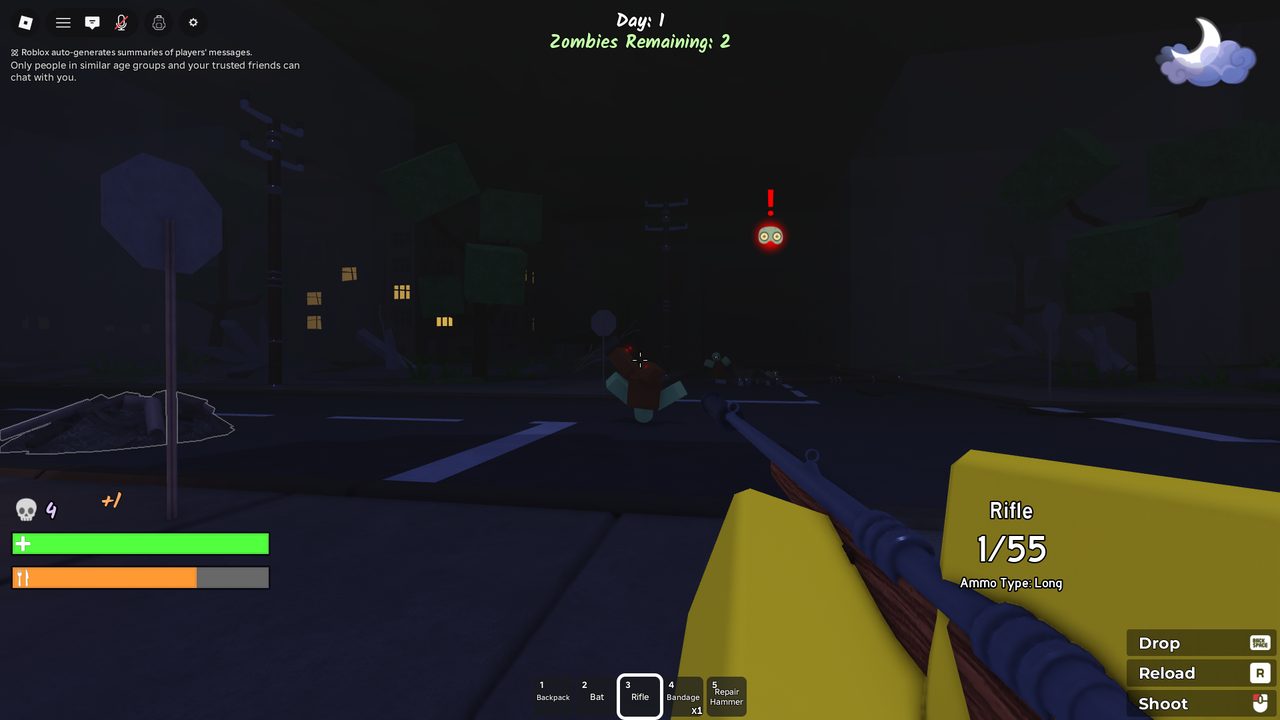
Each in-game day is a countdown timer. While it runs, you're free to explore, pump gas, open crates and build. When it expires, a horde event triggers and the screen tells you how many zombies remain until you've cleared the wave.
Economy & Currencies
Kills are the in-run wallet. Emeralds are the premium meta-currency. Gas, gold and gems feed crafting.
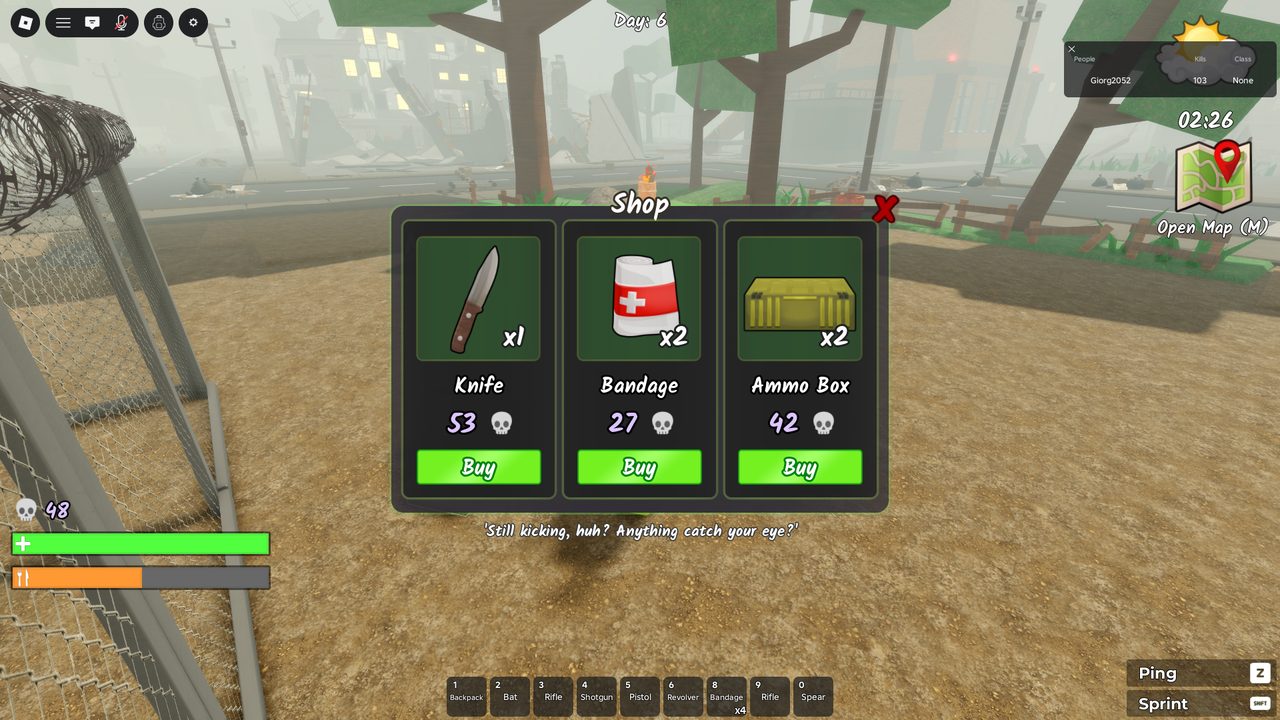
The headline design choice: your kill count is your spending money. The skull number in the corner is simultaneously your score and your purchasing power at the traveling merchant. Killing well and spending well are the same skill, which keeps combat and economy tightly coupled.
| Currency | Where | Source | Spends on |
|---|---|---|---|
| Kills 💀 | In-run | Killing zombies | Merchant items (knife, ammo, bandages) |
| Emeralds 💎 | Lobby / meta | Bought with Robux, login rewards, events | Premium unlocks, classes, cosmetics |
| Gold / Gems | In-run | Looting crates | Crafting recipes at the workbench |
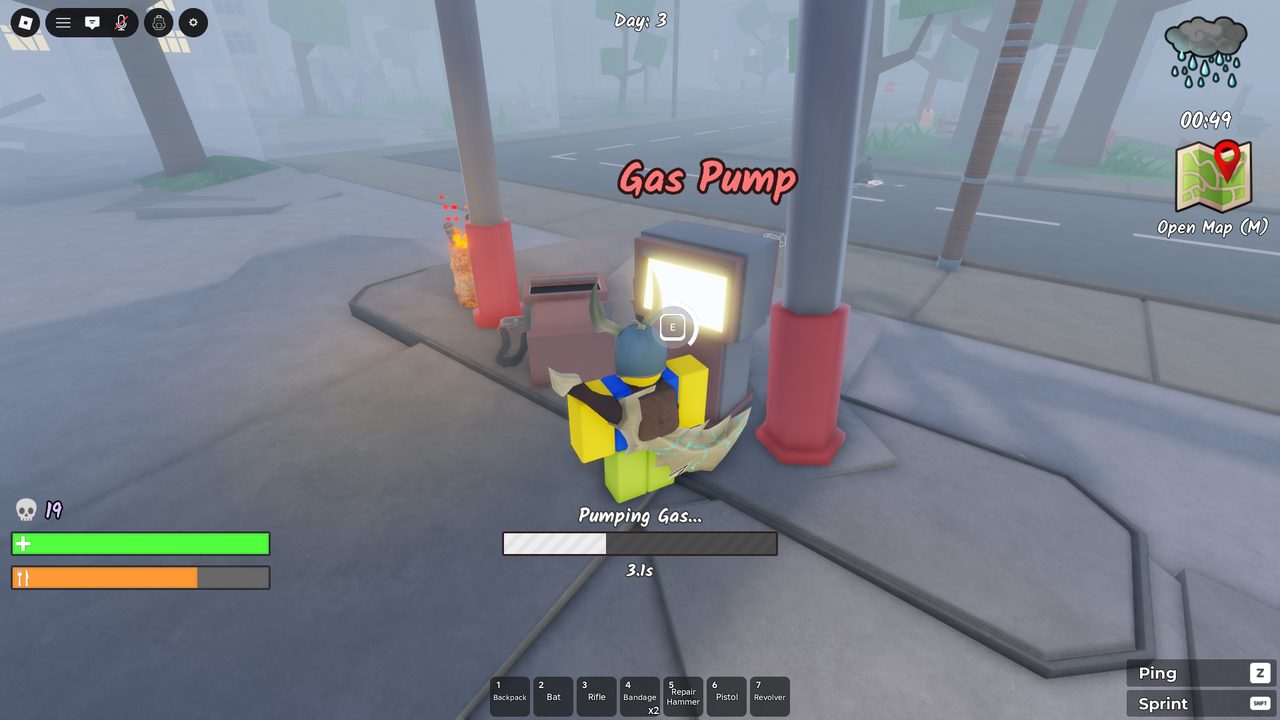
| Gas ⛽ | In-run | Gas pumps (timed pump) | Escape-objective fuel (power plants) |
Progression
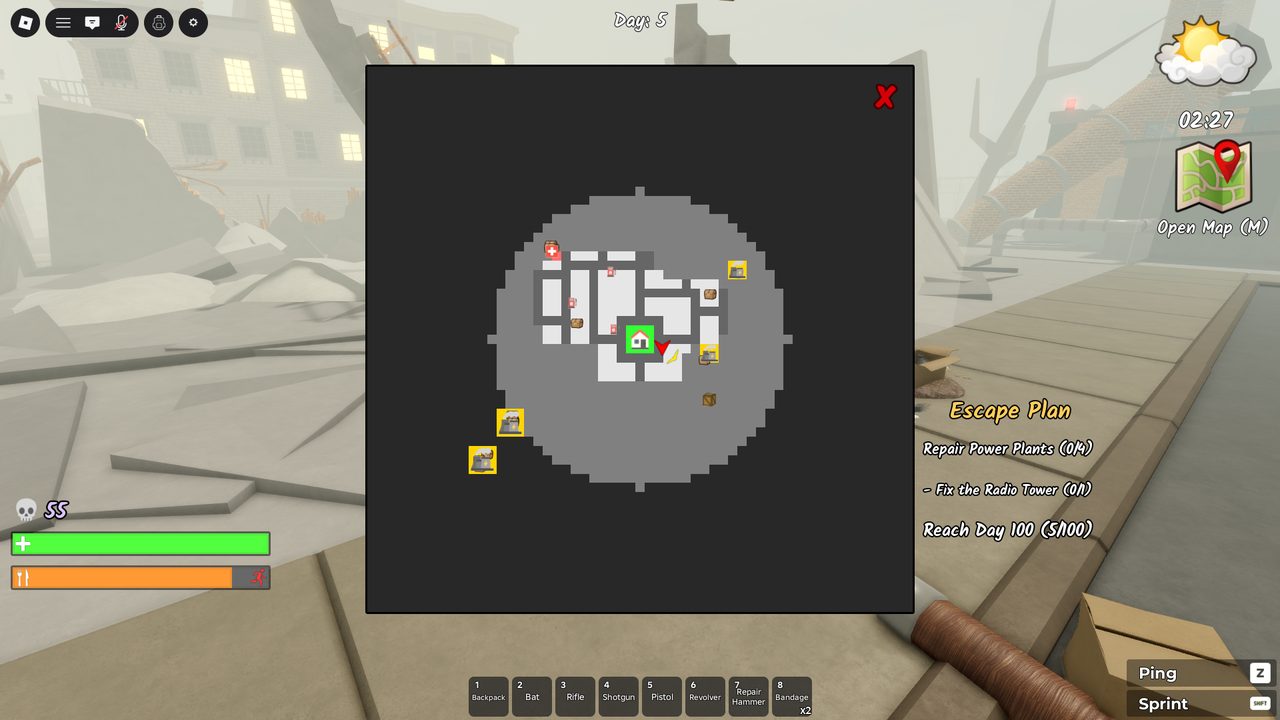
Two clocks run at once: a fast per-run Level bar and a long Escape Plan that stretches to Day 100.
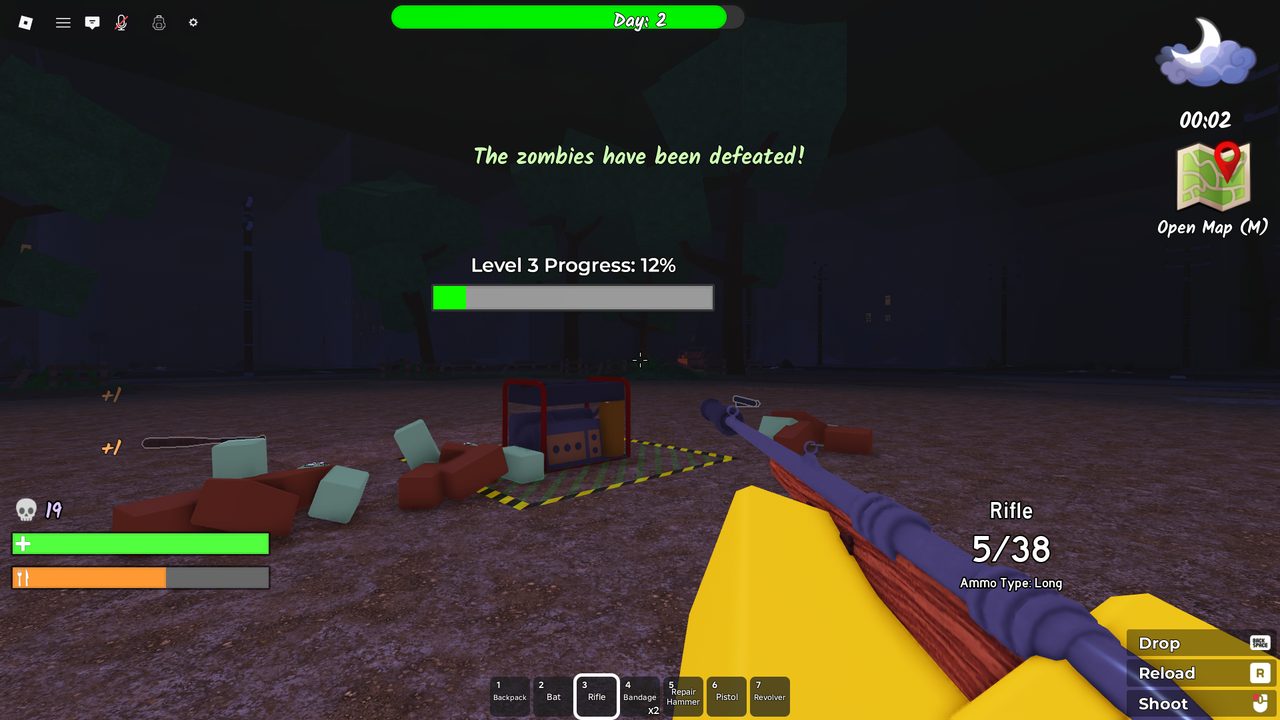
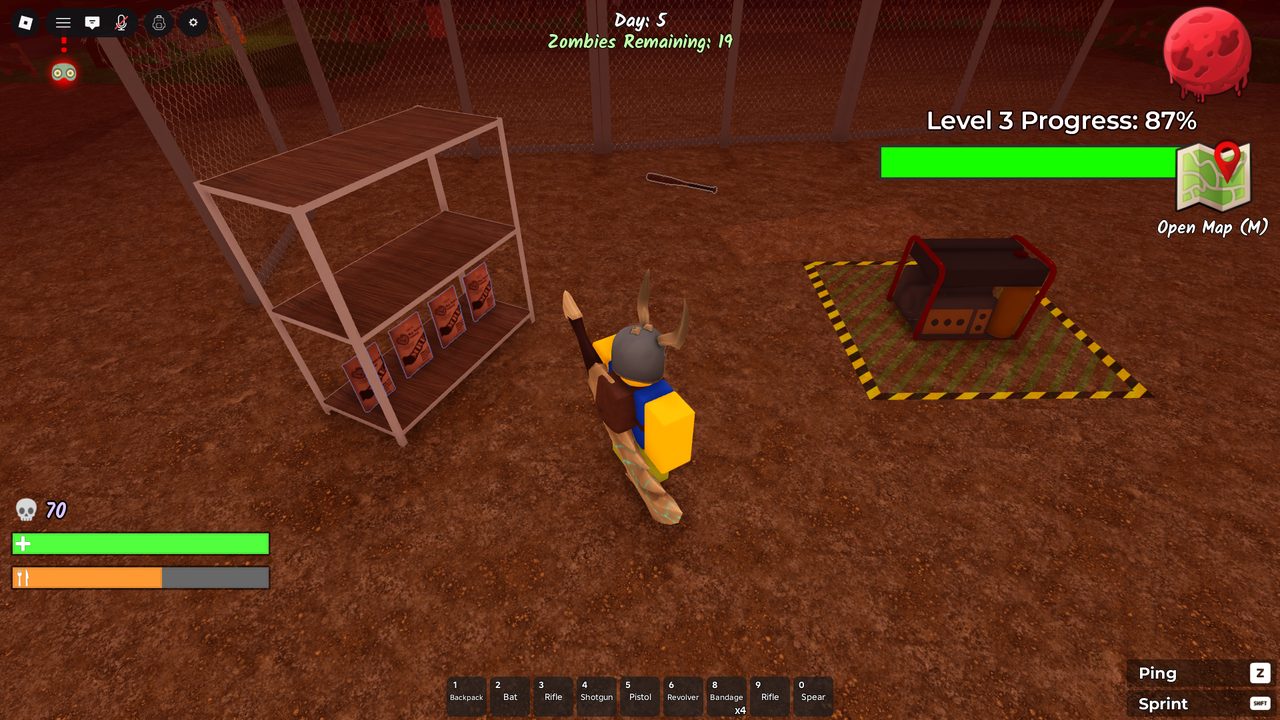
Short-term, a Level Progress % bar fills as you play — I watched it climb from 12% to 87% across a single session, a steady dopamine drip that rewards staying alive. Long-term, the Escape Plan is the spine of the whole experience.
Combat & Weapons
A tidy weapon ladder from melee bat to pistol, revolver, rifle and shotgun — each with magazine, ammo type and reload.
Guns carry real shooter detail: a visible magazine/reserve count (e.g. Rifle 7/56), a named ammo type (Long, Pistol), and clear Drop / Reload / Shoot prompts. Ammo is a resource you manage, which is why Ammo Boxes show up in the merchant.
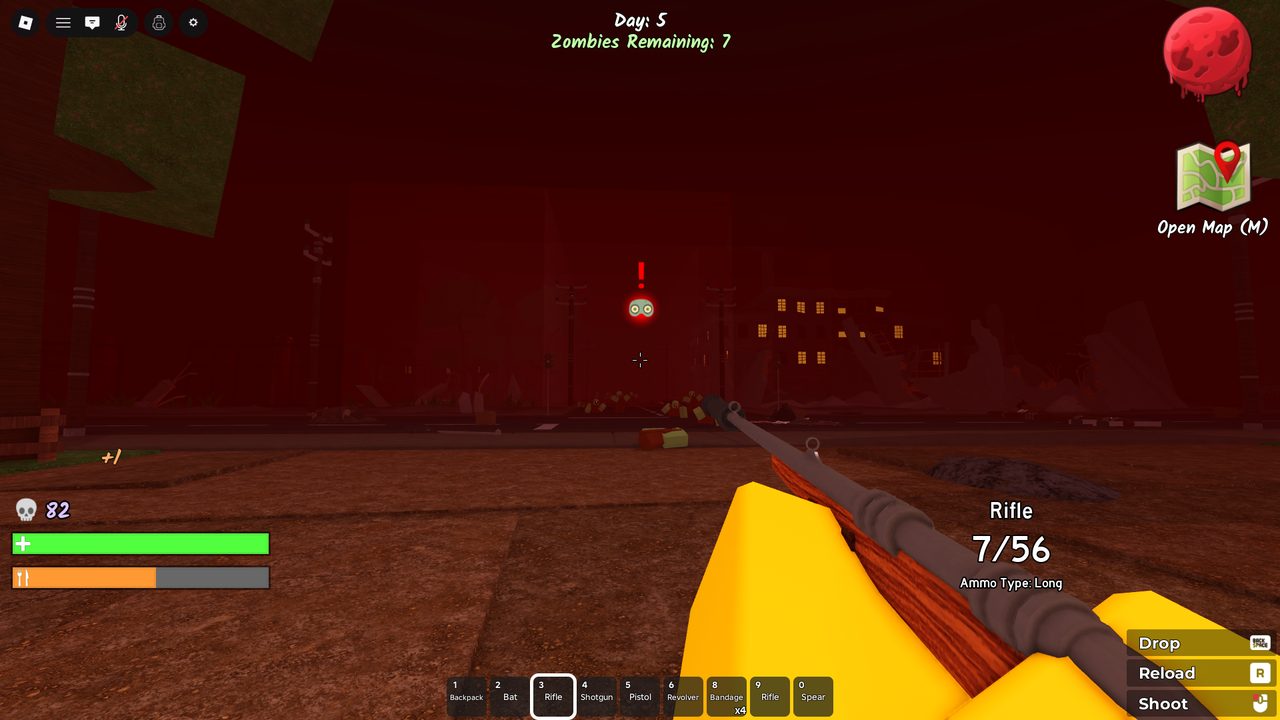
The hotbar grows as you craft and loot: I went from Backpack / Bat on Day 1 to a full bar of Bat, Rifle, Shotgun, Pistol, Revolver, Spear, Bandage and a Repair Hammer by mid-run.
Crafting & Base Building
A workbench turns looted resources into survival gear, weapon mods and placeable defenses.
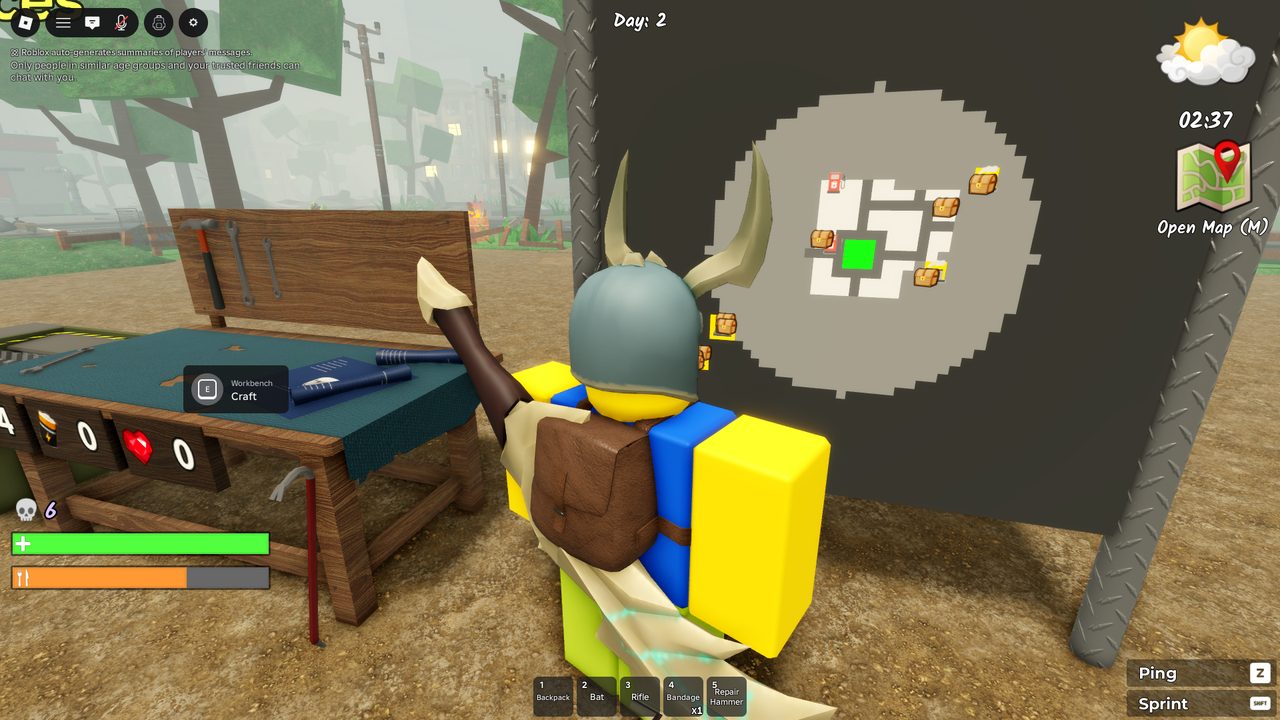
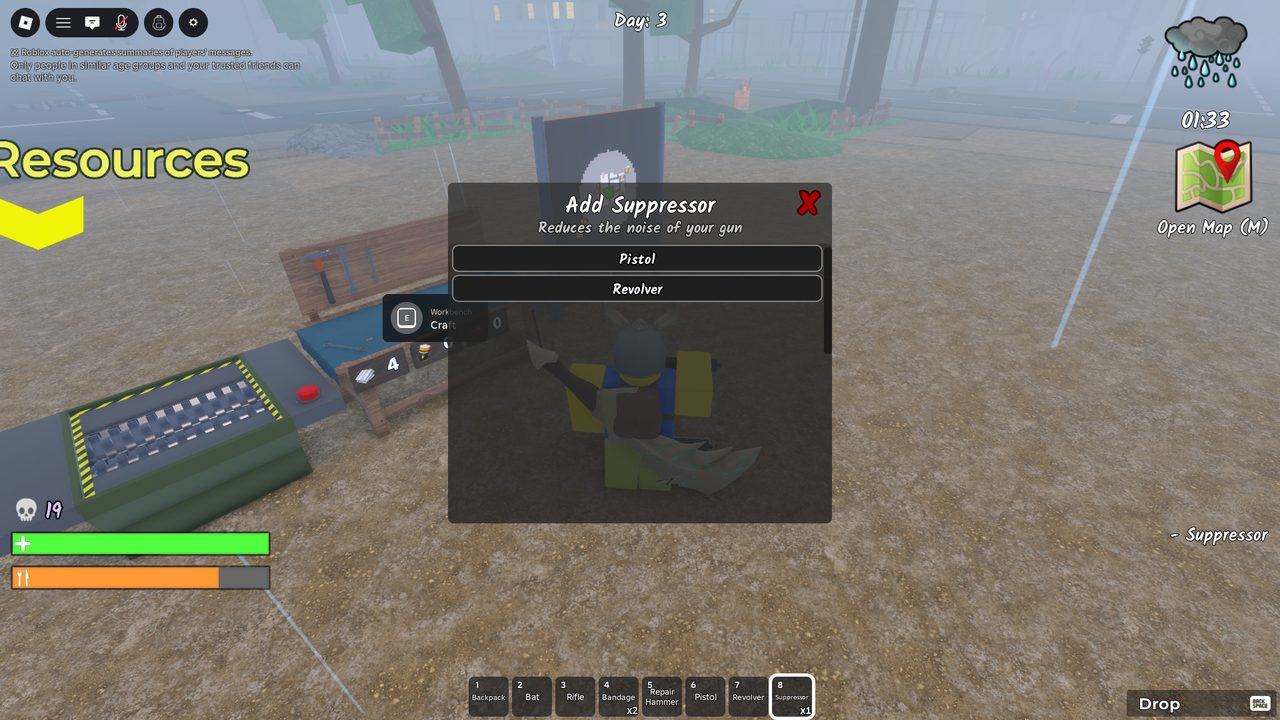
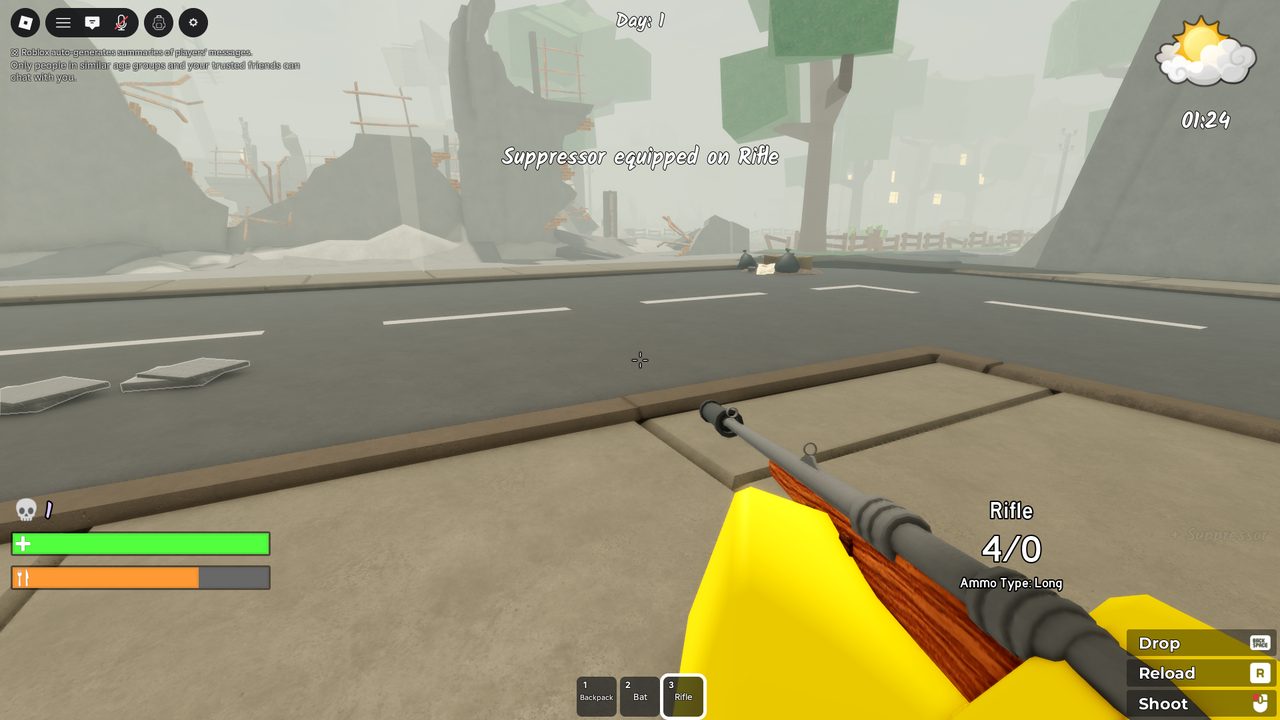
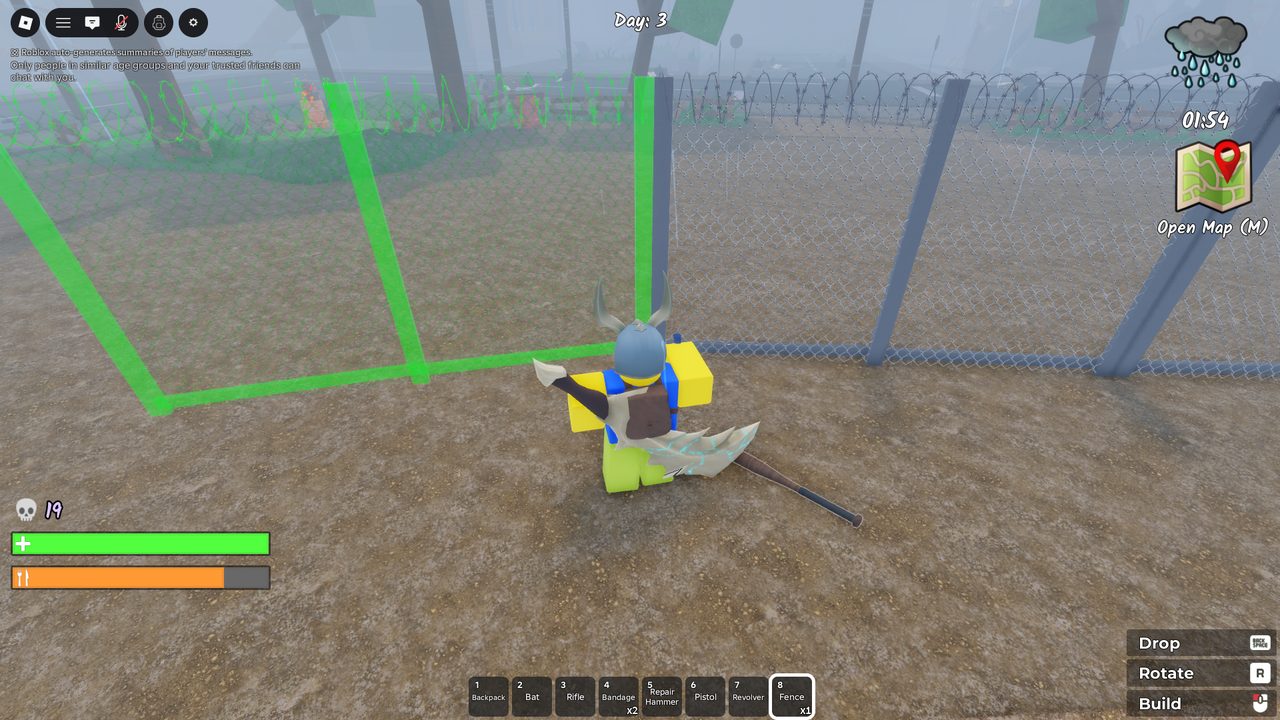
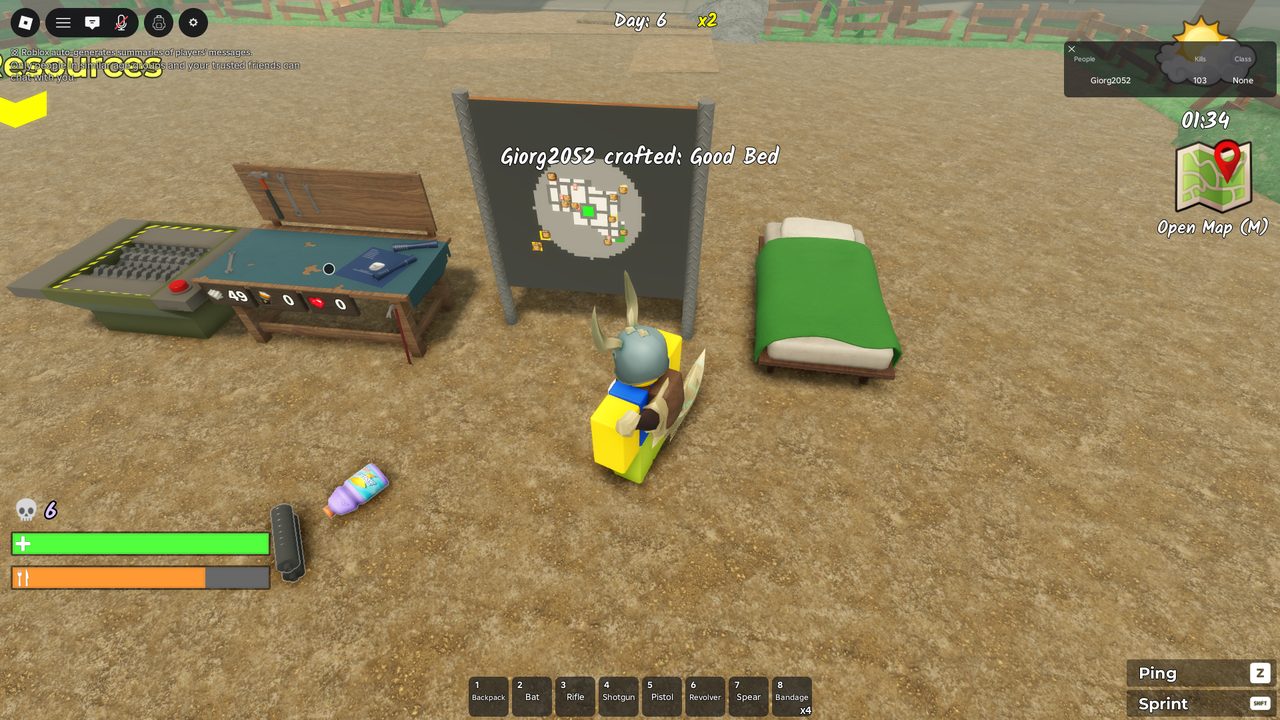
Crafting splits into three jobs: survival comfort (Good Bed, Shelf — storage and respawn/quality-of-life), weapon mods (the Suppressor, which you attach to a chosen gun to reduce noise), and defenses (fences you place around your camp).
Difficulty & The Blood Moon
Escalation is explicit and theatrical: the sky turns, the game announces it, and the zombies upgrade.
Difficulty isn't hidden in a spawn table — it's narrated. The weather/event widget cycles clear → rain → blood moon, and the blood moon arrives with a full-screen "The zombies are getting stronger…" beat and a menacing enemy portrait.
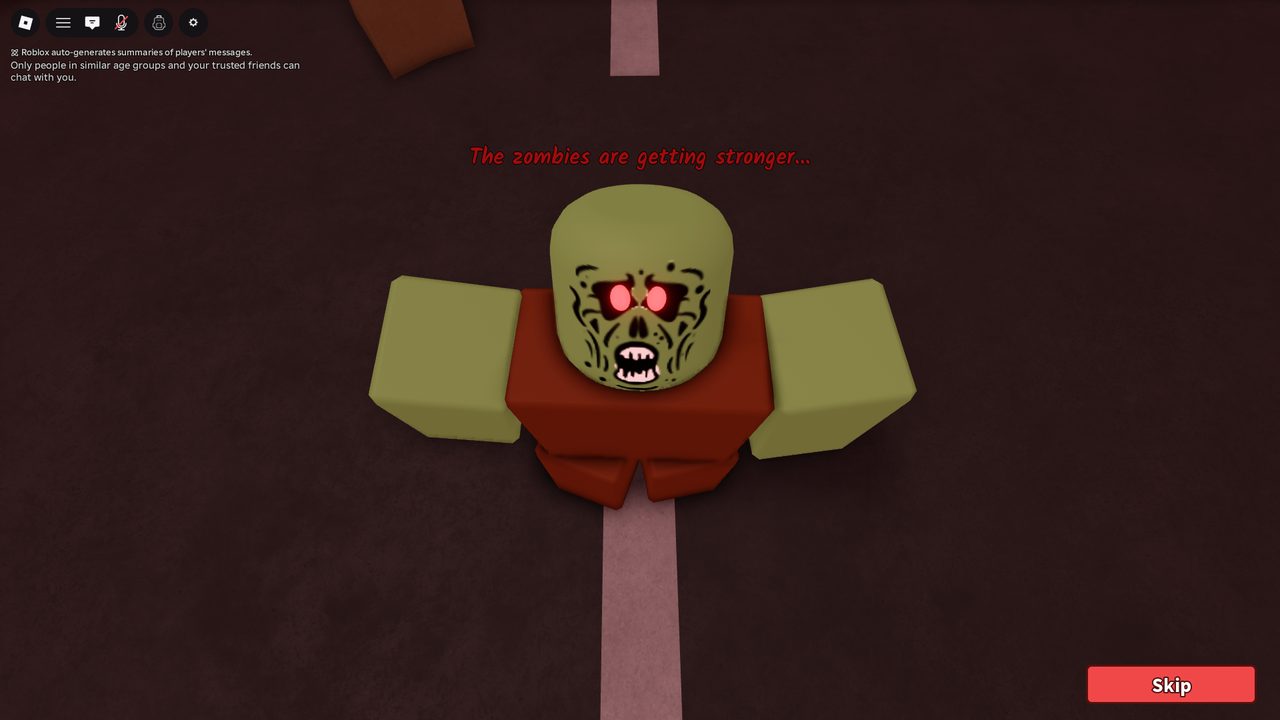
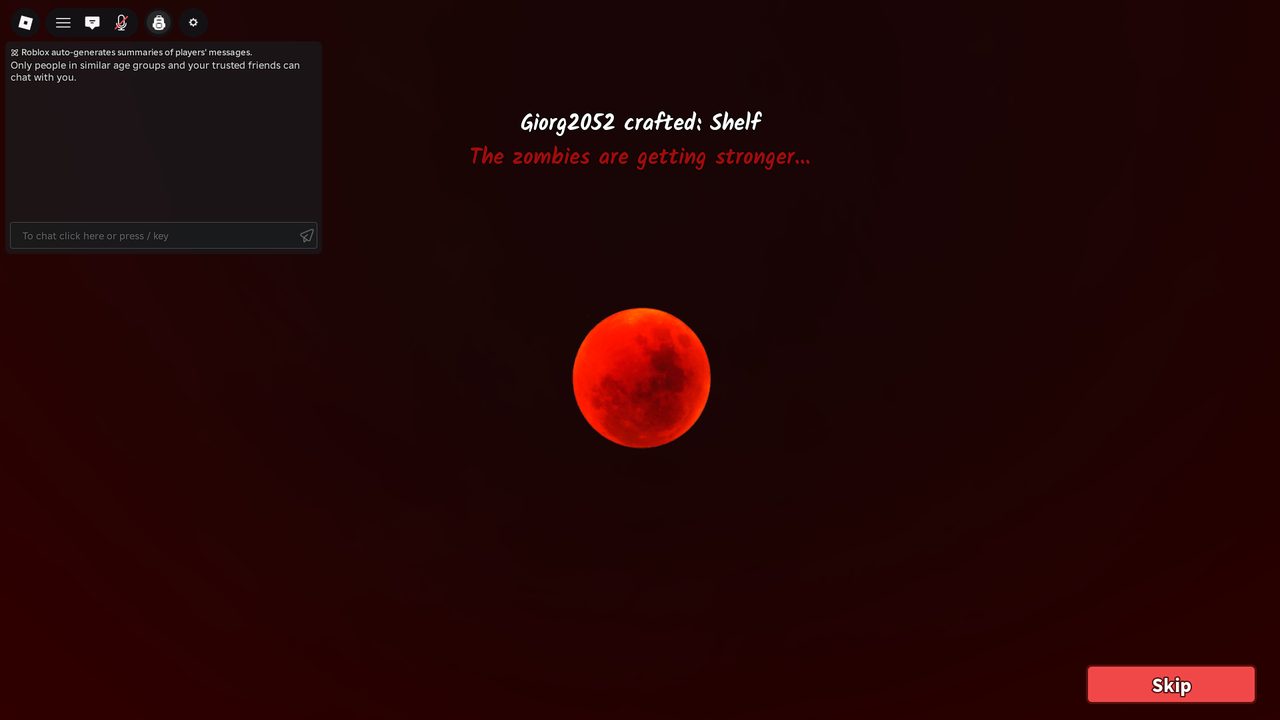
This honesty is good design for the audience: younger players read the telegraph, brace, and don't feel cheated when a harder wave overruns them.
Events & The Merchant
A traveling merchant is the recurring spice — a timed visitor that turns banked kills into gear.
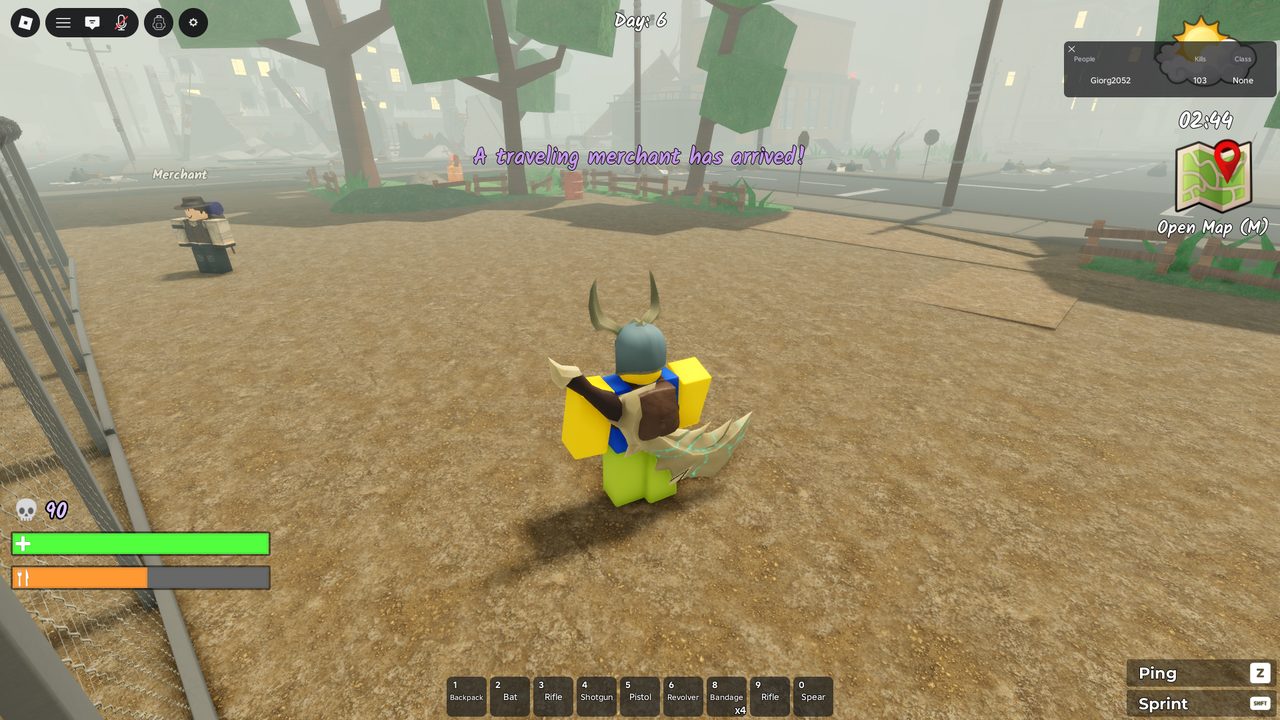
The merchant's flavor line — "Still kicking, huh? Anything catch your eye?" — gives the world a sliver of personality. Mechanically, his rotating, kill-priced stock (knife, bandages, ammo) is a pressure valve: a bad loot run can be patched if you've been killing efficiently.
Retention & Monetization
Emeralds (bought with Robux) anchor the spend; the Day-100 goal and class system anchor the return.
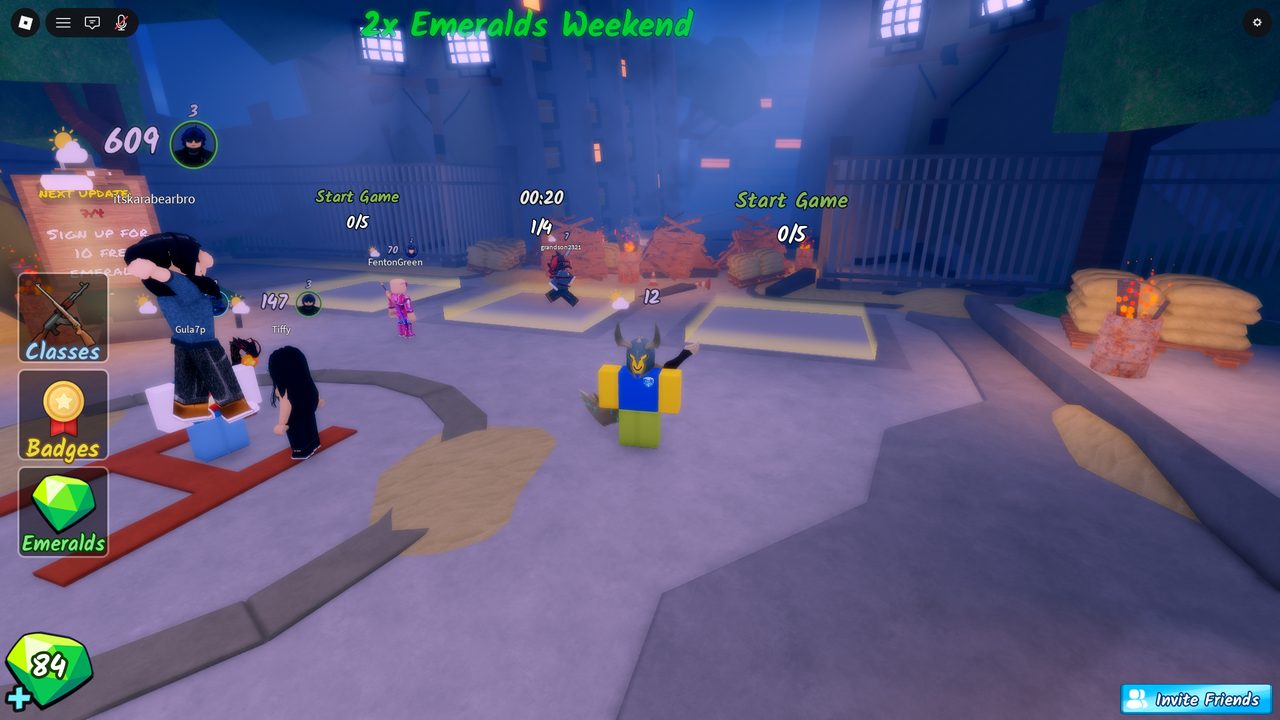
The lobby does the commercial heavy lifting. Emeralds are the premium currency and are purchasable with Robux, then reinforced with a 2x weekend multiplier, a free-emerald signup incentive, and a permanent Emeralds button. Classes and Badges sit beside it as the unlock/achievement layer.
| Hook | Type | Effect |
|---|---|---|
| Emeralds for Robux | Monetization | Direct premium-currency sale |
| 2x Emeralds Weekend | Urgency | Time-boxed spend/play incentive |
| 10 free emeralds (signup) | Acquisition | Lowers first-purchase friction |
| Reach Day 100 | Retention | Long campaign goal across sessions |
| Classes | Depth | Build variety & replay |
| Badges | Achievement | Completion chase |
Verdict & Takeaways
A confident, well-telegraphed co-op survival loop with one genuinely sharp idea: kills are currency.
What lands
- Kills-as-currency couples combat and economy into one skill.
- Day/night rhythm gives constant tension-and-release.
- Escape Plan provides a concrete, multi-stage win condition.
- Difficulty is narrated, so wipes feel fair.
- Excellent threat readability (red ! markers, glowing heads).
Where it strains
- Day-100 goal risks feeling distant without mid-run milestones.
- Heavy lobby monetization stack competes for attention pre-run.
- Two "Start Game" pads needing 5 players each can stall matchmaking on low pop.
- Soft art may undersell the survival stakes for some players.